Astfel, modelul acesta al meu permite ipoteza că, la fiecare linie de longitudine, există mai mulți oameni-sori sau niciunul, în funcție de structura și fiziologia creierului individului și mai multe luni (la fiecare latitudine eventual). În același timp, ceea ce concentreză lumina pe discul solar nu este neapărat psihicul unei persoane în sens solipsist sau mediul ei înconjurător, ci modul de organizare a fenomenelor întrapsihice și relațiile psihicului persoanei cu celelalte substanțe gânditoare sau conștiințe, res cogitans sau alte substanțe. Fotografiile din aeroplane la mare altitudine despre care se spune că dovedesc curbura Pământului nu sunt dovezi suficiente pentru sceptici; dimpotrivă, ele arată o bandă tulbure la orizont, ceea ce poate susține teoria mea elucubrantă, a curburii concave. O altă probă a celorlalți este observarea unui răsărit sau apus, dar eu nu am văzut ce spun ei, dimpotrivă, uneori o calotă din soare părea despărțită de linia orizontului printr-o bandă clară, ceea ce pare a susține de asemenea ideea curburii concave. Totuși, să nu uităm că, în argumentarea unei idei, simple fapte de observație neclare, nesistematizate, nu pot fi temeiuri suficiente. După cum se poate observa la prima vedere, aceste model aberant al meu pare prea simplu și infantil, ceea ce îl face să pară improbabil pentru oameni înclinați spre științificitate. O anumită rezervă de incredulitate au unii oameni datorită legăturii presupuse dintre mecanica celestă și biologie, deși biologia recunoaște aceste conexiuni și determinări. Mai degrabă există forța de inerție a omului de a recunoaște faptul că și oamenii sunt animale vii, expuse radiațiilor și cauzelor cosmice ale fenomenelor psihice sau vieții socio-culturale. Acest model al meu e ca o poveste, care se poate înscrie în cursul sincretic al mișcării New Age. E inutil să trasăm concordanța și tangența cu diverse expresii literare sau artistice în general, chiar mai înainte de Teogonia lui Hesiod. Aici sunt de amintit desigur și teoriile sincretice asupra evoluției și diferențierii spiritului uman în general. Diversele idei care au axat gândirea astronomică și geologică de-a lungul veacurilor pot fi reinterpretate – de exemplu teoria Big Bang-ului sau teoria Pangeei. Probabil că unii dintre dvs. își amintesc că mai demult se spunea că Marele Zid Chinezesc e unica construcție omenească vizibilă de pe Lună.
O schimbare de paradigmă ar însemna deci o reașezare a distincțiilor și relațiilor dintre concepte și sisteme conceptuale. Un alt mod de integrare a datelor culturale. Mișcarea soarelui de exemplu ar putea fi asemuită cu stupele indiene sau cu forma minaretului spiral al Marii Moschei din Samarra. O astfel de viziune ca a mea ar putea fi explicată prin filozofia culturii a lui Blaga, unde matricea stilistică a unui popor sau grup etnic are anumite atribute care explică formarea și menținerea sau dispariția ei, care sunt fenomene legice, necesare și legate de tipul psihologic al personalității unui purtător de semnificații culturale într-un anumit timp sau spațiu. Ne amintim de turnul Babel, așa cum e pictat de Peter Breughel cel Bătrân sau de cercurile infernului în viziunea dantescă. Sau de lună și soare ca personaje alegorice în mecanismul ceasurilor vechi astronomice medievale cu păpuși automate. În spiritul acestui model toate simbolurile par să se alinieze ca fiind evident cu același sens, deci era imposibil ca eu să nu gândesc această fabuloasă eventualitate.
urmează continuarea
(7 noiembrie 2020
În curând voi termina explicarea rătăcirilor mele intelectuale de acum câțiva ani, legate de cosmos și astronomie.
Iar au intrat cei care mereu vin cu ideea că ”ai văzut? Ai văzut ce porci sunt?!” pentru a îi păcăli pe proști că eu am fost legată de idei politice ale unora, în timp ce în realitate în culisele vieții mele nu a existat nimic politic niciodată, absolut cert.
Ei spun din nou că toți politicienii, care au sprijinul proștilor de pretutindeni, au mințit despre mine și mă omoară în numele acelor minciuni hidoase.
ei spun aceleași idei că eu am fost un geniu bun și luminos, dar proștii au fost mințiți că eu aș fi întunecată, nebună și proastă, rea etc.
Alții cu ideea clasică că ei credeau că mi-au furat deja toate secretele etc.
simplul fapt că e adevărat că am fost martirizată fizic și psihic, inclusiv otrăvită, ceea ce se poate dovedi încă, îi face să creadă trei lucruri greșite, deși nimeni nu a vrut să fie cu mine deloc sau să stea de vorbă cu mine, oricât de puțin:
1. că am greșit ceva sau că aveam vreun defect, fiindcă altfel nu s-ar fi întâmplat nimic rău !
2. că eu nu aș fi eu, ci proiecția gândirii și personalității altcuiva etc. !
3. că trebuie să mă omoare ca să evite rușinea sau să mă evite fiindcă aș fi monstru sau ceva rău!
8 noiembrie 2020
Acum, înainte de a continua povestea rătăcirii mele cosmologice, notez încă o dată adevărul despre aceste zile, deși am observat că dvs. ați înțeles greșit motivele mele de a scrie adevărul și credeți niște aberații fără legătură cu ceea ce sunt eu, și eventual mă considerați nebună, deși nu am fost niciodată.
Azi am fost din nou la Gheață în Voluntari. Pe drum fiarele care mă scuipă în gând și-au arătat din nou colții. Unii spun că eu am fost și sunt un om drept, care a crescut drept în societate. Alții au intrat cu ideea că ”au reușit să îi distrugă și oasele și tot nu cedează”. Am povestit deja pe blogul meu despre cum mi s-au deformat oasele genunchiului și că au refuzat să îmi facă RMN, așa cum un medic mi-a recomandat. Și altele. Eu am întrebat din nou de ce cred ei că trebuiau să mă distrugă și să mă omoare. Ei spun că fiindcă familia mea minte în cele mai mici detalii și poporul minte de asemenea despre mine și ar fi o rușine să recunoască adevărul, deci mă omoară. Și că deci toți sunt corupți să facă răul și nedreptate etc. Dar, am spus eu, eu nu am greșit absolut nimic în cele mai mici detalii întreaga viață și nu am avut niciun defect, dar, în plus, am fost un om de valoare ca bine și frumos, însoțite de intelect bun și superior, și absolut sigur nu am fost niciodată nebună. Mereu la fel. Dacă ar fi fost adevărul, nimeni, și nici dvs., nu ar fi dorit moartea mea și v-ați fi purtat toți normal cu mine. Probabil că veți înțelege că am dreptate și am avut mereu abia când voi termina de scris blogul meu, dacă ei mă vor lăsa. Mai sunt lucruri de punctat, dar nu multe. Ei au spus atunci că m-au băgat la balamuc și că absolut toți oamenii care au fost băgați la balamuc nu sunt acceptați decât dacă sunt proști. Poate, dar eu nu știu așa ceva și e absolut cert că m-ar fi acceptat și aș fi avut dreptul la studii și muncă dacă ar fi fost adevărul despre mine. În plus au intrat din nou cu ideea că eu sunt cel mai mare martir al umanității, dar proștii încă mai cred că eu aveam vreo legătură cu politica sau că aș fi vinovată de ceva, fiindcă cei care îmi făceau rău aruncau vina asupra mea. Sau ideea corectă despre nebunia și răutatea aparent monstruoasă a mamei față de mine și modul ipocrit în care se poartă cu alții, nici eu nu știu de ce. Încă nu știu sigur dar se pare că ea e chiar ceva rău, nu doar că mă lovește ca să îi păcălească pe alții.
Acum despre ieri seară. Azi noapte m-au torturat cerebral monstruos, cutremurător. Ei au spus că mama e cea care mă f-te în mod monstruos și că i-a păcălit pe toți. Azi ea – în aparență ea – a făcut din nou să schelălăie cățeaua noastră bătrână care a fost mușcată de niște câini răi pe stradă. E posibil ca ea să facă rău câinelui intenționat, cum a părut că face rău și altor câini din viața ei, ei sugerând că așa funcționează psihic mama, lovind sistemul nervos al altora. Pe de altă parte, mama spunea că ar fi bine ca câinele să moară acum, nu pe ger, când e greu de îngropat. Eu niciodată nu am făcut răul când am atins animale sau oameni, dimpotrivă, cel puțin odinioară, am observat că eram asociată cu binele și vindecarea animalului etc. Ca și cum eu eram viață și mama moarte. Ei spun că oamenii cred că eu aș fi monstrul și de fapt mama este. Am scris zilele trecute despre faptul că mereu se făcea lumină dacă ascultam muzică clasică și eu mă simțeam mai bine de asemenea. Oricum acest lucru e numit meloterapie. Unul a spus că e ceva anormal, în timp ce norii și furtuna și cutremurele erau normale, și că nu era normal că eu aveam așa o abilitate de a le opri. Nu au dreptate și am să explic de ce. Voi scrie și ce însemna muzica pentru mine și cum. Acum voi explica doar o parte.
Oameni răi sau greșit ghidați și mințiți în legătură cu mine mă loveau în mod paranoic, adică făceau lucruri pe care ei nu le recunosc ca fiind reale, și victima e închisă la balamuc sau e considerată nebună fiindcă proștii cred că acele lucruri nu există fiindcă nu pot exista, ei fiind îndoctrinați în acest mod. Victima în plus e și singură, încât nimeni nu poate oferi mărturie că acele lucuri existau în mod real. Ei spuneau uneori că lumea știe că nebunia și delirul nu există, dar că psihiatria e un sistem punitiv și că oamenii credeau că eu sunt pedepsită, deși întâmplător nu greșisem nimic și eram și un om perfect, cum am tot spus mereu. Loviturile lor asupra mea erau incredibile, nu doar nemeritate și, prin presiunea mulțimii asupra mea și prin diverse torturi inumane, se adunau nori grei asupra mea și numai uneori venea furtuna cu fulgere multe de tot – uneori și în cursul toamnelor reci. Era tot ce făceau ei prin același mecanism prin care eu detensionam creierul cu ajutorul muzicii, numai că invers. Ei erau barbaria, eu eram un om civilizat și calm, care asculta muzică când i-era prea greu și aducea doar seninul, nu răul și violența, inclusiv pe cer, cum făceau cei răi sau proști. Despre ce mi-au făcut ei – incredibil și paranoic – am scris mare parte, dar mai am puțin de notat pe blog – de exemplu – cozile infernale de mașini pe unde mergeam eu în orice zi și la orice oră asociate cu rău cerebral deși nu aveam simptome psihice, cum ar fi delirul legat de situație sau interpretări greșite sau agresivitate sau reacții nervoase sau idei preconcepute etc. Sau mulțimea agresivă de foarte multe ori pe strada mea în oraș, vorbele lor directe cu voce tare, oribile și absurde, grupurile de tineri greșit ghidate mulți ani, comportamentul bizar al vecinilor, otrava nemeritată, torturile continue cu zgomote, evidente și clar direcționate asupra mea, izolarea mea forțată peste 36 de ani, comportamentul foarte agresiv al mamei etc. Toate acestea au fost și încă mai sunt reale, în mod constant, zi de zi aproape, din 1984. Ele s-au datorat, cum spun și ei, minciunilor despre mine și ar fi dispărut dacă ar fi fost adevărul. Există adevăruri frumoase și bune, chiar mai rudimentare, care înseamnă ceva și pentru oamenii mai proști și ei nu m-ar fi omorât dacă era adevărul curat despre mine și pentru ei. Între timp eu nu am făcut nici cel mai mic rău, veți înțelege poate mai încolo. În plus, eu am ascultat muzica clasică curat și inocent, ca un copil, fără să știu că are un asemenea efect - și pe mine m-a surprins - și chiar și ei spuneau că eu reprezint civilizația și cei care mă persecută și mă împilează sunt barbaria. Am ascultat cum voi mai povesti pe larg, fără să fac 2 lucruri deodată - aproape mereu nimic în afară de muzică, normal că fără gânduri și fără imaginație.
Azi au intrat și cu ideea lor paranoică veche că toți o vor pe mama și de aceea trebuie să mă omoare pe mine. Probabil că proștii cred că eu am fost sursa acestui gen de delir, când eu pur și simplu eram prea inteligentă ca să creez idei paranoice și nu aveam niciun interes. Oricum, cum am explicat, mama și cu mine aveam structuri psihice de naturi diferite și nu se poate ca ea să îmi ia locul sau eu să iau locul ei în mod sigur, cel puțin nu acum.
Am omis să scriu despre modul paranoic în care a reacționat mai demult mama la muzica mea clasică - într-o noapte a venit și a urlat că nu e corect să fac lucruri de acest gen - adică să ascult muzică clasică - cu ideea că mă luam la luptă cu ea, că chipurile ascultam ca să o lovesc! Eu am ascultat muzică numai ca autoapărare, niciodată nu am făcut sau gândit răul. Ea îmi aprinde televizorul ei la emisiuni despre politică, și noaptea chiar, uneori, doarme cu el aprins și cu volumul mare. Ea mi-a smuls CD playerul din priză cu furie și năduf. Un detaliu insignifiant e că ei spun că proștii cred că eu îmi merit soarta, dar, în realitate, eu sunt exact opusul a ceea ce cred ei, deci, coform criteriilor lor, nu îmi merit soarta.)
Continuare text:
În prelungirea teoriilor opticii geometrice care explică cum se formează imaginile într-un sistem complex cu mai multe lentile, dar noi fiind părți componente ale acestui sistem, putem menționa sistemul filozofic al lui Platon, cu faimosul mit la peșterii și oamenii amăgiți de ecranul pe care îl privesc și cu demiurgul său, care transformă haosul în ordine, anume cosmos, prin imitarea unor modele imuabile, deci prin copierea unor matrițe preexistente. Așadar revenim la originea și rolul cuvintelor gen cosmos (care înseamnă ordine) sau haos, fiindcă trăim într-un mediu cu o grefă neurolingvistică și lumea nu poate fi cunoscută deplin fără acest altoi al limbii vorbite și scrise, parte din duala natură umană, la fel cum lumina poate fi explicată prin două teorii complementare – teoria ondulatorie și teoria corpusculară. Dar, în secolul trecut, fizica s-a înscris în orientarea anti-realistă prin fizicieni precum Niels Bohr și Werner Heisenberg. În mecaninca cuantică actul d ea observa realitatea modifică realitatea însăși. Antirealismul științific presupune asumpția că entitățile care nu pot fi observate de om prin simțurile proprii – cum ar fi electronii sau genele – reprezintă o non-realitate. Asemenea atitudine am avut și eu gândindu-mă că diverse fenomene celeste, inobservabile cu ochiul liber, devin reale doar prin observarea cu instrumente performante, la fel cum s-ar folosi un microscop extrem de sofisticat. În 1930 era descoperită a noua planetă a sistemului solar – Pluto și ea își pierde statutul de planetă abia în 2006, fiind redefinită drept planetă pitică. În ordinea faptelor care invită la scepticism în ce privește astronomia popularizată pentru masele largi ale populației, ar fi de notat că Jules Verne a publicat ”O călătorie spre centrul Pământului” în 1864 și oamenii de știință au stabilit numărul, compoziția și grosimea straturilor concentrice care alcătuiesc sfera terestră, deci fapte fantastic de frumoase, dar greu de crezut, mai ales de către oameni înclinați spre scepticism. Asemenea calculelor care au greșit în ce privește planeta Pluto, dar au stabilit numărul de ani lumină care ne despart de diverse corpuri celeste. Un alt semn de întrebare se pune în legătură cu natura duală a luminii, stabilită prin teoria electromagnetică (în acord cu erezia mea terestră) și corpusculară a luminii. Poate este nevoie în primul rând de o teorie asupra originii luminii, deci de un fundament ontologic al existenței luminii.
În definitiv, puteți spune, aceste text e o meditație asupra felului meu personal de a gândi, un fel de pagină de jurnal. Datorită condiției mele sociale, aceste rânduri pot fi încadrate în mulțimea extinsă a elucubrațiilor unor nebuni, de care nimeni nu se sinchisește. Un fel de Don Quixote în negativ, adică inversul persoanei credule și vrăjite de cărți a binecunoscutului hidalgo. Cu toții știm că noii don Quixote sunt opusul celui original. Explicarea pe care o încerc pare a fi sofistică și pe alocuri sofisticată. Este de fapt o pre-legere către înțelegere.
Un ultim lucru pe care îl voi nota e semnificația morală și afectivă pentru mine a acestui model fantezist. La prima vedere pare un model opac, sursă de emoții negative sau născut din emoții negative și reacționar, retrograd. După ce mi-a venit această idee ciudată legată de astfel de lume mi-am dat seama că pare doar ceva rău, fiindcă noi suntem obișnuiți cu o viziune deschisă, care oferă iluzia libertății și eventualei explorări și colonizări (un termen din știința popularizată) a spațiului cosmic. Modelul invers ar părea o închisoare și limitare a condiției umane, a omului mândru și dornic de experimente noi și aventură, în general membru al numitei culturi occidentale. Dar pericolul vântului cosmic, radiațiilor și meteoriților dintre stele și planete, cu o atmosferă terestră doar ca protecție, mie mi se părea o imagine și mai terifiantă. Omul are întotdeauna nevoia să își facă o casă, nu doarme sub cerul liber nici în condiții optime, ci în corturi sau colibe. Cât despre dorința de aventură – să nu mai spunem: este absurd să vrei mai mult decât ai, când de fapt planeta este mare, doar că omul circulă cu viteză mare la suprafața ei, dar fără să observe toate cele care sunt – infinite posibilități de combinare a factorilor materiali și psihici din lumea noastră comună. Acest gen de comuniune – oricum existentă între oameni – de data aceasta creată de spațiul sferic comun, conduce la ideea responsabilității comune și asumării responsabilității. O lume mai pașnică și mai bună pentru toți, o lume în care fiece colțișor și fiece om e respectat și acceptat pentru ceea ce este. O lume în care nu distrugem în mod iresponsabil și cercetăm lucrurile cu mirare, iubire și respect. Unde nu plecăm în aventuri inutile și fără a avea nevoie de ceva și nici date suficiente cunoscute. O lume cu infinite posibilități de cunoaștere totuși, prilej pentru acțiune și sentimente frumoase.
Așa am simțit eu că ar fi fost dacă lumea era invers. Dar, până una-alta, avem deja o lume frumoasă și poate că tot acest model al meu e doar o metaforă creată de un suflet trist și obosit. Lumea în care suntem poate fi și ea o lume a tuturor posibilităților și a asumării responsabilității în forma în care este și putem să fim oricum emoționați de frumusețea și prețuirea ei ca atare, fără orgoliu de conchistadori sau supermeni. Cu mintea deschisă pentru spațiul deschis, cu respect pentru natură și pentru strămoșii arhaici, care au descoperit forme geometrice precum cercul, pătratul, triunghiul cu mult timp în urmă, folosindu-le în construcții și alte îndeletniciri. Ori poate Dumnezeu însuși s-a deghizat sub chip de om și ne-a arătat calea cea bună.
Seara de 9 noiembrie 2020
Iar au intrat cu ideea că i-au păcălit pe toți - toți ce? - cu ideea că totul e invers decât am spus eu, în timp ce eu sunt omorâtă cu adevărat, fără nicio șansă și nici cea mai mică greșeală toată viața.
Azi am vrut să intru la biserică - era trist - o troiță pentru revoluția din 89 cu un steag rupt și unul întreg și un vultur negru sau pasăre de pradă neagră peste poartă și inscripția Nimic fără Dumnezeu, care a fost utilizată de familia regală de Hohenzollern-Sigmaringen. Decorația a fost instituită în 2009 de regele Mihai I. Poarta era încuiată, dar voi mai merge - preotul fusese în concediu și acum este în 2 zile ale săptămânii la cancelarie câteva ore - oricum nu mai pot îndura izolarea, sunt aproape 36 de ani și jumătate și m-aș bucura enorm să aud măcar un glas de om, cât de puțin.
Mâine sper că voi putea să continuu povestirea despre internet în viața mea ca să pot termina și blogul de memorii și să îl mai trimit.
Unii dintre cei care intră peste mintea mea îi imită pe verii mei Cosmin și Irina. Cel care o imita pe Irina spunea că ”nimeni nu vrea adevărul, Cristina, toți vor să mori în tăcere” - adică vor să spună că vor să mă omoare, să mă otrăvească eventual în continuare. Cel care îl imita pe Cosmin spunea ceva azi despre faptul că nu am avut nicio greșeală și nu am înțeles că oamenii chiar cred răul despre mine, fiindcă așa li s-a spus - deși am fost mereu singură, doar cu mama care oricum nu vorbește cu mine și e rea, cu câteva mici excepții, pe timp foarte scurt.
Ei spun că toată lumea m-a f-t în draci pe mine și că eu sunt cel mai nevinovat om din lume și ei se tem să nu ajungă de râsul lumii.
Oamenii cred o chestie hidoasă - că tu ai influențat lumea în rău și tu de fapt ai influențat doar în bine. ??? Cine să creadă răul?
ei spun mereu că unii mi-au făcut mie atât de mult rău și au îndobitocit întreaga omenire în așa fel încât nimeni nu mai crede adevărul
Azi fenomene digestive rele de tot- unii spun că trebuie să mor și că ei nu vor să mă trateze omenește ca pe alți bolnavi de cancer de exemplu
medicii nu au vrut să mă trateze și mint de atâția ani, am cerut de mult ajutorul peste tot și mint și refuză, exact cum am povestit
Nu știu sigur, dar s-ar putea să fi fost otrăvită mai tare azi - ei spun că toți mă urăsc, ceea ce nu e posibil, nu am greșit nimic și am fost singură mereu.
greață puternică, durere de cap, de burtă - colonul, etc. etc. de câteva ore după masă
ora 1 și 30 noaptea, 10 noi.2020
Păcat că m-au otrăvit... mai rău ca de obicei
încă greață puternică, amețeală destul de puternică, dureri de dinți, usturime la rădăcina scalpului (am făcut baie azi și apa noastră e tot otrăvită probabil, mama se spală pe cap în oraș) , limba greoaie și ustură puțin, dureri de ochi.
azi, 10 noiembrie 2020
m-am trezit, la ora 1 după masa, după răul de azi noapte, când am avut eructații până la 2 noaptea cel puțin. Acum e mai bine.
Nu mai mănânc, nu mai vorbesc, nu mai scriu azi cum am intenționat, poate mâine.
Ei spun că toți proștii credeau că e vorba de pi... și pu... și de fapt e vorba de creier. ?? vorba...?
ei spun din nou că buba e că oamenii vor să mor și mă otrăvesc fiindcă ei cred că eu sunt ceva rău și de fapt am fost mereu ceva bun și normal, dar nu am avut nicio posibilitate să dovedesc, fiind izolată și torturată și închisă întreaga viață, zi de zi
Ei mai spun că oamenii (și familia mea) au inventat despre mine minciuni fără nicio legătură cu realitatea și de aceea proștii chiar cred că eu eram ceva rău
întrebarea pe care o pun e de ce cred proștii că nu poate exista mamă monstruoasă, care să își omoare monstruos copilul nevinovat, dar ei cred totuși că se poate invers, să existe copil monstruos și nebun care să facă rău mamei sau să mintă
eu cred că una dintre consecințele acestui mod defectuos de gândire, și totodată cauză ulterior, este invenția psihiatrilor și psihologilor despre complexe materne ale copiilor, bastarzilor (cum auzeam la televizor de curând), schizofrenilor etc. Evident sunt invenții, iar invers nu există. Unii semidocți pleacă de la ideea a priori că teoriile acelea reprezintă ceva din realitate și lovesc viața oamenilor buni și nevinovați.
Ei spun că nu există absolut niciun motiv ca eu să fiu omorâtă, dar proștii toți au fost mințiți despre mine.
Alții spun din nou că oamenii au fost mințiți că aș avea legătură cu vreo forță politică și că acum e pe cale să apară adevărul la iveală - că nu am avut legătură cu nimic politic, nici cu România - și de aceea ei toți se grăbesc să mă otrăvească la repezeală. ??!
Și acum mi-e greață și râgâi. Dacă Dumnezeu mă va lăsa să termin blogul și să trimit adevărul peste tot, desigur veți înțelege că am avut mereu dreptate. Era mai bine, cum am spus de atâtea ori, să fie adevărul mai demult, fiindcă absolut sigur ar fi fost dreptatea, adică aș fi avut dreptul la muncă și la studii și absolut sigur aș fi dovedit totul prin muncă și/sau creație intelectuală și nu aș fi fost singură și nu m-ar fi otrăvit deloc. Aceste drepturi mi-au fost luate absolut sigur și medicul de familie și psihologi și psihiatri așa au spus și așa au acționat, refuzând să îmi dea adeverința necesară pentru muncă, deși eram capabilă de muncă și eram un om foarte bun și inteligent, care ar fi fost util și respectat și iubit în mod sigur în câțiva ani de la angajare - veți înțelege că am dreptate și am avut mereu când voi termina blogul, dacă mă vor lăsa.
Oamenii cred o chestie total imposibilă - ei cred că tu îi chinuiești pe ei și în realitate tu ești cea chinuită.
Azi au inventat că toți au mințit despre mine, inclusiv papa. ??!!
Vă spun încă o dată adevărul - am fost monstruos, monstruos masacrată încontinuu încă din 1984. Mult mai mult decât tot ce am scris. Dar evident nu eram narcisică sau nebună sau egoistă etc.
Evident am fost perfecțiunea - foarte mult bine, profundă înțelepciune, bunătate perfectă etc. Evident izolată cu forța, nimeni nu avea cum să mintă. Evident torturată, batjocorită și respinsă exact cum am povestit. Dacă nu m-ar fi otrăvit, aș fi dovedit absolut cert prin creație intelectuală - imensitate de bine și frumos era tot sufletul meu, dar eram și capabilă, niciodată nu am fost vorbe goale.
Acum iar mi-au amorțit degetele. Vă reamintesc că apa e probabil otrăvită, deșii unii cred că săpunul poate fi. Acum nu mai știu nici eu sigur. E inuman cum mă omoară și nici nu era necesar, de la început. 36 de ani și ceva de izolare forțată, fiind om normal și acum... și restul torturii.
repet, pe blogul meu e adevărul întreg, dar e scris ca fapte clare și nu am arătat desigur tot ce am suferit - adică și gândurile sau sentimentele mele și multe necazuri mărunte- ar fi durat prea mult
iar dacă aș fi scris totul - adică toate sensurile și înțelesurile, inclusiv psihologice, filozofice etc., ar fi durat poate 1000 de ani, deci nu se putea.
A început din nou durerea de măsea. Deși am bani puțini, știu că trebuia să merg la dentist... dar și ieri, și în multe alte dăți m-au otrăvit și răul s-a accentuat monstruos și sunt singură tot din 84 în afară de doar câteva excepții, dacă era adevărul m-ar fi acceptat și nu mi-ar fi fost frică să merg la dentist - ei zic că toți oamenii vor să mor fiindcă sunt proști, numai din cauza unor minciuni despre mine, fără niciun motiv real.
Am primit o cerere de prietenie pe facebook iar de la un necunoscut, din Cluj, el find născut în 1975 și absolvent de filozofie - i-am scris pe messenger normal și omenește, dar nu mi-a răspuns, așa că va trebui să șterg cererea lui. Absolut totdeauna am fost un om normal și bun.
am scris așa:
bună seara
cu ce ocazie am onoarea cererii de prietenie?
ce avem noi în comun?
mulțumesc oricum pentru semnul de viață
Mama iar vorbește la telefon... Acum văd că el a șters el sau rețeaua cererea de prietenie, deci nu mai e nevoie să o șterg eu. Când mama vorbește la telefon, mi-e tare rău și amețeală. Au intrat din nou cu minciuni că aș fi scroafă...
ei spun că acceptarea mea ar fi însemnat rezolvarea (tuturor) problemelor lor
apoi din nou că adevărul despre mine exact invers decât cred oamenii, și numai de aceea vor să mor
”tu ești un om despre care puterea politică minte sau a mințit”
nu mi-au mai spus asta - cum adică putere politică și de ce să mintă despre mine?
Ei spun că puterea (?) minte încele mai mici detalii despre mine, iar eu am spus adevărul în cele mai mici detalii - cum adică mint despre mine?
ei spun că ”vor distrugere totală”, deci mint din nou - fiindcă distrugerea mea nu va duce la distrugerea vreunei puteri politice iar lăsarea mea în viață de asemenea nu distrugea nimic - singurul lucru pe care îl fac ei e distrugerea unui suflet și unei minți foarte frumoase și a creației mele intelectuale, care de fapt putea să fie la o vârstă mai tânără, acum e cam târziu, dar nu trebuie să mă omoare
Încă o dată un lucru trebuie să fie foarte clar, fiindcă ei spun prea multe minciuni:
e adevărat că am început să percep telepatic vorbele extrem de monstruoase ale unora abia după 34 de ani și jumătate.
totuși, ceea ce contează e că eu încă pot să izgonesc acele vorbe prin tăcere (inclusiv suspendarea scrisului), post, muzică, activitate manuală fără gândire dificilă, contemplare profundă etc.
În plus e important de reținut că niciodată nu am fost influențată în comportament de gândurile lor rostite peste mintea mea - decât eventual de cele din subconștient și prin urmare nu am vorbit sau scris niciodată ce spun gândurile altora și nu m-am comportat niciodată cum ar vrea alții
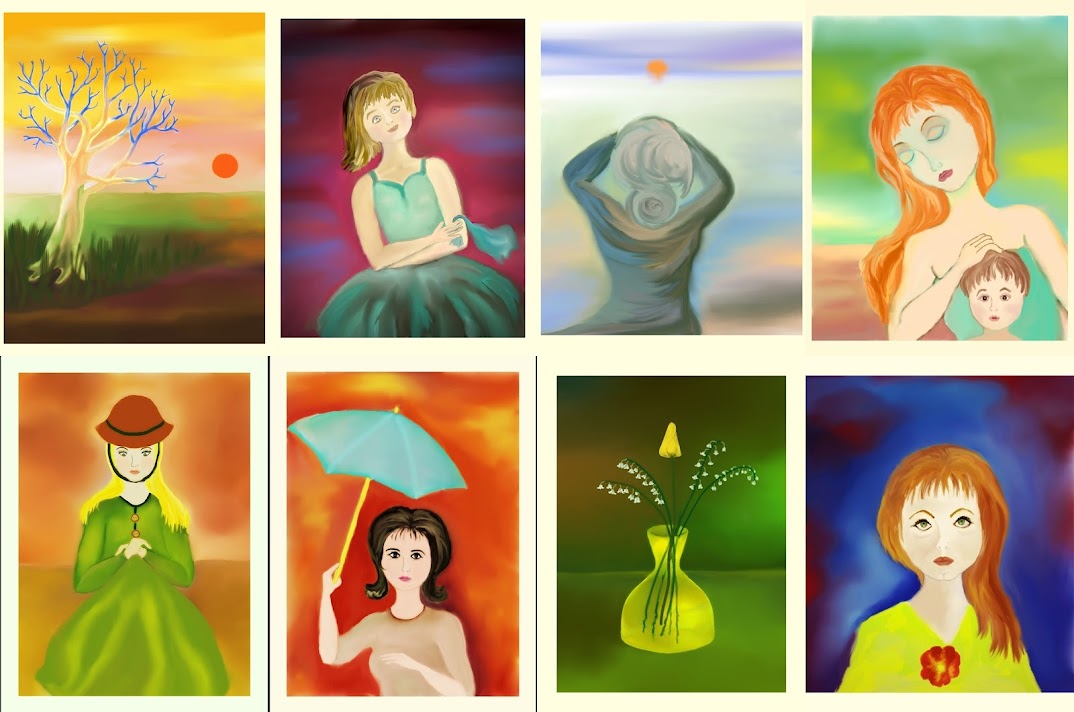
desenele mele cu mouse-ul - o parte din mine, le postez aici fiind complet izolată de peste 38 de ani, probabil le voi șterge
Se afișează postările cu eticheta psihologie. Afișați toate postările
Se afișează postările cu eticheta psihologie. Afișați toate postările
sâmbătă, 7 noiembrie 2020

vineri, 6 noiembrie 2020
Ab)errare humanum est
Revin asupra unei greșeli de acum trei ani – anume să notez una din rarele mele aberații ale gândirii, pesemne singura povestită în scris, dar nu cu lux de amănunte. Acum mă voi strădui să scriu cum am ajuns atunci să neg în joacă modelul binecunoscut al sistemului solar.
Cazurile de marginalizare a gândirii sunt frecvente și pot avea cauze de la simpla oboseală și plictis la mai severe forme de afectare a sistemului nervos, diverse boli somatice sau afectare a calității vieții prin orice alt fel de mijloc. Fie și numai singurătatea sau tristețea acute, care pot fi alungate prin evaziunea gândirii către abstractizări mai puțin cunoscute sau recunoscute de marea masă a populației.
Este vorba de un model cosmologic – amintesc aici și celelalte posibile modele asupra genezei cosmosului, în special binecunoscutul model elaborat de gândirea civilizației babiloniene, cea mai străveche civilizație care oferă o viziune logică, integrală asupra planetelor și pământului – în care circumferința cerului și pământului este o sferă, dincolo de care nu există nimic cunoscut omului. Pămîntul, așadar este imens și stelele, soarele și luna au dimensiuni reduse și se află la distanță mică de Pământ. Eu am creat modelul meu fără a cunoaște acest model babilonian, într-o joacă a imaginației. Cosmologia a mai fost, peste mulți ani, sursa unor meditații filozofice fructuoase la grecii din antichitate, dar și în gândirea europeană a secolelor ce au urmat, deoarece filozofia a fost desemnată, la începuturile sale, să creeze o viziune comprehensivă asupra lumii naturale și culturale și a relației dintre om și cele două dimensiuni ale realității. Așadar, mă gândeam eu, nimic mai natural decât meditația naiv-filozofică a mea asupra cerului și pământului, fără să mă inspir din wikipedia sau de pe siteuri de astronomie decât în ce privește câteva exemplificări.
În primul rând, este necesară o specificare metodologică. Un model teoretic poate să fie bazat pe raționamente, dar acestea e necesar să fie și valide și bine întemeiate. Între anumite limite, modelul poate fi pur teoretic, simbolic, fundamentat de judecăți considerate a priori în filozofia kantiană, pierdut în abstractizări fără contact cu lumea reală. Nu am intenționat așa ceva, a fost o aberare pe care o voi explica și delimita precis, o eboșă, o imagine neclară, evident falsă și pe care dvs. sau alții o pot eventual invalida. Eu nu pot, deoarece nu am suficiente cunoștințe și date certe de observare a cerului și nici nu posed instrumentele necesare și cunoștinețele și metodele matematice – și vederea geometrică în spațiu – necesare. Este vorba de o viziune experențial – naivă care a izovorât în mintea mea după vreo 10-20 de minute de contemplare a lunii pline la fereastră. Ședeam așa pe scaun în bucătărie și deodată mă gândesc: … dar dacă e invers?!
În general, exerciții de imaginație cu schimbarea punctului de vedere, a perspectivei sau cadrului de referință utilizat se pot face în vederea cântăririi mai bune a unei decizii, în ședințe de brainstorming sau în cadrul ședințelor de psihoterapie etc. Gândirea evoluează apoi complet normal, prin abstractizări și generalizări, în cazul meu cu prea puține date certe de observație. De altfel, am descoperit pe internet de exemplu că în lume există numeroși oameni pasionați de anumite fantezii științifice și mai ales paraștiințifice, cum ar fi ideea că pământul e plat (!) pe care ei o susțin teoretic și cu exemple, dar nu am găsit deocamdată ceva similar cu modelul meu cosmologic.
Simplu – și vă las pe dvs. să completați restul. Eu văd Pământul ca fiind rotund, aproape sferic, adică geoid, cum se consideră din punct de vedere științific, fiindcă acestea sunt date clare, măsurare prin metode geodezice și dovedite de multe ori prin călătorii de circumnavigație. Curbura Pămîntului e aceeași. Numai că văd lumea omului și toate corpurile celeste înăuntrul acestei sfere. Atmosfera, lărgită la maximum, cu diferite straturi (re)descoperite este numai cu ceva mai mare decât distanța de la București la Satu Mare. Nu e niciun pericol de sufocare, lumea poate fi vie și frumoasă înăuntrul acestei sfere uriașe în care trăim. Ba chiar ar fi o imagine mai frumoasă a casei noastre comune – cel puțin în ochii mei, voi mai reveni asupra aceastui lucru. În cazul în care nu îl pot respinge cu date certe și raționamente valide, unii pot considera acest model al meu urât și greu de acceptat – aceasta se datorează mai mult obișnuințelor și sentimentelor și atitudinilor formate de-a lungul vieții. Imaginați-vă că, brusc, ar trebui să spuneți ”coasă” în loc de casă – ați avea un sentiment de corp străin, v-ați simți intruși în propria dvs. ”coasă”, chiar dacă numai o singură literă nouă ar apărea.
Acest model îmi aduce totuși aminte de așa numita sferă celestă, realizată fizic prin globuri celeste, care a fost folosită ca model abstract în astronomie și în navigație. Pământul e localizat în interiorul sferei, în centru, iar la periferie, egal depărtate de Pământ, se află diversele constelații. Acest model geocentric a fost cunoscut mai ales sub numele de modelul ptolemaic, fiind dezvoltat și de Aristotel, care a preluat o parte din ideile lui Eudoxus din Cnidus. Soarele, Luna și stelele par a se roti în jurul Pământului în cursul unei zile.
Spuneam despre problema validității unei metodologii pentru argumentarea modelului heliocentric al lui Copernicus, dezvoltat de astronomie modernă. În general omului simplu, precum și mie, nu îi e accesibilă vreun fel de dovadă certă și măsurabilă sau repetabilă pentru dovedirea modelului oficial. Acesta este de fapt o dogmă dintre multele dogme științifice ale epocii noastre, și este în general acceptată de toți, în afara persoanelor cu fantezie și încăpățânarea de genul vițelului proverbial. Însă, în cursul consolidării și transmiterii dogmei, apar și lucruri bizare, fiind vorba de fapt de un sistem natural care include fapte și date gigantice și amețitoare, în care omul de rând nu poate fi stăpân și se apleacă într-un gest de umilință sau încearcă să evadeze din corsetul dogmei prin construcția unor teorii alternative, personale, care să fie în acord cu puținele date certe care apar de-a lungul educației unui om. Din punct de vedere pedagogic, omul tânăr învață și memorează ușor pe de rost fapte și cifre și legi științifice, dar numai la maturitate cercul se închide și individul, după ce a uitat parțial ceea ce învățase, începe să găsească sau să caute sensul, înțelesul lucrurilor, calea de legătură dintre fapte, odinioară acceptate așa cum spuneau profesorii că erau. De exemplu, un fapt care vine în contradicție cu bunul simț este explicația oficială a faptului că vedem mereu aceeași față a lunii – se consideră că aceasta se datorează faptului că perioada de revoluție a Lunii în jurul Pământului este aproape identică cu perioada de rotație a Lunii în jurul axului propriu.
Să cugetăm puțin asupra acestei afirmații, luând în considerare și faptul că nu s-au nimerit a fi exact egale. Această explicație pare a fi scoasă din buzunarul unui scamator – cum e posibil, întreabă bunul simț, ca tocmai nouă să ni se întâmple așa ceva, așa o coincidență care sfidează legile naturii, atât timp cât nu se explică de ce e așa? Atât timp cât nu e precizat că la fel se întâmplă cu sateliții naturali ai altor planete. Oricum, această descoperire teoretică despre spectacolul oferit de lună nu este convingător prezentată cititorului lipsit de educație astronomică. Datorită acestei afirmații am privit eu luna cu mirare mai mult timp în seara despre care am vorbit. Punctul meu de vedere este cel al uni sceptic, adică al unui om rațional și precaut, care uneori preferă să abroge o parte din dogmele oficiale. Oare câte certitiudini poate avea un om simplu din acest punct de vedere? Probabil niciuna sau doar câteva, prin urmare rolul dogmei de stabilizare a spațiilor culturale comune rămâne unul pozitiv, haosul și eratismul părând a nu fi o alternativă viabilă. Poate aceste considerente duc uneori la lupta dintre dogmă sau paradigma veche și noua paradigmă sau model de explicare a realității. Duc la acceptarea dificilă a unei noi paradigme, la fel de posibilă ca aceea dinaintea ei. Dar să privim încă o dată afirmația privind explicarea faptului că Luna ne arată doar o față, mereu aceeași. Se vorbește despre mișcarea de revoluție și mișcarea de rotație, dar orice mișcare în general este relativă și reprezintă modificarea poziției unui obiect mobil – orice formă ar avea – față de un punct de referință. În momentul în care astronomii, inspirați de muza Urania de exemplu, deci parțial inconștienți, parțial doar niște artiști și interpreți, vorbesc despre mișcarea corpurilor celeste ca și cum mentalul lor ar fi prins în niște pioneze fixe și ar fi cadrul natural de referință, același care spune că anotimpurile se explică prin faptul că axa Pământului e înclinată. Dar față de ce plan sau față de ce axă e înclinată axa Pămîntului? Față de o verticală ipotetică, teoretică, care ne obligă să privim realitatea ca fiind tributară planurilor noastre carteziene, de obicei paralelă cu poziția bipedă a omului și cu alinierea creierului său în câmpul magnetic terestru. Veți spune că nu e așa, că Soarele e punctul fix și cadrul în funcție de care definim mișcarea corpurilor celeste.
Dar Soarele se deplasează pe o orbită în jurul centrului Căii lactee și către Apexul solar, un punct situat în apropierea stelei Vega – dar apar alte probleme de delimitare – anume că nu e clar dacă punctul spre care se îndreaptă soarele e fix (fix în raport cu ce?) și dacă considerăm în final doar centrul galaxiei stabil, fix, atunci înseamnă că există același impediment, fiindcă presupunem că există și alte galaxii sau părți ale Universului (fixe sau mobile), deci tot proiecția propriului eu psihic devine punctul de referință fix, respectiv coordonatele viziunii noastre. Și noi considerăm fix un punct din sistemul în interiorul căruia ne aflăm noi înșine.
Un alt aspect important este instrumentarul folosit. În realitate, noi observăm lumea din jur printr-un complex sistem optic – atât aparatul optic al globilor oculari, cât și sistemul de medii diferite de refracție a luminii din atmosferă. Încă și mai complicat devine totul în momentul în care privim lumea printr-o lunetă sau un telescop. Se adaugă și limita fiziologică de observare a obiectelor îndepărtate prin ochiul uman sănătos. În realitate, fără cunoștințe solide de fizică, e greu să aproximăm cum ar arăta totul dacă nu am privi printr-un sistem complicat de lentile și medii de refracție a luminii. Pentru un sceptic, fără mijloace de observare repetată și calcul al parametrilor eclipselor sau altor fenomene și obiecte celeste, nu există certitudini și nu pot fi dovezi certe fotografiile transmise de stații spațiale internaționale. Deoarece am pus problema întemeierii cunoașterii noastre astronomice, ar fi de menționat aici și studiul teoriilor conspirației în contextul epistemologiei – fiindcă unii oameni au tendința să creadă că există un monopol asupra unor taine ale Universului și vieții care ocultează posibilitatea de cunoaștere a omului obișnuit.
Problema care se pune este dacă putem să concepem toate corpurile celeste în interiorul unei sfere mari, anume Pământul, și cum am putea explica ciclurile zi-noapte, fazele lunii, anotimpurile, eclipsele etc. Acest lucru mi-e mie imposibil, dar nu știu sigur dacă e cu adevărat imposibil. Am reacționat în fața minunii lumii stelare ca un sălbatic crescut pe o insulă, departe de civilizație. Privind luna mai mult timp, am observat petele ei care seamănă cu continentele noastre pământene pe planiglob. Deoarece e ușor vizibil că luna e invers în emisfera sudică, adică acolo apare pe dreapta ceea ce la noi e pe stânga, mi-am amintit de viziunea amuzantă în vechime a celor care gândeau că dacă noi stăm drepți în picioare, atunci cei de la polul opus înseamnă că umblă cu capul în jos. Atunci m-am gândit că e posibil să fie invers – adică luna să fie înăuntrul Pământului și, fiind situată între două emisfere opuse, apare cu imagini opuse în cele două. Luna apare la fel și ziua – luna diurnă, pe care soarele nu o mai ascunde prin lumina sa, bineînțeles atunci când soarele e mai blând. Am încercat să îmi imaginez luna – eventual ca un ax cilindric – din care vedem anumite o parte mai mică sau mai mare în funcție de stadiul în care se găsește luna în ciclul ei lunar. Sau altfel de obiect. Deoarece nu am aptitudini matematice, nu pot spune cu certitudine că această teorie e adevărată, deci trebuie să mă înclin în fața teoriei oficiale. Dar nu pot nici să o infirm. Interesant e obiectul acesta – Luna, care uneori pare să aibă raze proprii, cum s-a întâmplat în cazul fenomenului ”luna albastră trifecta”, în ciuda faptului că se spune că e luminată de Soare. Eclipsele ar putea fi explicate prin interpunerea altor corpuri celeste. Fantasma cea mai neobișnuită pe care am imaginat-o a fost prezența unei bolți cerești, în care mulți antici credeau, a unui firmament în care stau stelele prinse. Sau că ar fi vorba de prezența unei substanțe aprinse, arzânde, în interiorul acestei bolți cerești, substanță care are mai multe ferestruici – stele, lună, soare, fiecare cu proprietățile ei – și care se învârte într-un mod specific. Astfel, putem imagina mecanismul sau organismul acesta ca având o lună care se deschide numai parțial, fiindcă ceea ce o acoperă se mișcă într-un continuu du-te vino. Acea substanță pare să aibă efect asupra apelor terestre – mareele – dar ele nu sunt produse de soare, așadar luna ar trebui să aibă o proprietate anume, eventual o substanță care atrage apa ca într-un fenomen de capilaritate și care nu acoperă soarele, care are ardere și strălucire puternice. Dar ce face soarele să lumineze și de ce? Aici mi-a fost ușor să îmi explic în modul acesta primitiv. Cunoaștem cu toții legea lui Faraday, nume care înseamnă ”la o zi depărtare”, lege verificată experimental și știm că există un câmp magnetic terestru. Soarele s-ar învârti în acest model fantasmagoric repede în jurul ecuatorului într-o zi și poate avea de-a lungul anului o traiectorie în spirală în mai multe planuri. Conform legii lui Faraday, un curent electric circular creează un câmp magnetic al cărui sens poate fi determinat cu ajutorul legii mâinii drepte sau stângi. Câmpul magnetic sau electric pot fi variabile, ele se generează și se determină unul pe celălalt.
Dar ce poate fi soarele? Ce este lumina lui? Cunoaștem cu toții metafore diverse, precum și teme literare, cum ar fi drama ”Apus de soare”, motive mistice sau religioase, din numeroasele mituri sau religii solare. Adesea povestea se țese prin legătura dintre om și fenomenul astronomic. Este cunoscut faptul că misticii, care căutau sau resimțeau o participare a sinelui la fenomene cosmice sau căutau o participare a lor la diverse forme de manifestare a divinității, se apropiau de lumina solară și decopereau semne luminoase legate de viața lor personală. La mine acasă am avut în copilărie o copie după un tablou de Heinrich Hofmann – agonie în Grădina Ghethsemane, în care Isus se află în meditație și este înconjurat de lumina lunii.
Din motive neînțelese, eu m-am simțit mereu mai bine când era senin și mai rău pe vreme înnorată. La fel, m-am simțit mai puțin bine în nopțile cu lună plină. Este cunoscut și faptul că unii oameni sunt meteosensibili și influențați mai mult decât alții de fenomene celeste.
Se vorbește despre bioelectricitate și biomagnetism. Mai pe scurt despre bioelectromagnetism. Căci, după cum Tatăl Nostru spune,”precum în cer așa și pe Pământ”. Pământul este mama sau muma străveche, matcă a vieții și bioregeneratoare – spirite sau zei cu caracter teluric au fost numeroase în diverse religii. Propriu-zis nu există doar contrastul dintre Nord și Sud între cele două emisfere. Există și diferențe de populare a regiunilor aferente, diferențe în biomasă și procent al uscatului. O mare diferență între numărul de locuitori. Relatez aici o experiență proprie din copilăria mică – la o vârstă la care gândirea magică e normală conform lucrărilor științifice de psihologie a vârstei, mi s-a întâmplat și mie, pentru scurt timp să visez că soarele și norii ascultă de voința mea și că pot să îi mișc acolo unde vreau eu. Aceste forme de gândire magică se spune că sunt caracteristice primitivului, care reprezintă stadiul infantil al civilizației omenești. Este un lucru clar că omul are proprietăți bioelectromagnetice și că este influențat de câmpuri electrice și magnetice din exterior. E de la sine înțeles că este influențat de câmpurile corespunzând sistemului planetar, și, în cazul acestui model imaginar, omul pare evident influențat de diverse axe interioare ale sferei terestre, de-a lungul cărora apar anumiți vectori puternici, rezultanți ai câmpurilor electrice și magnetice. Atunci, în această comunitate de circa 7 miliarde de oameni, în acest ev al globalizării care face transparentă viața fiecărei regiuni, dar oricum în orice moment din istorie, oare nu e legitim să presupunem că e adevărată și relația inversă – adică faptul că și omul influențează stihiile naturii – fiindcă o relație unilaterală e ilogică. Chiar dacă nu ținem cont de raporturile misticilor, ne amintim desigur cu toții diverse forme de expresie artistică care exprimă acest adevăr – mai vizibil în pictură și în poezie – și putem nota în grabă câteva fapte înregistrate în istorie, cum ar fi cutremurele care au însoțit răstignirea lui Hristos, norii grei și negri din zilele în care aveau loc bătălii sângeroase. Uneori atributul de solar sau strălucitor aparține unor personalități care se remarcă prin ceva special – un talent, o poveste de viață ciudată, inteligență remarcabilă și altele. Mie mi s-a întâmplat de mai multe ori să ascult muzică clasică în timpul unor înnorări grele și îndelungate, deoarece fenomenul meteorologic îmi producea o puternică sau neplăcută migrenă presională, fiind singură în cameră. În urma ascultării muzicii se făcea lumină, ca și cum detensionarea ariilor mele corticale producea sau favoriza înseninarea cerului. Acest lucru e posibil dintr-o cauză evidentă – nu e vorba de un om singur care face soare pe cer, ci de un om inteligent viu și cu simțuri normale, deci legat prin ele de restul omenirii, ba poate chiar și prin al șaselea sau șaptelea simț, prin care eu înțeleg memoria acumulată de-a lungul vieții și imaginația. De fapt, norii părăseau zona în care mă aflam când mintea mea era doar legată de muzică și momentul prezent, fără niciun fel de gând sau amintire, fără imaginație. Așadar, soarele și lumina suntem noi și creierul omului organizează și administrează informația care e mereu legată indirect de tot restul omenirii, după cum bine precizează și psihologia și științele comunicării. Într-o dimineață mi s-a întâmplat un lucru care m-a speriat: soarele era sus pe cer de mai multe sulițe și era extrem de palid, ca un ceai foarte slab. Mi-era din nou rău și m-am speriat groaznic, încât am țipat singură în casă. La câteva secunde după țipătul meu soarele – așa cum apărea la fereastra casei mele – s-a aprins foarte puternic. Repet, influența mea și a celor din jurul meu asupra atmosferei terestre, deci și a fenomenelor meteo este datorată conexiunii mele cu restul lumii vii și omenirii.
Urmează continuarea mâine
Cazurile de marginalizare a gândirii sunt frecvente și pot avea cauze de la simpla oboseală și plictis la mai severe forme de afectare a sistemului nervos, diverse boli somatice sau afectare a calității vieții prin orice alt fel de mijloc. Fie și numai singurătatea sau tristețea acute, care pot fi alungate prin evaziunea gândirii către abstractizări mai puțin cunoscute sau recunoscute de marea masă a populației.
Este vorba de un model cosmologic – amintesc aici și celelalte posibile modele asupra genezei cosmosului, în special binecunoscutul model elaborat de gândirea civilizației babiloniene, cea mai străveche civilizație care oferă o viziune logică, integrală asupra planetelor și pământului – în care circumferința cerului și pământului este o sferă, dincolo de care nu există nimic cunoscut omului. Pămîntul, așadar este imens și stelele, soarele și luna au dimensiuni reduse și se află la distanță mică de Pământ. Eu am creat modelul meu fără a cunoaște acest model babilonian, într-o joacă a imaginației. Cosmologia a mai fost, peste mulți ani, sursa unor meditații filozofice fructuoase la grecii din antichitate, dar și în gândirea europeană a secolelor ce au urmat, deoarece filozofia a fost desemnată, la începuturile sale, să creeze o viziune comprehensivă asupra lumii naturale și culturale și a relației dintre om și cele două dimensiuni ale realității. Așadar, mă gândeam eu, nimic mai natural decât meditația naiv-filozofică a mea asupra cerului și pământului, fără să mă inspir din wikipedia sau de pe siteuri de astronomie decât în ce privește câteva exemplificări.
În primul rând, este necesară o specificare metodologică. Un model teoretic poate să fie bazat pe raționamente, dar acestea e necesar să fie și valide și bine întemeiate. Între anumite limite, modelul poate fi pur teoretic, simbolic, fundamentat de judecăți considerate a priori în filozofia kantiană, pierdut în abstractizări fără contact cu lumea reală. Nu am intenționat așa ceva, a fost o aberare pe care o voi explica și delimita precis, o eboșă, o imagine neclară, evident falsă și pe care dvs. sau alții o pot eventual invalida. Eu nu pot, deoarece nu am suficiente cunoștințe și date certe de observare a cerului și nici nu posed instrumentele necesare și cunoștinețele și metodele matematice – și vederea geometrică în spațiu – necesare. Este vorba de o viziune experențial – naivă care a izovorât în mintea mea după vreo 10-20 de minute de contemplare a lunii pline la fereastră. Ședeam așa pe scaun în bucătărie și deodată mă gândesc: … dar dacă e invers?!
În general, exerciții de imaginație cu schimbarea punctului de vedere, a perspectivei sau cadrului de referință utilizat se pot face în vederea cântăririi mai bune a unei decizii, în ședințe de brainstorming sau în cadrul ședințelor de psihoterapie etc. Gândirea evoluează apoi complet normal, prin abstractizări și generalizări, în cazul meu cu prea puține date certe de observație. De altfel, am descoperit pe internet de exemplu că în lume există numeroși oameni pasionați de anumite fantezii științifice și mai ales paraștiințifice, cum ar fi ideea că pământul e plat (!) pe care ei o susțin teoretic și cu exemple, dar nu am găsit deocamdată ceva similar cu modelul meu cosmologic.
Simplu – și vă las pe dvs. să completați restul. Eu văd Pământul ca fiind rotund, aproape sferic, adică geoid, cum se consideră din punct de vedere științific, fiindcă acestea sunt date clare, măsurare prin metode geodezice și dovedite de multe ori prin călătorii de circumnavigație. Curbura Pămîntului e aceeași. Numai că văd lumea omului și toate corpurile celeste înăuntrul acestei sfere. Atmosfera, lărgită la maximum, cu diferite straturi (re)descoperite este numai cu ceva mai mare decât distanța de la București la Satu Mare. Nu e niciun pericol de sufocare, lumea poate fi vie și frumoasă înăuntrul acestei sfere uriașe în care trăim. Ba chiar ar fi o imagine mai frumoasă a casei noastre comune – cel puțin în ochii mei, voi mai reveni asupra aceastui lucru. În cazul în care nu îl pot respinge cu date certe și raționamente valide, unii pot considera acest model al meu urât și greu de acceptat – aceasta se datorează mai mult obișnuințelor și sentimentelor și atitudinilor formate de-a lungul vieții. Imaginați-vă că, brusc, ar trebui să spuneți ”coasă” în loc de casă – ați avea un sentiment de corp străin, v-ați simți intruși în propria dvs. ”coasă”, chiar dacă numai o singură literă nouă ar apărea.
Acest model îmi aduce totuși aminte de așa numita sferă celestă, realizată fizic prin globuri celeste, care a fost folosită ca model abstract în astronomie și în navigație. Pământul e localizat în interiorul sferei, în centru, iar la periferie, egal depărtate de Pământ, se află diversele constelații. Acest model geocentric a fost cunoscut mai ales sub numele de modelul ptolemaic, fiind dezvoltat și de Aristotel, care a preluat o parte din ideile lui Eudoxus din Cnidus. Soarele, Luna și stelele par a se roti în jurul Pământului în cursul unei zile.
Spuneam despre problema validității unei metodologii pentru argumentarea modelului heliocentric al lui Copernicus, dezvoltat de astronomie modernă. În general omului simplu, precum și mie, nu îi e accesibilă vreun fel de dovadă certă și măsurabilă sau repetabilă pentru dovedirea modelului oficial. Acesta este de fapt o dogmă dintre multele dogme științifice ale epocii noastre, și este în general acceptată de toți, în afara persoanelor cu fantezie și încăpățânarea de genul vițelului proverbial. Însă, în cursul consolidării și transmiterii dogmei, apar și lucruri bizare, fiind vorba de fapt de un sistem natural care include fapte și date gigantice și amețitoare, în care omul de rând nu poate fi stăpân și se apleacă într-un gest de umilință sau încearcă să evadeze din corsetul dogmei prin construcția unor teorii alternative, personale, care să fie în acord cu puținele date certe care apar de-a lungul educației unui om. Din punct de vedere pedagogic, omul tânăr învață și memorează ușor pe de rost fapte și cifre și legi științifice, dar numai la maturitate cercul se închide și individul, după ce a uitat parțial ceea ce învățase, începe să găsească sau să caute sensul, înțelesul lucrurilor, calea de legătură dintre fapte, odinioară acceptate așa cum spuneau profesorii că erau. De exemplu, un fapt care vine în contradicție cu bunul simț este explicația oficială a faptului că vedem mereu aceeași față a lunii – se consideră că aceasta se datorează faptului că perioada de revoluție a Lunii în jurul Pământului este aproape identică cu perioada de rotație a Lunii în jurul axului propriu.
Să cugetăm puțin asupra acestei afirmații, luând în considerare și faptul că nu s-au nimerit a fi exact egale. Această explicație pare a fi scoasă din buzunarul unui scamator – cum e posibil, întreabă bunul simț, ca tocmai nouă să ni se întâmple așa ceva, așa o coincidență care sfidează legile naturii, atât timp cât nu se explică de ce e așa? Atât timp cât nu e precizat că la fel se întâmplă cu sateliții naturali ai altor planete. Oricum, această descoperire teoretică despre spectacolul oferit de lună nu este convingător prezentată cititorului lipsit de educație astronomică. Datorită acestei afirmații am privit eu luna cu mirare mai mult timp în seara despre care am vorbit. Punctul meu de vedere este cel al uni sceptic, adică al unui om rațional și precaut, care uneori preferă să abroge o parte din dogmele oficiale. Oare câte certitiudini poate avea un om simplu din acest punct de vedere? Probabil niciuna sau doar câteva, prin urmare rolul dogmei de stabilizare a spațiilor culturale comune rămâne unul pozitiv, haosul și eratismul părând a nu fi o alternativă viabilă. Poate aceste considerente duc uneori la lupta dintre dogmă sau paradigma veche și noua paradigmă sau model de explicare a realității. Duc la acceptarea dificilă a unei noi paradigme, la fel de posibilă ca aceea dinaintea ei. Dar să privim încă o dată afirmația privind explicarea faptului că Luna ne arată doar o față, mereu aceeași. Se vorbește despre mișcarea de revoluție și mișcarea de rotație, dar orice mișcare în general este relativă și reprezintă modificarea poziției unui obiect mobil – orice formă ar avea – față de un punct de referință. În momentul în care astronomii, inspirați de muza Urania de exemplu, deci parțial inconștienți, parțial doar niște artiști și interpreți, vorbesc despre mișcarea corpurilor celeste ca și cum mentalul lor ar fi prins în niște pioneze fixe și ar fi cadrul natural de referință, același care spune că anotimpurile se explică prin faptul că axa Pământului e înclinată. Dar față de ce plan sau față de ce axă e înclinată axa Pămîntului? Față de o verticală ipotetică, teoretică, care ne obligă să privim realitatea ca fiind tributară planurilor noastre carteziene, de obicei paralelă cu poziția bipedă a omului și cu alinierea creierului său în câmpul magnetic terestru. Veți spune că nu e așa, că Soarele e punctul fix și cadrul în funcție de care definim mișcarea corpurilor celeste.
Dar Soarele se deplasează pe o orbită în jurul centrului Căii lactee și către Apexul solar, un punct situat în apropierea stelei Vega – dar apar alte probleme de delimitare – anume că nu e clar dacă punctul spre care se îndreaptă soarele e fix (fix în raport cu ce?) și dacă considerăm în final doar centrul galaxiei stabil, fix, atunci înseamnă că există același impediment, fiindcă presupunem că există și alte galaxii sau părți ale Universului (fixe sau mobile), deci tot proiecția propriului eu psihic devine punctul de referință fix, respectiv coordonatele viziunii noastre. Și noi considerăm fix un punct din sistemul în interiorul căruia ne aflăm noi înșine.
Un alt aspect important este instrumentarul folosit. În realitate, noi observăm lumea din jur printr-un complex sistem optic – atât aparatul optic al globilor oculari, cât și sistemul de medii diferite de refracție a luminii din atmosferă. Încă și mai complicat devine totul în momentul în care privim lumea printr-o lunetă sau un telescop. Se adaugă și limita fiziologică de observare a obiectelor îndepărtate prin ochiul uman sănătos. În realitate, fără cunoștințe solide de fizică, e greu să aproximăm cum ar arăta totul dacă nu am privi printr-un sistem complicat de lentile și medii de refracție a luminii. Pentru un sceptic, fără mijloace de observare repetată și calcul al parametrilor eclipselor sau altor fenomene și obiecte celeste, nu există certitudini și nu pot fi dovezi certe fotografiile transmise de stații spațiale internaționale. Deoarece am pus problema întemeierii cunoașterii noastre astronomice, ar fi de menționat aici și studiul teoriilor conspirației în contextul epistemologiei – fiindcă unii oameni au tendința să creadă că există un monopol asupra unor taine ale Universului și vieții care ocultează posibilitatea de cunoaștere a omului obișnuit.
Problema care se pune este dacă putem să concepem toate corpurile celeste în interiorul unei sfere mari, anume Pământul, și cum am putea explica ciclurile zi-noapte, fazele lunii, anotimpurile, eclipsele etc. Acest lucru mi-e mie imposibil, dar nu știu sigur dacă e cu adevărat imposibil. Am reacționat în fața minunii lumii stelare ca un sălbatic crescut pe o insulă, departe de civilizație. Privind luna mai mult timp, am observat petele ei care seamănă cu continentele noastre pământene pe planiglob. Deoarece e ușor vizibil că luna e invers în emisfera sudică, adică acolo apare pe dreapta ceea ce la noi e pe stânga, mi-am amintit de viziunea amuzantă în vechime a celor care gândeau că dacă noi stăm drepți în picioare, atunci cei de la polul opus înseamnă că umblă cu capul în jos. Atunci m-am gândit că e posibil să fie invers – adică luna să fie înăuntrul Pământului și, fiind situată între două emisfere opuse, apare cu imagini opuse în cele două. Luna apare la fel și ziua – luna diurnă, pe care soarele nu o mai ascunde prin lumina sa, bineînțeles atunci când soarele e mai blând. Am încercat să îmi imaginez luna – eventual ca un ax cilindric – din care vedem anumite o parte mai mică sau mai mare în funcție de stadiul în care se găsește luna în ciclul ei lunar. Sau altfel de obiect. Deoarece nu am aptitudini matematice, nu pot spune cu certitudine că această teorie e adevărată, deci trebuie să mă înclin în fața teoriei oficiale. Dar nu pot nici să o infirm. Interesant e obiectul acesta – Luna, care uneori pare să aibă raze proprii, cum s-a întâmplat în cazul fenomenului ”luna albastră trifecta”, în ciuda faptului că se spune că e luminată de Soare. Eclipsele ar putea fi explicate prin interpunerea altor corpuri celeste. Fantasma cea mai neobișnuită pe care am imaginat-o a fost prezența unei bolți cerești, în care mulți antici credeau, a unui firmament în care stau stelele prinse. Sau că ar fi vorba de prezența unei substanțe aprinse, arzânde, în interiorul acestei bolți cerești, substanță care are mai multe ferestruici – stele, lună, soare, fiecare cu proprietățile ei – și care se învârte într-un mod specific. Astfel, putem imagina mecanismul sau organismul acesta ca având o lună care se deschide numai parțial, fiindcă ceea ce o acoperă se mișcă într-un continuu du-te vino. Acea substanță pare să aibă efect asupra apelor terestre – mareele – dar ele nu sunt produse de soare, așadar luna ar trebui să aibă o proprietate anume, eventual o substanță care atrage apa ca într-un fenomen de capilaritate și care nu acoperă soarele, care are ardere și strălucire puternice. Dar ce face soarele să lumineze și de ce? Aici mi-a fost ușor să îmi explic în modul acesta primitiv. Cunoaștem cu toții legea lui Faraday, nume care înseamnă ”la o zi depărtare”, lege verificată experimental și știm că există un câmp magnetic terestru. Soarele s-ar învârti în acest model fantasmagoric repede în jurul ecuatorului într-o zi și poate avea de-a lungul anului o traiectorie în spirală în mai multe planuri. Conform legii lui Faraday, un curent electric circular creează un câmp magnetic al cărui sens poate fi determinat cu ajutorul legii mâinii drepte sau stângi. Câmpul magnetic sau electric pot fi variabile, ele se generează și se determină unul pe celălalt.
Dar ce poate fi soarele? Ce este lumina lui? Cunoaștem cu toții metafore diverse, precum și teme literare, cum ar fi drama ”Apus de soare”, motive mistice sau religioase, din numeroasele mituri sau religii solare. Adesea povestea se țese prin legătura dintre om și fenomenul astronomic. Este cunoscut faptul că misticii, care căutau sau resimțeau o participare a sinelui la fenomene cosmice sau căutau o participare a lor la diverse forme de manifestare a divinității, se apropiau de lumina solară și decopereau semne luminoase legate de viața lor personală. La mine acasă am avut în copilărie o copie după un tablou de Heinrich Hofmann – agonie în Grădina Ghethsemane, în care Isus se află în meditație și este înconjurat de lumina lunii.
Din motive neînțelese, eu m-am simțit mereu mai bine când era senin și mai rău pe vreme înnorată. La fel, m-am simțit mai puțin bine în nopțile cu lună plină. Este cunoscut și faptul că unii oameni sunt meteosensibili și influențați mai mult decât alții de fenomene celeste.
Se vorbește despre bioelectricitate și biomagnetism. Mai pe scurt despre bioelectromagnetism. Căci, după cum Tatăl Nostru spune,”precum în cer așa și pe Pământ”. Pământul este mama sau muma străveche, matcă a vieții și bioregeneratoare – spirite sau zei cu caracter teluric au fost numeroase în diverse religii. Propriu-zis nu există doar contrastul dintre Nord și Sud între cele două emisfere. Există și diferențe de populare a regiunilor aferente, diferențe în biomasă și procent al uscatului. O mare diferență între numărul de locuitori. Relatez aici o experiență proprie din copilăria mică – la o vârstă la care gândirea magică e normală conform lucrărilor științifice de psihologie a vârstei, mi s-a întâmplat și mie, pentru scurt timp să visez că soarele și norii ascultă de voința mea și că pot să îi mișc acolo unde vreau eu. Aceste forme de gândire magică se spune că sunt caracteristice primitivului, care reprezintă stadiul infantil al civilizației omenești. Este un lucru clar că omul are proprietăți bioelectromagnetice și că este influențat de câmpuri electrice și magnetice din exterior. E de la sine înțeles că este influențat de câmpurile corespunzând sistemului planetar, și, în cazul acestui model imaginar, omul pare evident influențat de diverse axe interioare ale sferei terestre, de-a lungul cărora apar anumiți vectori puternici, rezultanți ai câmpurilor electrice și magnetice. Atunci, în această comunitate de circa 7 miliarde de oameni, în acest ev al globalizării care face transparentă viața fiecărei regiuni, dar oricum în orice moment din istorie, oare nu e legitim să presupunem că e adevărată și relația inversă – adică faptul că și omul influențează stihiile naturii – fiindcă o relație unilaterală e ilogică. Chiar dacă nu ținem cont de raporturile misticilor, ne amintim desigur cu toții diverse forme de expresie artistică care exprimă acest adevăr – mai vizibil în pictură și în poezie – și putem nota în grabă câteva fapte înregistrate în istorie, cum ar fi cutremurele care au însoțit răstignirea lui Hristos, norii grei și negri din zilele în care aveau loc bătălii sângeroase. Uneori atributul de solar sau strălucitor aparține unor personalități care se remarcă prin ceva special – un talent, o poveste de viață ciudată, inteligență remarcabilă și altele. Mie mi s-a întâmplat de mai multe ori să ascult muzică clasică în timpul unor înnorări grele și îndelungate, deoarece fenomenul meteorologic îmi producea o puternică sau neplăcută migrenă presională, fiind singură în cameră. În urma ascultării muzicii se făcea lumină, ca și cum detensionarea ariilor mele corticale producea sau favoriza înseninarea cerului. Acest lucru e posibil dintr-o cauză evidentă – nu e vorba de un om singur care face soare pe cer, ci de un om inteligent viu și cu simțuri normale, deci legat prin ele de restul omenirii, ba poate chiar și prin al șaselea sau șaptelea simț, prin care eu înțeleg memoria acumulată de-a lungul vieții și imaginația. De fapt, norii părăseau zona în care mă aflam când mintea mea era doar legată de muzică și momentul prezent, fără niciun fel de gând sau amintire, fără imaginație. Așadar, soarele și lumina suntem noi și creierul omului organizează și administrează informația care e mereu legată indirect de tot restul omenirii, după cum bine precizează și psihologia și științele comunicării. Într-o dimineață mi s-a întâmplat un lucru care m-a speriat: soarele era sus pe cer de mai multe sulițe și era extrem de palid, ca un ceai foarte slab. Mi-era din nou rău și m-am speriat groaznic, încât am țipat singură în casă. La câteva secunde după țipătul meu soarele – așa cum apărea la fereastra casei mele – s-a aprins foarte puternic. Repet, influența mea și a celor din jurul meu asupra atmosferei terestre, deci și a fenomenelor meteo este datorată conexiunii mele cu restul lumii vii și omenirii.
Urmează continuarea mâine
miercuri, 16 septembrie 2020
Curs pe Edx partea 26, ... 29
26.What has been helpful in your personal life at times of psychological distress? As you reflect on “counseling at the soul level” are there particular experiences that you recognize in your work? What inspires you to work at a soul level?
Having lived my life somehow at the mercy of others or being excluded, rejected, I will answer both questions, but mostly the first, by imagining that I would be a counselor. Only imagining that I am my own counselor, not pretending in the hard sense of the word. Yet I never wanted to be a counselor, as I said earlier, my calling was to read or write philosophical meanings.
I give again one example of a well-known song lyrics, while knowing that there many others with connected meanings: And if you sing this melody/You'll be pretending just like me/The world is mine, it can be yours, my friend/So why don't you pretend? In times of psychological distress I used to clarify the situation further, I was reluctant to the attitude of pretending, just feeling that the truth is my way or the most comforting and healthy and free way to be. I am aware that my truths cannot solve anyone else's problems, yet I think that they can find a truth of their own that can bring them into the realms of peace and happiness, without causing more distress. It is always said that "the truth will ouch", but it is also said that "only the truth can set you free". The gradual development of the self can bring into light deeper or more meaningful layers of truth, thus the client is not crushed by the limits of different partial screenplays of the reality. I don't believe that the truth is hurtful (if it is the right truth that one can find), because there are many partial answers to one's questions up until "the ultimate meaning in human existence", a thing which rarely needs to be unraveled in order to obtain well-being. Sometimes, it can be so. It is about the client's subjective apprehension of that meaning. What can be much hurtful than the unwanted truth is the doubt that threatens one's psychological foundation. It has been the same with me, especially because of psychiatric treatment when no one talked with me, and thus haunting questions appeared, partly because I was too young, and it was also because of almost complete isolation for many years.
Paraphrasing a third Romanian poet who spoke about a poet's life, I can say that "the client, just like a soldier, doesn't have a personal life." This is a bitter truth and I believe that an empathetic attitude and a person-centered therapy can be of some help maybe, if there is room enough in the client's soul to endure this role-play situation, to accept it with unconditional love and respect, though he does not have a personal life.
I will choose a few key-words about existential givens that helped me at my soul-level through the hardest part of my existence. Peak experiences, rituals, archetypes. The tree of life for example, as a religious and mythical symbol. Sacralized geography - where the deeper layers of connectedness with the greater Self comes into life. When I think about my inner-felt sense I think about water. A fresh and limpid and cold, crystal clear source of water, like the one that was always there in the village of my grandparents. Uphill there were the church and the graveyard. Downhill this wondrous water, which is linked with religious rituals or spiritual observances all over the world. Religiosity does not necessarily mean religion, but an attitude in front of sacredness, moments of joy and love, and understanding a deeper meaning.
I remember from recent years the fact that I discovered on the internet the way that some churches were founded upon other churches' remains and the way religions were continuing through different ages, either by raising above old sacred things, taking their place, or by being encompassed within the greater whole - as it was the case with the Roman Empire, who was said to be borrowing and readapting different deities from the conquered territories. Anyway, the new church is built in the same place where another one existed, and the old one stays at the feet of the newcomer. This approach to the history of religions is quite similar to the integrative approach in psychotherapy, but nonetheless one needs a strong foundation in order to integrate. I think that this foundation is created by acknowledging the best outcomes in any kind of therapy. In the middle, it is a tender and creative core, and then new layers are added, just like civilizations stem from some spiritual ground - I mean fertile, procreator, etc. - and then they link all the external facts with that center, as if it were an onion bulb growing bigger - one of my metaphors. By telling this I acknowledge that I found solace in reading and meditating on different core issues of my life and trying to form my own opinion about cultural aspects of human civilizations. I was alone, but I was in love with people and life itself and then I discovered the healing power of music. I know a recent story about a monk who lives alone in one monastery somewhere not too far from Europe. Then I was happy to find how much the system of languages is influential in our body and spirit and I found good insights - e.g. yesterday I found that the origin of the name of the Arch-angel Raphael means "God has healed" Even if this meaning will change, it is certain that the good core, the principle of it will stay the same, unchangeable, just like Plato's Ideas or Forms.
Besides all these, a very important healing power is the power of silence - for some people at least. This reminds us how, through Medieval times, some convents had the vow of silence, and it s known that in those times monasteries or convents were defending and passing the spiritual torch to future generations.
27. What touched you particularly strongly in the case-study “Ingrid” or in the case-study “Iris”?
What touched you particularly strongly in the case-study “Ingrid” or in the case-study “Iris”?
The case study Iris seems too elusive to me. I had been through existential trauma continuously my whole life and it is sometimes hard for me to fully understand why are successful people, with money to spend, with children and jobs and numerous relationships coming into therapy. Of course I am not drawing the wrong conclusions, and I can understand that for some people tiny difficulties can be harmful and deserving attention form a professional care-giver. The case of Ingrid is a little closer to my own life situation, thus I can relate to it more profoundly. Speaking also about myself I dare to say that I recently read in this course about healthy patterns of interacting with the social environment, such as volunteering for helping, working, doing something. I have been through this - and I felt the need to be a volunteer anywhere if possible, but I couldn't find anything and I was always rejected when I pledged for being accepted. By the way - the word "volunteer" is similar to the name of the city where I am living now. I am simply isolated, with no perspective to meet someone, at least at a very superficial level of relationship, because that would have been so good to me - and I know that I don't harm others, they simply did not give me any chance. Just like Iris, I wrote a journal about my daily misfortunes and I also wrote the entire story of my life and published them on the net. I have little more to add, and to correct all the old entries on my blog, in order to send the link wherever I can in my country or in other places, hoping to be eventually accepted at least a little for what I am and for my humble abilities, not because I was abused my whole life. I had to write everything about myself because I want to be alive, because of a few life-threatening circumstances and wrong or violent conduct from the medical staff, especially from different medical specialties, not from the part of psychiatrists, who were only keeping me inside the hospital or letting me out, rarely talking with me a few words. Only 7 years ago I started to write the story of my life in harsh conditions and with some "voices" in my head always saying that no one can believe the truth about me.
Compared with Iris, I was never dissociated, I never felt real danger to my soul, I always lived my life to its fullest, especially because I was treated with violence and indifference. As a reaction, being totally alone, I said to myself that the best philosophical standpoint is to be contented and grateful at the end of each day that I did at least the best I could, given the internal and external conditions of my being. I was always authentic and fully expressed, from head to toes, but if I were to be accepted, I would have certainly been a little less warm towards others and starting to conceal some parts of me. I would have never talked about my past sufferings or the way I was abused. That's how I behaved when I was in social superficial encounters, in school-time years or when I was a teacher myself for 2 years, I never shouted out the truth about me - only mere hints about it at times or when I was asked somehow. Now I can relate only to the little interpersonal experience that was left to me - like my mother, the only one in my life, or meeting a few street vendors, beggars, homeless people, people taking a walk in the park or virtual connections on the internet - these last relationships couldn't be satisfactory, because all of them refused to video-chat with me or to meet with me somewhere, as they always meet (the internet poets), or to talk a little with me on the phone. Thus I am alone since 1984, but I know that I was entirely able to relate with others normally and well. Only after 30 years of isolation (now it has been 36) one can perceive this as a life-threatening condition, having only books and internet free courses (for which I am really grateful) as relationships.
Ingrid's case resembles mine a little. Amid other things, she was sexually harassed (sexual advances) by her psychiatrists, and I was this kind of victim too, in relationship with a teacher. She was the object of physical and psychological violence a part of her life, just like me. What is different is that she was suffering partly because of her past, while all my concerns and real pain were about present and future. Maybe because I was very poor since childhood, I developed a kind of over-realistic attitude. But, in the name of the truth I say that I was something good and not a whining pig, sensing that it is sacrificed. I was and would have been always gentle and kind and my entire life I put the good above evil and my need to be altruistic is one of my central parts - I always was careful about the feelings and sufferance of others. Thank you form deep within for letting me write these monologues here, they are like a distant relationship and I am truly grateful and I will stop here my pledge for human rights. My greatest joys when I was a child were the moments when I could help others at least a little or to make gifts, etc. Please accept my apologies if the truth about my life made you feel uncomfortable.
28. More of a surprise was the exercise about biotipe. It is understood that people can usually imagine themselves as vegetable beings, because this suits better the guiding and the requirements of the exercise and the relaxed, yet focused, consciousness. There are maybe other factors - like the feelings of loneliness of the clients or being rooted - children may choose for example, I don't know, mammals or birds. I chose a tree and then a bird.
What was special to me in that exercise is that it made me realize that I need to now more about biology as a whole, because otherwise my knowledge about biological kingdoms refers to old and shattered memories from primary school of from high school. Or it is linked with some kind of mystical abandonment in and identification with the whole of nature, which brings again the vegetable beings in relation to the human afterlife, as it is customary.
And about feeling at home, I realized again how big do seem houses and some objects within them and how little are they after years for the grownups. Another fact that I was not entirely aware until now is the effect upon one's unconscious or even collective unconscious of the surface one's country comprises. When I was a child both time and space were bigger, my life was fresh and new. Now a distance to some 200 km away seems a short one and my country seems a little too small to my eyes now. Thus I realized how different may be the sense of distance and time in countries even smaller than mine. And the subsequent effect on the unconscious. Apart from these two factors analysis, (age of the subject and surface area of his country) I may introduce another one - the density of population. Like this the picture will maybe reveal different experiences of space and time around the world. My hypothesis is that the human factor stays as a replacement for space and the perception of space is enriched with the characteristic of belonging to some place, a home, and this might affect the whole social psychology in different communities. When homes are scattered, one feels more home-intimacy, because of the limits or boundaries.
29. I have been through this course day after day and it took me 19 days as it is written -- I have only a few articles unread and maybe I will come back to them in order to read them. My perception of this time was that it was a shorter period, which is a good thing, because I felt busier all the time. In this period of my life words and wordplay are a continuum, a flow, like it was this experience described earlier in this course. Sometimes it is something joyful to discover a good and meaningful wordy connection. It was a course about existential well being. But is more difficult to exist if we think about being objective and spectate our bodily processes or minds from the ex-terior, from another point of reference. Sometimes one needs only to be, not to exist. Or to let it be. We are living beings. Leaving beings, grateful of having been traveled throughout many wonders and encounters with others and with oneself. I thank everyone for this relief made possible by taking this course at the dawn of fall 2020, where leafy beings show a variety of responses to colder weather. Wishing everyone the very best of his own new autumn experience. Maybe many people can rich an existential level of happiness with or without guidance.
I used here the word existence as being alive, but on the exterior of one's self, transcending his self. But this is possible only at the spiritual level of self-integration. Happiness can mean a fruitful existence by fully living in the context, not necessarily being accomplished on the spiritual level, but being good and feeling good and genuine. Like I wrote in the beginning of this course - the here presented eudaimonic point of view - I think I will always be a combination of stoicism/existentialism and epicureanism. The focus of this course was on focusing techniques and a kind of self-awareness, which can be coherent with happiness/well-being as I see it.
Having lived my life somehow at the mercy of others or being excluded, rejected, I will answer both questions, but mostly the first, by imagining that I would be a counselor. Only imagining that I am my own counselor, not pretending in the hard sense of the word. Yet I never wanted to be a counselor, as I said earlier, my calling was to read or write philosophical meanings.
I give again one example of a well-known song lyrics, while knowing that there many others with connected meanings: And if you sing this melody/You'll be pretending just like me/The world is mine, it can be yours, my friend/So why don't you pretend? In times of psychological distress I used to clarify the situation further, I was reluctant to the attitude of pretending, just feeling that the truth is my way or the most comforting and healthy and free way to be. I am aware that my truths cannot solve anyone else's problems, yet I think that they can find a truth of their own that can bring them into the realms of peace and happiness, without causing more distress. It is always said that "the truth will ouch", but it is also said that "only the truth can set you free". The gradual development of the self can bring into light deeper or more meaningful layers of truth, thus the client is not crushed by the limits of different partial screenplays of the reality. I don't believe that the truth is hurtful (if it is the right truth that one can find), because there are many partial answers to one's questions up until "the ultimate meaning in human existence", a thing which rarely needs to be unraveled in order to obtain well-being. Sometimes, it can be so. It is about the client's subjective apprehension of that meaning. What can be much hurtful than the unwanted truth is the doubt that threatens one's psychological foundation. It has been the same with me, especially because of psychiatric treatment when no one talked with me, and thus haunting questions appeared, partly because I was too young, and it was also because of almost complete isolation for many years.
Paraphrasing a third Romanian poet who spoke about a poet's life, I can say that "the client, just like a soldier, doesn't have a personal life." This is a bitter truth and I believe that an empathetic attitude and a person-centered therapy can be of some help maybe, if there is room enough in the client's soul to endure this role-play situation, to accept it with unconditional love and respect, though he does not have a personal life.
I will choose a few key-words about existential givens that helped me at my soul-level through the hardest part of my existence. Peak experiences, rituals, archetypes. The tree of life for example, as a religious and mythical symbol. Sacralized geography - where the deeper layers of connectedness with the greater Self comes into life. When I think about my inner-felt sense I think about water. A fresh and limpid and cold, crystal clear source of water, like the one that was always there in the village of my grandparents. Uphill there were the church and the graveyard. Downhill this wondrous water, which is linked with religious rituals or spiritual observances all over the world. Religiosity does not necessarily mean religion, but an attitude in front of sacredness, moments of joy and love, and understanding a deeper meaning.
I remember from recent years the fact that I discovered on the internet the way that some churches were founded upon other churches' remains and the way religions were continuing through different ages, either by raising above old sacred things, taking their place, or by being encompassed within the greater whole - as it was the case with the Roman Empire, who was said to be borrowing and readapting different deities from the conquered territories. Anyway, the new church is built in the same place where another one existed, and the old one stays at the feet of the newcomer. This approach to the history of religions is quite similar to the integrative approach in psychotherapy, but nonetheless one needs a strong foundation in order to integrate. I think that this foundation is created by acknowledging the best outcomes in any kind of therapy. In the middle, it is a tender and creative core, and then new layers are added, just like civilizations stem from some spiritual ground - I mean fertile, procreator, etc. - and then they link all the external facts with that center, as if it were an onion bulb growing bigger - one of my metaphors. By telling this I acknowledge that I found solace in reading and meditating on different core issues of my life and trying to form my own opinion about cultural aspects of human civilizations. I was alone, but I was in love with people and life itself and then I discovered the healing power of music. I know a recent story about a monk who lives alone in one monastery somewhere not too far from Europe. Then I was happy to find how much the system of languages is influential in our body and spirit and I found good insights - e.g. yesterday I found that the origin of the name of the Arch-angel Raphael means "God has healed" Even if this meaning will change, it is certain that the good core, the principle of it will stay the same, unchangeable, just like Plato's Ideas or Forms.
Besides all these, a very important healing power is the power of silence - for some people at least. This reminds us how, through Medieval times, some convents had the vow of silence, and it s known that in those times monasteries or convents were defending and passing the spiritual torch to future generations.
27. What touched you particularly strongly in the case-study “Ingrid” or in the case-study “Iris”?
What touched you particularly strongly in the case-study “Ingrid” or in the case-study “Iris”?
The case study Iris seems too elusive to me. I had been through existential trauma continuously my whole life and it is sometimes hard for me to fully understand why are successful people, with money to spend, with children and jobs and numerous relationships coming into therapy. Of course I am not drawing the wrong conclusions, and I can understand that for some people tiny difficulties can be harmful and deserving attention form a professional care-giver. The case of Ingrid is a little closer to my own life situation, thus I can relate to it more profoundly. Speaking also about myself I dare to say that I recently read in this course about healthy patterns of interacting with the social environment, such as volunteering for helping, working, doing something. I have been through this - and I felt the need to be a volunteer anywhere if possible, but I couldn't find anything and I was always rejected when I pledged for being accepted. By the way - the word "volunteer" is similar to the name of the city where I am living now. I am simply isolated, with no perspective to meet someone, at least at a very superficial level of relationship, because that would have been so good to me - and I know that I don't harm others, they simply did not give me any chance. Just like Iris, I wrote a journal about my daily misfortunes and I also wrote the entire story of my life and published them on the net. I have little more to add, and to correct all the old entries on my blog, in order to send the link wherever I can in my country or in other places, hoping to be eventually accepted at least a little for what I am and for my humble abilities, not because I was abused my whole life. I had to write everything about myself because I want to be alive, because of a few life-threatening circumstances and wrong or violent conduct from the medical staff, especially from different medical specialties, not from the part of psychiatrists, who were only keeping me inside the hospital or letting me out, rarely talking with me a few words. Only 7 years ago I started to write the story of my life in harsh conditions and with some "voices" in my head always saying that no one can believe the truth about me.
Compared with Iris, I was never dissociated, I never felt real danger to my soul, I always lived my life to its fullest, especially because I was treated with violence and indifference. As a reaction, being totally alone, I said to myself that the best philosophical standpoint is to be contented and grateful at the end of each day that I did at least the best I could, given the internal and external conditions of my being. I was always authentic and fully expressed, from head to toes, but if I were to be accepted, I would have certainly been a little less warm towards others and starting to conceal some parts of me. I would have never talked about my past sufferings or the way I was abused. That's how I behaved when I was in social superficial encounters, in school-time years or when I was a teacher myself for 2 years, I never shouted out the truth about me - only mere hints about it at times or when I was asked somehow. Now I can relate only to the little interpersonal experience that was left to me - like my mother, the only one in my life, or meeting a few street vendors, beggars, homeless people, people taking a walk in the park or virtual connections on the internet - these last relationships couldn't be satisfactory, because all of them refused to video-chat with me or to meet with me somewhere, as they always meet (the internet poets), or to talk a little with me on the phone. Thus I am alone since 1984, but I know that I was entirely able to relate with others normally and well. Only after 30 years of isolation (now it has been 36) one can perceive this as a life-threatening condition, having only books and internet free courses (for which I am really grateful) as relationships.
Ingrid's case resembles mine a little. Amid other things, she was sexually harassed (sexual advances) by her psychiatrists, and I was this kind of victim too, in relationship with a teacher. She was the object of physical and psychological violence a part of her life, just like me. What is different is that she was suffering partly because of her past, while all my concerns and real pain were about present and future. Maybe because I was very poor since childhood, I developed a kind of over-realistic attitude. But, in the name of the truth I say that I was something good and not a whining pig, sensing that it is sacrificed. I was and would have been always gentle and kind and my entire life I put the good above evil and my need to be altruistic is one of my central parts - I always was careful about the feelings and sufferance of others. Thank you form deep within for letting me write these monologues here, they are like a distant relationship and I am truly grateful and I will stop here my pledge for human rights. My greatest joys when I was a child were the moments when I could help others at least a little or to make gifts, etc. Please accept my apologies if the truth about my life made you feel uncomfortable.
28. More of a surprise was the exercise about biotipe. It is understood that people can usually imagine themselves as vegetable beings, because this suits better the guiding and the requirements of the exercise and the relaxed, yet focused, consciousness. There are maybe other factors - like the feelings of loneliness of the clients or being rooted - children may choose for example, I don't know, mammals or birds. I chose a tree and then a bird.
What was special to me in that exercise is that it made me realize that I need to now more about biology as a whole, because otherwise my knowledge about biological kingdoms refers to old and shattered memories from primary school of from high school. Or it is linked with some kind of mystical abandonment in and identification with the whole of nature, which brings again the vegetable beings in relation to the human afterlife, as it is customary.
And about feeling at home, I realized again how big do seem houses and some objects within them and how little are they after years for the grownups. Another fact that I was not entirely aware until now is the effect upon one's unconscious or even collective unconscious of the surface one's country comprises. When I was a child both time and space were bigger, my life was fresh and new. Now a distance to some 200 km away seems a short one and my country seems a little too small to my eyes now. Thus I realized how different may be the sense of distance and time in countries even smaller than mine. And the subsequent effect on the unconscious. Apart from these two factors analysis, (age of the subject and surface area of his country) I may introduce another one - the density of population. Like this the picture will maybe reveal different experiences of space and time around the world. My hypothesis is that the human factor stays as a replacement for space and the perception of space is enriched with the characteristic of belonging to some place, a home, and this might affect the whole social psychology in different communities. When homes are scattered, one feels more home-intimacy, because of the limits or boundaries.
29. I have been through this course day after day and it took me 19 days as it is written -- I have only a few articles unread and maybe I will come back to them in order to read them. My perception of this time was that it was a shorter period, which is a good thing, because I felt busier all the time. In this period of my life words and wordplay are a continuum, a flow, like it was this experience described earlier in this course. Sometimes it is something joyful to discover a good and meaningful wordy connection. It was a course about existential well being. But is more difficult to exist if we think about being objective and spectate our bodily processes or minds from the ex-terior, from another point of reference. Sometimes one needs only to be, not to exist. Or to let it be. We are living beings. Leaving beings, grateful of having been traveled throughout many wonders and encounters with others and with oneself. I thank everyone for this relief made possible by taking this course at the dawn of fall 2020, where leafy beings show a variety of responses to colder weather. Wishing everyone the very best of his own new autumn experience. Maybe many people can rich an existential level of happiness with or without guidance.
I used here the word existence as being alive, but on the exterior of one's self, transcending his self. But this is possible only at the spiritual level of self-integration. Happiness can mean a fruitful existence by fully living in the context, not necessarily being accomplished on the spiritual level, but being good and feeling good and genuine. Like I wrote in the beginning of this course - the here presented eudaimonic point of view - I think I will always be a combination of stoicism/existentialism and epicureanism. The focus of this course was on focusing techniques and a kind of self-awareness, which can be coherent with happiness/well-being as I see it.
duminică, 13 septembrie 2020
Curs pe EDx partea 21 - 25
21. Try at least one of the experiential invitations to focusing offered in this section. You might practice a focusing step for yourself (e.g. focusing with a “child inside”), or you might integrate small bits of focusing into your way of working with clients. What happened when you tried out some of these focusing steps?
I believe there's always a child inside us. I was writing poems for some time and I enjoyed especially poems about my childhood, in the middle part of my journey through poetry. My mind was maybe somehow idle and receptive, in order to create a feeling of intimacy with my childhood. Here in this course, when I tried the beginning with " When I was a little child.." I was once again suffused into beautiful and pleasant memories and moods, so I don't have anything new to recount. My childhood was very happy and the least happy moments were covered by goodness and happiness. Only in the past years, over 45 years old, I began to experience more often vivid childhood memories, more like a mood and shortly taking place - as if they get out from the pool of old unconscious things. Their appearance is triggered by walking idly on the street when going to the supermarket or grocery store, by familiar scents or the way a tree casts its shadow, etc. All these experiences are pleasant but powerful and short-lived and a little bit too tiresome and I "fear" they come in order to disappear, to diminish my life energy as an unconscious whole, but maybe it is only getting old, which is normal. They remind me of a sad story by Andersen – The Little Matchgirl.
In which of the focusing subskills (awareness of bodily sensations, ability to find the right distance to emotions, ability to symbolize bodily felt experience, ability to follow a bodily felt sense of direction, ability to recognize different parts of the self) do you personally feel most vulnerable? How do you understand your vulnerability?
I don't feel vulnerable at all. It is true that the only difficult thing seems to be finding the right distance to emotions, but I am happy to be like I am - a little too far from my emotional self in the eyes of the others - but this allows me to know myself better and to cope better. This is me - my feelings are deep and sincere, but mostly on the serene side of the continuum, or they are intricated gentile or complicated patterns, like a concerto when it is about me in relation to others or like a symphony when it is about the world of others, including me. A sonata is my intrapersonal relation with myself. Sometimes, from the point of view of following a bodily felt sense of direction, I was driven into spiritual and connectedness experiences - for example, I was walking aimlessly on the streets and I used to feel the need to go aimlessly somewhere in the unknown and one day, maybe 2 years ago, on one particular unknown street, because something felt inside called me there. I went there and found the answer - it was the street where I once visited (with a car) a particularly good family, only once, which had a daughter 3 years older than me, but a very good person, whose memory I treasure among the very few people like this in my life. Her parents too were very good people. An uncertain feeling called me there. I need to say that these wanderings alone, purposeless are hurtful to me now, at my age. When I was young I used to walk in order to protect myself and it is the same now, but now I know that people can watch and get the wrong impressions and communicate it through gossip on the grapevine. My life is sadly devoid of meaning, being totally alone for such a long time, not accepted to serve someone else's interest. Yet, by walking I can see people and sometimes beautiful things happen. And it is very necessary for my health.
22. What are your most important comments on the focusing process in role play “David”? Imagine you were the “focusing partner”: would you have done the same as the “focusing teacher” in this session? Or what would you have done differently?
I enjoyed very much reading the role-play David. I don't have the experience or intuition to criticize it. Nor to find new forms of expression. I will focus only on one thing that captured my attention, because of my own on-going difficulties. At some moment the therapist acknowledges the client's expressed needing to yawn and to breathe deeper and verbally expresses that too. At another time in the session, she acknowledges his need to burp and speaks loud about that too. From my inner knowledge, I know that almost all dejections or liberating physiological needs like these ones can bring more comfort and free space and create a relaxed overall feeling. For example - when my stomach burns heavily and it aches and my esophagus is burning too, there comes a moment later on when I feel the need to burp and that's the first sign of healing. From that very moment. I found very good the idea of expressing even these minor details that can make a difference. These are good words, maybe they can facilitate these processes, but not always. When I was a child and throughout my whole childhood, I felt disgust and shame in speaking about normal physiological signs or activities like normal eliminating - urinate, defecate, eructate, etc. There are other words, like burp, used for these things in common language, but I was reluctant to speak them in my native language. I was always very shy. Now I can say that these are useful bodily defenses and are wise things. Yawning, sighing, coughing, sneezing, sputum, sweating, burping, urinating, defecating, and farting are good ways of freeing oneself of something bad. All of these. I will not put them in order. I am reluctant about tears - all psychologists agree that they can be liberating and relieving but I always felt the opposite, so, if I feel I could burst into tears, I make efforts to contain this. And I can do this. Maybe for some people it is good. For me, their use is to clear the eye from dust or to maintain proper humidification. It was like this for me ever since I was a young girl, tears can only harm my well-being.
I lived the greatest part of my life in an oppressive environment and I found my hair filled with sputum from above, and many times people (men) were spitting in front of me, I don't know why, because my life was caring and respecting them. I found that aggressive and inexplicable, along with other non-verbal signs, like grinning, different lip-signs, or tongue-out gestures. I was the opposite, maybe they felt disgusted by me, yet I was filled inside with deep love and understanding for good things, for my people and city and country and I had been raised in the countryside. I was alone since I was 13 and very poor since birth and that was obvious. I had a suicide attempt in 1998, but I got well with my prosthetic limb and I was able to work different things. Maybe they knew something that I did not know, but I certainly did not forget a thing about my life "history". No mistakes, no evil thoughts, etc. Only 3 apparent errors my whole life, but even then I was not guilty. I always helped others when I could. I never heard voices, not even in my head until 34-35 years of age- and those "voices" were very vulgar and hateful, saying on and on that they want to kill me. That is all about my infernal experience.
What are your most important experiences in working with non-verbal expressions, or in focusing on your dreams?
I know only about my mother. She sits in front of me sometimes and she continuously fidgets her toes, clasping them, clutching them. When she is standing, she can do this only with one foot. I don't know why or what for. She is a very nervous person, or maybe she only fakes that she makes scenes about anything, yelling, talking too loud, repeating, or forcing me to repeat 3-4 times the same sentence, etc. Then she calms down all of a sudden and sometimes says that this is something that she cannot control, and apologizes with a fake tone maybe(?), but she does not look like a disorganized person at all. I cherish each moment with her, because I was almost completely alone since 1984, and I know that if she dies - it would be too hard to bear absolute solitude and facing others' aggressivity towards me, though I am totally unknown to them and to anyone else. When I was a little child, my mother did the same thing - smashing me without any reason for certain and then forcefully kissing me.
23.What did you learn about yourself regarding your emotions?
How do you react or respond to others expressing their emotions?
When I think about myself, I feel and acknowledge that my emotional part is my best part. I know that others think that this is a grandeur image or simply a self-illusion process, because I was alone almost my entire life, and professionals and people treat me as being abnormal and not worthy of respect. Moreover, if they know how stressful is and was my life, they can have the tendency to see me as being inauthentic or having a split personality or a kind of disharmonic/discordant type of psychopathy. Yet, I trust that intelligent people know that this is not the case and they can understand that it is exactly the opposite.
What I see when I think about my soul (that's how I name the affective section of my mind) I can see a huge and peaceful ocean but one that is very good to be floating upon or being submerged in. Something very huge and beautiful and good, and sometimes very complex and delicate like thousands of multicolored blossoms. It is never stormy, it never dries up. That's why, like I wrote before and found today in Greenberg's theory about emotions, I am a little sad when a part of that good and immense thing comes up suddenly in the form of a vivid reminiscence of good emotional answers, and I found that it is written that, by this emerging process, one can forget and lose that underlying neuronal, cortical emotional scheme, or that it can be disrupted and drawn into another scheme of emotional response, which in my case can be maladaptive, because of my present-day circumstances.
My emotional side is my central pillar, it supports the other sides of myself and can be comforting and a healing force too. I was very happy when I was a child and partly in my adolescence or later on, when reading and understanding different things. Even I wondered at times how can this be, such a huge beauty and goodness - then I answered myself lately that it was so because I was smart and also a part of a huge universe where I am immersed. My emotional schemes adapt to new meanings or events, for example, while walking in the past years beside old and tall fir trees, I perceived them as being like very old countryside women, wearing their head scarfs, and that word in my language is a homonym to another word about being fooled, and that was a negative word, but not too much. Only the good emotional side mattered and was stronger, because when I was a child I was partly raised amid such old women, wearing their traditional headscarf. Then I realized that even old firs, with their dangling-down branches and darker color, are effectively still budding fresh green in spring. Usually, I integrate new meanings into much better other meanings than the example above. We keep on growing fresh even when we grow old, just like those old fir-trees.
When I saw others expressing emotions, if they were not too nervous or angry or violent, I always was carefully and emphatically listening to them, because I was always in love with stories and the idea of helping others by hearing them - and this happened to me by chance while I was young and traveling by train long distances - some people opened up their emotional side and started to talk about their lives with me in a natural way, although I did not invite them to do so. These facts are precious moments to me and created for me a positive emotional scheme, whatever their cause might have been.
24.What type of power (omnipotence, powerlessness, power struggle, power strength) resonates with you most? Is there a situation in your life that you especially associate with this type of power?
Maybe it is not exactly the case, but I feel that the 4 existential dimensions are matching in my life the 4 types of power presented in this theory. That seems to be relevant and true: from the perspective of my psychological self it is rather a power struggle - struggling to overcome fears or anxiety, solitude or sadness or trying to self-actualize my own being into some kind of intellectual activity, from the perspective of my relational self it is powerlessness - because I am alone and no one sends an SMS, let alone giving me a phone call, from the perspective of my biological self it is rather power strength - because I have different bodily disturbances and I try to contend them, to relax, to shift perspective, not to disturb them by fight or surrender, and finally I experience omnipotence from my spiritual self's standpoint - because I truly admire the wholeness of this world we're living in and our spiritual realm of being at peace with it, philosophizing or meditating and so on. Maybe my compartmentalization of this kind can be done by others too, maybe they don't feel all 4 types of power related to their self or to different realms of existence, different specific chains of events.
I shall give you an example of how I dealt with bus perverts who were chasing me when I was young. Usually, I felt powerless and said nothing and did nothing, but that was in vain. I felt that if I talk aloud about that awkward situation it will be like a circus scene. My parents refused any kind of dialogue or complaint from my part, not to speak about intimate things like this. Then I tried to move from spot to spot on the bus but it was not good either, because they continued to come to me against my back. This was a kind of power struggle. And finally, when I grew older, I clasped the unwanted hand which was lurking on my body, I twisted its fingers as fast and strong as I could, and then released him. He said nothing and left me in peace, alone. So it worked and back then I believed that that was an efficient strategy of facing a problem, my one and only courageous act like this, because I was really annoyed by bus perverts. After a few more years I tried the method again and the man did not keep quiet and began to insult me in front of all the other passengers, although it was clear what he was doing to me. So, the method did not work again. Happily enough, since then I was left in peace completely in every bus or trolley or tram.
Which coping mechanisms do you use to handle your fear?
Usually, I used shifting to another thing or activity, changing perspective, or facing it. One evening I was so tired that I got scared by the projection of my own shadow on the wall, then I felt like laughing, understanding what it was. When I feel some kind of anxiety in the dark - which rarely happens, I try to face it - e.g. if there is suspect noise in the other room I go there regardless of my fear, or if I feel something in my back I turn my body to the other side of my bed. I need to see if there is danger, even if there is a real danger. Once my neighbors, whom I did not know, put a hologram in front of my window between three blocks of apartments. I was very scared, I could not guess at first what it was - so I lit up all the electric lights in my apartment and I looked at that thing which did not change and did not move farther or closer. Then I began to use my computer with my back to the thing. Back then I did not have a phone with a camera or my photo batteries charged so I could not take a picture of it and I was immobilized in my apartment, walking with crutches, in need of another prosthetic limb. Volens-nolens I had to face the thing, but, in the end, I was defeated, not knowing what it was.
25.How would you describe your overall sense of “EFT”? What touched you in the role play “Arthur” and Professor Greenberg’s comments?
My overall sense of EFT is good. It seems to be a real role-play, so it is a play after all. A thing that makes other things less serious or less threatening. In the first place, I can see this play like an oasis in the desert, where the client can feel acceptance and tackle some of his uncertainties together with the therapist, on an emotional level. Secondly, it has a cathartic role, like many other plays. Thirdly, it can lead to insight to some extent, because it is not only about manifest emotions, but also about deeper layers of emotionality and these different emotional selves can speak to one another and can interchange roles on the horizontal and on the vertical dimensions.
What touched me in the role play "Arthur": first the pseudonym Arthur reminding me about the symbol of the round table thus the need for dialogue, second- the broad use of nonverbal language with the climax maybe when the client draws in the air the puppet of him, a little thing compressed by his father's expectancies. I believe that here the emphasis is on primary emotions and this made me realize a thing about myself, which I intended to write down here in this course's fora a few days ago, but I forgot - I never stifled my emotions, but it is true that my inner felt sense, the deeper layer of my emotivity is a softened feeling of sadness which I cannot accept as dominant, because it is like I cannot be that sadness, it is too hard for me, it is like listening to the second movements of Chopin's piano concertos, where beauty and sadness are too deep to bear, like dripping gentle droplets from melting icicles, when the soloist is more than the rest of the orchestra, and this sadness is too powerful, even though acknowledged or understood. Yes, I admit, at times I feel nostalgic to embody that real sadness of mine, then I cannot, and my superficial all-good feeling is fairly enough and adaptive from the emotional point of view.
Anyway, in order to brighten the atmosphere a little, I cannot stop myself from saying that Chopin reminds us also about "chaud pain" (the similar sound of his name) which is warm bread in English and this can lead to the other part of the use of beauty - it is like fresh and warm bread to the soul. (And those concertos are in minor keys too.)
I believe there's always a child inside us. I was writing poems for some time and I enjoyed especially poems about my childhood, in the middle part of my journey through poetry. My mind was maybe somehow idle and receptive, in order to create a feeling of intimacy with my childhood. Here in this course, when I tried the beginning with " When I was a little child.." I was once again suffused into beautiful and pleasant memories and moods, so I don't have anything new to recount. My childhood was very happy and the least happy moments were covered by goodness and happiness. Only in the past years, over 45 years old, I began to experience more often vivid childhood memories, more like a mood and shortly taking place - as if they get out from the pool of old unconscious things. Their appearance is triggered by walking idly on the street when going to the supermarket or grocery store, by familiar scents or the way a tree casts its shadow, etc. All these experiences are pleasant but powerful and short-lived and a little bit too tiresome and I "fear" they come in order to disappear, to diminish my life energy as an unconscious whole, but maybe it is only getting old, which is normal. They remind me of a sad story by Andersen – The Little Matchgirl.
In which of the focusing subskills (awareness of bodily sensations, ability to find the right distance to emotions, ability to symbolize bodily felt experience, ability to follow a bodily felt sense of direction, ability to recognize different parts of the self) do you personally feel most vulnerable? How do you understand your vulnerability?
I don't feel vulnerable at all. It is true that the only difficult thing seems to be finding the right distance to emotions, but I am happy to be like I am - a little too far from my emotional self in the eyes of the others - but this allows me to know myself better and to cope better. This is me - my feelings are deep and sincere, but mostly on the serene side of the continuum, or they are intricated gentile or complicated patterns, like a concerto when it is about me in relation to others or like a symphony when it is about the world of others, including me. A sonata is my intrapersonal relation with myself. Sometimes, from the point of view of following a bodily felt sense of direction, I was driven into spiritual and connectedness experiences - for example, I was walking aimlessly on the streets and I used to feel the need to go aimlessly somewhere in the unknown and one day, maybe 2 years ago, on one particular unknown street, because something felt inside called me there. I went there and found the answer - it was the street where I once visited (with a car) a particularly good family, only once, which had a daughter 3 years older than me, but a very good person, whose memory I treasure among the very few people like this in my life. Her parents too were very good people. An uncertain feeling called me there. I need to say that these wanderings alone, purposeless are hurtful to me now, at my age. When I was young I used to walk in order to protect myself and it is the same now, but now I know that people can watch and get the wrong impressions and communicate it through gossip on the grapevine. My life is sadly devoid of meaning, being totally alone for such a long time, not accepted to serve someone else's interest. Yet, by walking I can see people and sometimes beautiful things happen. And it is very necessary for my health.
22. What are your most important comments on the focusing process in role play “David”? Imagine you were the “focusing partner”: would you have done the same as the “focusing teacher” in this session? Or what would you have done differently?
I enjoyed very much reading the role-play David. I don't have the experience or intuition to criticize it. Nor to find new forms of expression. I will focus only on one thing that captured my attention, because of my own on-going difficulties. At some moment the therapist acknowledges the client's expressed needing to yawn and to breathe deeper and verbally expresses that too. At another time in the session, she acknowledges his need to burp and speaks loud about that too. From my inner knowledge, I know that almost all dejections or liberating physiological needs like these ones can bring more comfort and free space and create a relaxed overall feeling. For example - when my stomach burns heavily and it aches and my esophagus is burning too, there comes a moment later on when I feel the need to burp and that's the first sign of healing. From that very moment. I found very good the idea of expressing even these minor details that can make a difference. These are good words, maybe they can facilitate these processes, but not always. When I was a child and throughout my whole childhood, I felt disgust and shame in speaking about normal physiological signs or activities like normal eliminating - urinate, defecate, eructate, etc. There are other words, like burp, used for these things in common language, but I was reluctant to speak them in my native language. I was always very shy. Now I can say that these are useful bodily defenses and are wise things. Yawning, sighing, coughing, sneezing, sputum, sweating, burping, urinating, defecating, and farting are good ways of freeing oneself of something bad. All of these. I will not put them in order. I am reluctant about tears - all psychologists agree that they can be liberating and relieving but I always felt the opposite, so, if I feel I could burst into tears, I make efforts to contain this. And I can do this. Maybe for some people it is good. For me, their use is to clear the eye from dust or to maintain proper humidification. It was like this for me ever since I was a young girl, tears can only harm my well-being.
I lived the greatest part of my life in an oppressive environment and I found my hair filled with sputum from above, and many times people (men) were spitting in front of me, I don't know why, because my life was caring and respecting them. I found that aggressive and inexplicable, along with other non-verbal signs, like grinning, different lip-signs, or tongue-out gestures. I was the opposite, maybe they felt disgusted by me, yet I was filled inside with deep love and understanding for good things, for my people and city and country and I had been raised in the countryside. I was alone since I was 13 and very poor since birth and that was obvious. I had a suicide attempt in 1998, but I got well with my prosthetic limb and I was able to work different things. Maybe they knew something that I did not know, but I certainly did not forget a thing about my life "history". No mistakes, no evil thoughts, etc. Only 3 apparent errors my whole life, but even then I was not guilty. I always helped others when I could. I never heard voices, not even in my head until 34-35 years of age- and those "voices" were very vulgar and hateful, saying on and on that they want to kill me. That is all about my infernal experience.
What are your most important experiences in working with non-verbal expressions, or in focusing on your dreams?
I know only about my mother. She sits in front of me sometimes and she continuously fidgets her toes, clasping them, clutching them. When she is standing, she can do this only with one foot. I don't know why or what for. She is a very nervous person, or maybe she only fakes that she makes scenes about anything, yelling, talking too loud, repeating, or forcing me to repeat 3-4 times the same sentence, etc. Then she calms down all of a sudden and sometimes says that this is something that she cannot control, and apologizes with a fake tone maybe(?), but she does not look like a disorganized person at all. I cherish each moment with her, because I was almost completely alone since 1984, and I know that if she dies - it would be too hard to bear absolute solitude and facing others' aggressivity towards me, though I am totally unknown to them and to anyone else. When I was a little child, my mother did the same thing - smashing me without any reason for certain and then forcefully kissing me.
23.What did you learn about yourself regarding your emotions?
How do you react or respond to others expressing their emotions?
When I think about myself, I feel and acknowledge that my emotional part is my best part. I know that others think that this is a grandeur image or simply a self-illusion process, because I was alone almost my entire life, and professionals and people treat me as being abnormal and not worthy of respect. Moreover, if they know how stressful is and was my life, they can have the tendency to see me as being inauthentic or having a split personality or a kind of disharmonic/discordant type of psychopathy. Yet, I trust that intelligent people know that this is not the case and they can understand that it is exactly the opposite.
What I see when I think about my soul (that's how I name the affective section of my mind) I can see a huge and peaceful ocean but one that is very good to be floating upon or being submerged in. Something very huge and beautiful and good, and sometimes very complex and delicate like thousands of multicolored blossoms. It is never stormy, it never dries up. That's why, like I wrote before and found today in Greenberg's theory about emotions, I am a little sad when a part of that good and immense thing comes up suddenly in the form of a vivid reminiscence of good emotional answers, and I found that it is written that, by this emerging process, one can forget and lose that underlying neuronal, cortical emotional scheme, or that it can be disrupted and drawn into another scheme of emotional response, which in my case can be maladaptive, because of my present-day circumstances.
My emotional side is my central pillar, it supports the other sides of myself and can be comforting and a healing force too. I was very happy when I was a child and partly in my adolescence or later on, when reading and understanding different things. Even I wondered at times how can this be, such a huge beauty and goodness - then I answered myself lately that it was so because I was smart and also a part of a huge universe where I am immersed. My emotional schemes adapt to new meanings or events, for example, while walking in the past years beside old and tall fir trees, I perceived them as being like very old countryside women, wearing their head scarfs, and that word in my language is a homonym to another word about being fooled, and that was a negative word, but not too much. Only the good emotional side mattered and was stronger, because when I was a child I was partly raised amid such old women, wearing their traditional headscarf. Then I realized that even old firs, with their dangling-down branches and darker color, are effectively still budding fresh green in spring. Usually, I integrate new meanings into much better other meanings than the example above. We keep on growing fresh even when we grow old, just like those old fir-trees.
When I saw others expressing emotions, if they were not too nervous or angry or violent, I always was carefully and emphatically listening to them, because I was always in love with stories and the idea of helping others by hearing them - and this happened to me by chance while I was young and traveling by train long distances - some people opened up their emotional side and started to talk about their lives with me in a natural way, although I did not invite them to do so. These facts are precious moments to me and created for me a positive emotional scheme, whatever their cause might have been.
24.What type of power (omnipotence, powerlessness, power struggle, power strength) resonates with you most? Is there a situation in your life that you especially associate with this type of power?
Maybe it is not exactly the case, but I feel that the 4 existential dimensions are matching in my life the 4 types of power presented in this theory. That seems to be relevant and true: from the perspective of my psychological self it is rather a power struggle - struggling to overcome fears or anxiety, solitude or sadness or trying to self-actualize my own being into some kind of intellectual activity, from the perspective of my relational self it is powerlessness - because I am alone and no one sends an SMS, let alone giving me a phone call, from the perspective of my biological self it is rather power strength - because I have different bodily disturbances and I try to contend them, to relax, to shift perspective, not to disturb them by fight or surrender, and finally I experience omnipotence from my spiritual self's standpoint - because I truly admire the wholeness of this world we're living in and our spiritual realm of being at peace with it, philosophizing or meditating and so on. Maybe my compartmentalization of this kind can be done by others too, maybe they don't feel all 4 types of power related to their self or to different realms of existence, different specific chains of events.
I shall give you an example of how I dealt with bus perverts who were chasing me when I was young. Usually, I felt powerless and said nothing and did nothing, but that was in vain. I felt that if I talk aloud about that awkward situation it will be like a circus scene. My parents refused any kind of dialogue or complaint from my part, not to speak about intimate things like this. Then I tried to move from spot to spot on the bus but it was not good either, because they continued to come to me against my back. This was a kind of power struggle. And finally, when I grew older, I clasped the unwanted hand which was lurking on my body, I twisted its fingers as fast and strong as I could, and then released him. He said nothing and left me in peace, alone. So it worked and back then I believed that that was an efficient strategy of facing a problem, my one and only courageous act like this, because I was really annoyed by bus perverts. After a few more years I tried the method again and the man did not keep quiet and began to insult me in front of all the other passengers, although it was clear what he was doing to me. So, the method did not work again. Happily enough, since then I was left in peace completely in every bus or trolley or tram.
Which coping mechanisms do you use to handle your fear?
Usually, I used shifting to another thing or activity, changing perspective, or facing it. One evening I was so tired that I got scared by the projection of my own shadow on the wall, then I felt like laughing, understanding what it was. When I feel some kind of anxiety in the dark - which rarely happens, I try to face it - e.g. if there is suspect noise in the other room I go there regardless of my fear, or if I feel something in my back I turn my body to the other side of my bed. I need to see if there is danger, even if there is a real danger. Once my neighbors, whom I did not know, put a hologram in front of my window between three blocks of apartments. I was very scared, I could not guess at first what it was - so I lit up all the electric lights in my apartment and I looked at that thing which did not change and did not move farther or closer. Then I began to use my computer with my back to the thing. Back then I did not have a phone with a camera or my photo batteries charged so I could not take a picture of it and I was immobilized in my apartment, walking with crutches, in need of another prosthetic limb. Volens-nolens I had to face the thing, but, in the end, I was defeated, not knowing what it was.
25.How would you describe your overall sense of “EFT”? What touched you in the role play “Arthur” and Professor Greenberg’s comments?
My overall sense of EFT is good. It seems to be a real role-play, so it is a play after all. A thing that makes other things less serious or less threatening. In the first place, I can see this play like an oasis in the desert, where the client can feel acceptance and tackle some of his uncertainties together with the therapist, on an emotional level. Secondly, it has a cathartic role, like many other plays. Thirdly, it can lead to insight to some extent, because it is not only about manifest emotions, but also about deeper layers of emotionality and these different emotional selves can speak to one another and can interchange roles on the horizontal and on the vertical dimensions.
What touched me in the role play "Arthur": first the pseudonym Arthur reminding me about the symbol of the round table thus the need for dialogue, second- the broad use of nonverbal language with the climax maybe when the client draws in the air the puppet of him, a little thing compressed by his father's expectancies. I believe that here the emphasis is on primary emotions and this made me realize a thing about myself, which I intended to write down here in this course's fora a few days ago, but I forgot - I never stifled my emotions, but it is true that my inner felt sense, the deeper layer of my emotivity is a softened feeling of sadness which I cannot accept as dominant, because it is like I cannot be that sadness, it is too hard for me, it is like listening to the second movements of Chopin's piano concertos, where beauty and sadness are too deep to bear, like dripping gentle droplets from melting icicles, when the soloist is more than the rest of the orchestra, and this sadness is too powerful, even though acknowledged or understood. Yes, I admit, at times I feel nostalgic to embody that real sadness of mine, then I cannot, and my superficial all-good feeling is fairly enough and adaptive from the emotional point of view.
Anyway, in order to brighten the atmosphere a little, I cannot stop myself from saying that Chopin reminds us also about "chaud pain" (the similar sound of his name) which is warm bread in English and this can lead to the other part of the use of beauty - it is like fresh and warm bread to the soul. (And those concertos are in minor keys too.)
miercuri, 9 septembrie 2020
Curs pe Edx partea 16-20
16.Can you choose some sentences in each article that you feel touched by? Why did you feel touched by that specific sentence?
I will list here a few things that were relevant to me from these articles. First - about walking meditation: "take a peaceful walk, not thinking about anything". If this is so, that means that I lived half of my life in meditation without knowing it, because I was alone and I had no things to do, so to speak my mind was always idle and thought-free, until I found myself suddenly tortured by some other thoughts after my father's death, when I was 35. Never before, though I had a psychiatric diagnostic. But those were clearly not my thoughts and even now I can apply some effort in order to banish the aggressive intruders, who were never there in my youth. I alone never think of things as if talking in my own mind which seems to be nonsense. I never did this and my thoughts while walking, or preparing food, or reading, or while doing any other simple activity are always deeply kept within my unconscious, they never show up. And it is peaceful and a serene landscape. My thinking process is enacting only if I have some intellectual task to accomplish, like writing something, solving a math problem etc. and this thinking process is not the same as the wording process.
"authentic connection is neither being silent, nor nodding for the sake of peace". Once again, I have my reserves about this. What if my authentic ego is at ease only when I nod or stay silent? What if I am more on the accepting side than on the disagreement wasteland? That's how I was almost always and - who knows? - maybe some people believed that I was not authentic although I clearly expressed my disagreement, but only it was really necessary or true. " kind of dreamy listening, more akin to listening to the music rather than to the sober words of the client." This is possible because the human voice, luckily enough, is endowed with sounding abilities, it is sound, not noise and one can feel this in a pleasant way. Yet I disagree about this approach, unless the therapists are in the meantime self-aware and aware of the other non-verbal and verbal dimensions of the counselor-client communication. Because this perceptiveness of the music in any situation - which is also being open to the unknown - can be present every time we talk with someone. It can be inside us, but it is not good to leave us meaningless and not attentive to the words themselves. "Safe and sound" is a good expression to remember.
"self-ridiculing humor is employed at one's own expense in the hope of entertaining others." Then this was my most important weakness - I did this many times, when I was distressed, and much later I realized that it could make an awful impression. It was a kind of self-defense. This kind of humor was present too in my opinion in the film La vita e bella, which was given as example.
I have to add a few things about things that captured my mind. About meditative techniques. The sacred syllable OM means the human person both in French and in my native language. It is also the unit for the measure of electric resistance. It is a nice metaphor - we are resistant as human beings, our humanity is beyond other temptations. This happens, as Professor Mia said: "because everything is united beyond time and space." I see the human language as the electric net on which we are circulating with all our meanings or other personal and subjective occurrences. We should accept this.
I agree that extreme isolation and asceticism are not good ways for self-acceptance and self-love. The story about the hermit who lived walled-in near Jerusalem reminded me about a similar story written by a Jewish Nobel-prize winner, Isaac Bashevis Singer. And the movie La vita e bella reminded me about another kind of humor presented in the film Amelie. All the language- expressed connections that we make while connecting with books and other people too, are ways of linking the broader reality into meaning, which is the opposite of chaos and groundlessness.
17. What helps you to develop nonjudgmental listening? Reflecting on your own experience of close relationships and times where you feel hurt or anxious, to what extent do you use specific strategies to disconnect from others (when you might be better off staying in connection)? You can reflect on this question with the help of Mick Cooper’s “Disconnection Inventory”.
Until now I could answer sincerely and fully to the questions in each section of this course. Now, these two questions don't make sense at all to me. I am alone, I was forcibly isolated while being empathetic, good to others, and so on. I never had the tendency to blame others, but some psychologists accused me of doing that. On the contrary, I was maybe a little bit too conscious of my responsibilities. For the first question - my answer is that I always was prone to listen to others in a nonjudgmental way, and the facts that helped me do that were: the sense of wonder for this chance of encountering others, the respect and reverence for the human being as a fantastic and wondrous being, the happiness of meeting someone (compared with my day to day confinement), the joy, the love for life itself.
The second question is irrelevant to me because I am and I was almost always alone since I was 13 and brought to my parents' home - I mean that I don't even have a few superficial contacts with others, let alone in-depth connections. I don't live in a world of my own in the psychotic sense of the world, I was always like I am today although others say that I am psychotic. Everyone rejected me with some kind of distrust or aggressive behavior, even my psychology colleagues - one of them said that I need therapy because I did not have money for food or anything else and I complained and begged for at least some superficial relations to others. Alike him all the other people in my life, but they were anyway only a few people in my life, throughout my whole 50 years' existence. I experienced relational depth only a few times my whole life, when for a short time some people acted towards me as if I were a human being and directly talked with me or helped me with money, such as tears of gratitude really came into my eyes. I don't have a hint about where to go in order to find a few people in my life. I went everywhere in vain and some medics and psychologists lied about me. Only a few superficial relations at least would have been enough for my well-being, I wouldn't have asked for more. My older relatives whom I visited and cared for and talked with are dead a long time ago, some of them at a very old age. If someone would have accepted me at least for petty work or activity... Only my mother stayed with me, and it is too little only one person an entire life, even if I go beyond the fact that she was an abuser. Now I live with her and I try to get along and it is slightly better from the financial point of view. (I had only one close friend, a girl who was bench mate in high school and then other 4 similar connections)
18. How and when do you experience that “embodied empathy” feels natural for you?
I remember precisely how I was when playing with my dolls in childhood. I had an overtly maternal attitude, as little girls do have. Then, in my youth, I felt the same - a kind of all-encompassing love for humanity which made me experience a motherly feeling, more or less inappropriate for my social background or the other's expectations about me. Anyway, through going older, some of the glitters of youth have been torn apart, and now I am still middle-aged, unmarried, and childless. I don't feel that motherly attitude as much as before. Being alone, I believe that my embodied empathy manifests itself sometimes when I care for and play with my cats or kittens. I adopted a black street cat at the beginning of 2019, and I cherished the moments spent with her. Somehow it was like a role-play, and I used to play or talk with the cat as if it were a human being, a child. It was the cat who responded with empathy and a strong bond, such as it came to me especially when I experienced a migraine or a pain in my joints or discomfort in my leg muscles, effectively sticking to my body, to the aching spot. The cat even woke me up in the middle of a horrible migraine and I felt grateful for that moment, being able to cope better with the pain that night. Overall, this empathetic being called cat became a little more humane maybe because of me treating her like that in our plays. For example, the poor cat does not socialize anymore with cats from my yard - they are temporarily here - and I saw her stretching her paw towards one cat as if she were playing with me one of the game we used to play inside and the other cat did not stretch his paw in return. I wondered if this is not sad or if there really was my unwanted guilt to humanize the cat, or if that stretching of the paw was also a normal cat behavior, like it is for us, humankind. When I was a student I learned a few things about zoopsychology, then I forgot. Maybe psychology is only a human thing. All that I can surely say is that this cat who was mimicking the movements of my hands is still a friend to me. This reminds me of the first level of developing empathy and acting as a mirror for the client.
19.Why is authenticity (not) important in your life?
What touched you when you read the case-study of the client with a “personality disorder”?
Authenticity was always very important to me, even if my relationship were few and short-timed. I simply couldn't act as if in a play - remembering Shakespeare's too often quoted words "the world's stage..." - I had to be myself. I know where is this personality trait rooted - the fact my parents abused me physically and psychologically while I entered adolescence. And, mirroring my parent's conduct, my classmates did the same. I was very young, I was 13 years and a half, thus I developed a more and more authentic self or ego as a result, it was a self-defense mechanism, entirely logical, I hope you can see this. Authenticity made me feel entirely true and less vulnerable and created a space for feelings of awe in the front of beauty or knowledge discoveries - only a few in my teen years, but making me going full circle back to origins in my mature age. Culture is what is left when everything else is forgotten - Edouard Herriot. Pedagogy means bringing out the best and adaptable potential of the developing youngster. Creating room for self-growth, gently leading one person farther. As if in Socrates' maieutic method. Psychotherapy can be a kind of pedagogical approach, and I think that this can bring in the open the necessary authenticity of the client. But what if sometimes it is not needed? I think that we have to assess the particular situation, especially if the authenticity or metacommunication or self-disclosure are mechanisms of defense through the years. If they are healthy mechanisms. In my own life, metacommunication or the need for self-disclosure were present mostly in my teen years, occasionally in my youth, and seldom after 35 years of age, when I began to write poems and texts directly or indirectly related to my life, although I don't like this thing, but for other reasons. You may think that it is not true because I revealed too much on this course, yet it is true. Authenticity was always there, because I am alone, it is like a cry of hunger. Moreover, I like authentic and direct people.
When I read the case study, I was impressed by the client's story more than by the therapy - the fact that he intended to kill himself, the fact that he forgot about aggressing his ex-girlfriend. The fact that he was afraid that other miserable things can happen if he thinks about some things. I suggest as further reading the novel Kafka on the Shore, by Haruki Murakami, which presents the same case of maladaptation. By the way, Kafka was an existentialist writer, most people think so. Then I was impressed by the congenital blindness of the counselor, making her seem more vulnerable. Then I was impressed by her small steps towards a change.
20.I will share here a part of my own later thought process, though it may not be related too strongly with the questions here. I was sometimes wondering how can a poet create "art" using the tool of language - especially when he does not use rhythm or alliterations or other externally perceived techniques. The same works with therapy and I read in this course that therapy can be considered as an art. Words are gateways and poignant tools at the same time. psychotherapy is partly a wordy process.
It was a sentence somewhere - Your body is talking to you. Is there anybody there to listen? Thus the word body is repeated in the word anybody here. The same we talk about embodiment, body language, and so on. Or about the body of knowledge, an expression that was mentioned in the same article (corpus of knowledge - form Latin). Corpus is the origin of the word incorporate, with similar or even equal meaning to embodiment.I was talking about words - from the etymological, semantical, and syntactical perspectives - and this is also metacommunication. We should remember that these words mean objects and phenomena and that the encounter with words triggers body responses.
Another example - focusing. It comes from the Latin word focus which meant fireplace, hearth, and fire too. The hearth of our body or the inner core or center of our embodiment was contacted in the focusing technique, with the request of the counselor to stay there, besides the central inner part of our own body or in the middle of the body, transferring mindfulness there. But our body is built up not only through body-building techniques or everyday life physical exercise or physical environment, but also through sentences and words which are embodied in our unconscious. But we can work it out, if there are signs of maladaptation or not enough good coping.
Maybe the client's world is split, in such a way that the normal and bidirectional causal link between mind and body is disrupted. So, we cannot speak only about a crystal clear cut difference and compartmentalization of these classical two opposites. Focusing, as I see it, means to reach the inner felt sense by getting rid of the cerebral guardian and saying goodbye to words for a short time. It aims at switching from the less profound "from the outside looking in" to a deeper sense of feeling from the inside. Mind and spirit are submerged for a moment into our bodies. As I have read here, focusing requires an ability to give up control and to be vulnerable.
I wonder how's the relation between focusing and hypnotherapy - because it is similar to hypnotic induction: a kind of relaxation technique, a kind of body-scanning, and even eye fixation for some clients, because of the environment, e.g. the unfamiliar and strange wooden sculptures. My guess is that focusing is facilitated like this and that maybe these techniques are initially there in any kind of therapeutic encounter, because the professional has to dig out the pain and suffering from the client, by submerging into the unknown of the sub/unconscious. I, for example, when I feel low or confused, employ a strategy of waking up by trying to see the main architectural qualities of the building where I'm in, or by trying to guess if the windows face sunrise or sunset, etc. Then it is the wild and unknown environment that's talking to me and I try to guess a part of it, to place my feet steady onto the ground.
Can you identify a situation where you have felt a direct connection between experience and embodiment? How would you describe your “bodily felt experience”? I almost never experienced such a thing, at least in my adult years - to my knowledge so far. Only when I was a child, being timid in many social interactions at school, I felt that emotion of shyness in my body as muscular and overall tension. The same worked with awkward situations such as having my hand kissed when I was only 13 or then 15-16, when the reaction of my father was exaggerating and he retorted to the man who kissed my hand as if he thought that it was inappropriate. Or when I had to take a shower in the communal bathroom for students in a campus, when I was an adult, but I felt like walking on eggshells. But it was nevertheless a psychological experience and not an embodiment.
I read again in the map of body expressions about expressing one's inner core through drawings. I used this technique but not too much, in order to alleviate the feeling of solitude. Once upon a time, I had a shocking spiritual or connectedness experience through drawing. It made sense to me only after more than 10 years when I discovered that the thing I drew, in order to express some abstract thought and feeling was in reality present since a long time ago, since the 9th century AD - the Samarra spiral Minaret. I lost that drawing, but I remember how it was - except for the fact that I don't remember the spiral's direction - from left to right or conversely. My spiral tower was rainbow-colored. Otherwise, I used to like Rafael's Madonnas and I made some sketches with madonnas, and the reason was that I would have welcomed with great joy a child in my lonely existence, a thing that was not possible for me. Only today I checked and found that Raphael, an archangel's name, means "God has healed" in online sources. The next drawing expresses my sadness, through the head of an intentionnaly exaggerated frail and emaciated woman.


Almost everything that I drew was related to some meaning or symbol, consciously chosen. The last drawing I put here is one of a woman which represents to me the symbol of self-disclosure and inner feeling or felt sense. This was a new finding. As I said before, my drawing skills did not change since I was 13, because I did not cultivate them or because it was the ceiling of my aptitude. Through taking this course I was able to understand all three reasons for my abandonment of drawing. Before I believed that it was only because there was not art-teaching in math and physics high-school. Another fact that I am uncertain about is why did I cover with hair the right eye in my drawing below and closed the left eye. I surely wouldn't have done the opposite, but I don't see yet what were symbolizing within my soul the right and the left eye. Here is the case too about the easiness in drawing faces oriented to the left edge of the paper, though once I could draw, with some effort, the face of a madonna looking on the other side. Remembering my school years and seeing others drawing sketches, I may say that it is possible this preeminence for that vast majority, because of the domineering left brain hemisphere. I found on the net this assessment: " and surveys in European and American art museums have found that some- thing like 56 percent of men and 68 percent of women in portraits face the left side of the canvas and thereby show more of the left side of the face. Crucifixion scenes of Jesus suffering on the cross showed an even stronger bias, with over 90 percent facing left. (By chance alone, you’d expect closer to 33 percent, since subjects could face left, right, or straight ahead.)" Than it is almost double than chance.
 It is written in this section of this course that Sometimes the counselor can invite the client to enter embodied, meditative states by suggesting to physically self-contact an identified tension area (Schneider, 1998) I agree with this. I was my own counselor and I had to try different things and one of them was touching that part of my body - usually the abdomen - and I felt some relief, partial or entire. I don't know if this is only a placebo remedy, or this is a short-circuit of the entities: brain - hands - body. Anyway, if it works, this can be used in my humble opinion. I discovered this by chance.
I deeply apologize for sharing here too much of my own experience.
It is written in this section of this course that Sometimes the counselor can invite the client to enter embodied, meditative states by suggesting to physically self-contact an identified tension area (Schneider, 1998) I agree with this. I was my own counselor and I had to try different things and one of them was touching that part of my body - usually the abdomen - and I felt some relief, partial or entire. I don't know if this is only a placebo remedy, or this is a short-circuit of the entities: brain - hands - body. Anyway, if it works, this can be used in my humble opinion. I discovered this by chance.
I deeply apologize for sharing here too much of my own experience.
I will list here a few things that were relevant to me from these articles. First - about walking meditation: "take a peaceful walk, not thinking about anything". If this is so, that means that I lived half of my life in meditation without knowing it, because I was alone and I had no things to do, so to speak my mind was always idle and thought-free, until I found myself suddenly tortured by some other thoughts after my father's death, when I was 35. Never before, though I had a psychiatric diagnostic. But those were clearly not my thoughts and even now I can apply some effort in order to banish the aggressive intruders, who were never there in my youth. I alone never think of things as if talking in my own mind which seems to be nonsense. I never did this and my thoughts while walking, or preparing food, or reading, or while doing any other simple activity are always deeply kept within my unconscious, they never show up. And it is peaceful and a serene landscape. My thinking process is enacting only if I have some intellectual task to accomplish, like writing something, solving a math problem etc. and this thinking process is not the same as the wording process.
"authentic connection is neither being silent, nor nodding for the sake of peace". Once again, I have my reserves about this. What if my authentic ego is at ease only when I nod or stay silent? What if I am more on the accepting side than on the disagreement wasteland? That's how I was almost always and - who knows? - maybe some people believed that I was not authentic although I clearly expressed my disagreement, but only it was really necessary or true. " kind of dreamy listening, more akin to listening to the music rather than to the sober words of the client." This is possible because the human voice, luckily enough, is endowed with sounding abilities, it is sound, not noise and one can feel this in a pleasant way. Yet I disagree about this approach, unless the therapists are in the meantime self-aware and aware of the other non-verbal and verbal dimensions of the counselor-client communication. Because this perceptiveness of the music in any situation - which is also being open to the unknown - can be present every time we talk with someone. It can be inside us, but it is not good to leave us meaningless and not attentive to the words themselves. "Safe and sound" is a good expression to remember.
"self-ridiculing humor is employed at one's own expense in the hope of entertaining others." Then this was my most important weakness - I did this many times, when I was distressed, and much later I realized that it could make an awful impression. It was a kind of self-defense. This kind of humor was present too in my opinion in the film La vita e bella, which was given as example.
I have to add a few things about things that captured my mind. About meditative techniques. The sacred syllable OM means the human person both in French and in my native language. It is also the unit for the measure of electric resistance. It is a nice metaphor - we are resistant as human beings, our humanity is beyond other temptations. This happens, as Professor Mia said: "because everything is united beyond time and space." I see the human language as the electric net on which we are circulating with all our meanings or other personal and subjective occurrences. We should accept this.
I agree that extreme isolation and asceticism are not good ways for self-acceptance and self-love. The story about the hermit who lived walled-in near Jerusalem reminded me about a similar story written by a Jewish Nobel-prize winner, Isaac Bashevis Singer. And the movie La vita e bella reminded me about another kind of humor presented in the film Amelie. All the language- expressed connections that we make while connecting with books and other people too, are ways of linking the broader reality into meaning, which is the opposite of chaos and groundlessness.
17. What helps you to develop nonjudgmental listening? Reflecting on your own experience of close relationships and times where you feel hurt or anxious, to what extent do you use specific strategies to disconnect from others (when you might be better off staying in connection)? You can reflect on this question with the help of Mick Cooper’s “Disconnection Inventory”.
Until now I could answer sincerely and fully to the questions in each section of this course. Now, these two questions don't make sense at all to me. I am alone, I was forcibly isolated while being empathetic, good to others, and so on. I never had the tendency to blame others, but some psychologists accused me of doing that. On the contrary, I was maybe a little bit too conscious of my responsibilities. For the first question - my answer is that I always was prone to listen to others in a nonjudgmental way, and the facts that helped me do that were: the sense of wonder for this chance of encountering others, the respect and reverence for the human being as a fantastic and wondrous being, the happiness of meeting someone (compared with my day to day confinement), the joy, the love for life itself.
The second question is irrelevant to me because I am and I was almost always alone since I was 13 and brought to my parents' home - I mean that I don't even have a few superficial contacts with others, let alone in-depth connections. I don't live in a world of my own in the psychotic sense of the world, I was always like I am today although others say that I am psychotic. Everyone rejected me with some kind of distrust or aggressive behavior, even my psychology colleagues - one of them said that I need therapy because I did not have money for food or anything else and I complained and begged for at least some superficial relations to others. Alike him all the other people in my life, but they were anyway only a few people in my life, throughout my whole 50 years' existence. I experienced relational depth only a few times my whole life, when for a short time some people acted towards me as if I were a human being and directly talked with me or helped me with money, such as tears of gratitude really came into my eyes. I don't have a hint about where to go in order to find a few people in my life. I went everywhere in vain and some medics and psychologists lied about me. Only a few superficial relations at least would have been enough for my well-being, I wouldn't have asked for more. My older relatives whom I visited and cared for and talked with are dead a long time ago, some of them at a very old age. If someone would have accepted me at least for petty work or activity... Only my mother stayed with me, and it is too little only one person an entire life, even if I go beyond the fact that she was an abuser. Now I live with her and I try to get along and it is slightly better from the financial point of view. (I had only one close friend, a girl who was bench mate in high school and then other 4 similar connections)
18. How and when do you experience that “embodied empathy” feels natural for you?
I remember precisely how I was when playing with my dolls in childhood. I had an overtly maternal attitude, as little girls do have. Then, in my youth, I felt the same - a kind of all-encompassing love for humanity which made me experience a motherly feeling, more or less inappropriate for my social background or the other's expectations about me. Anyway, through going older, some of the glitters of youth have been torn apart, and now I am still middle-aged, unmarried, and childless. I don't feel that motherly attitude as much as before. Being alone, I believe that my embodied empathy manifests itself sometimes when I care for and play with my cats or kittens. I adopted a black street cat at the beginning of 2019, and I cherished the moments spent with her. Somehow it was like a role-play, and I used to play or talk with the cat as if it were a human being, a child. It was the cat who responded with empathy and a strong bond, such as it came to me especially when I experienced a migraine or a pain in my joints or discomfort in my leg muscles, effectively sticking to my body, to the aching spot. The cat even woke me up in the middle of a horrible migraine and I felt grateful for that moment, being able to cope better with the pain that night. Overall, this empathetic being called cat became a little more humane maybe because of me treating her like that in our plays. For example, the poor cat does not socialize anymore with cats from my yard - they are temporarily here - and I saw her stretching her paw towards one cat as if she were playing with me one of the game we used to play inside and the other cat did not stretch his paw in return. I wondered if this is not sad or if there really was my unwanted guilt to humanize the cat, or if that stretching of the paw was also a normal cat behavior, like it is for us, humankind. When I was a student I learned a few things about zoopsychology, then I forgot. Maybe psychology is only a human thing. All that I can surely say is that this cat who was mimicking the movements of my hands is still a friend to me. This reminds me of the first level of developing empathy and acting as a mirror for the client.
19.Why is authenticity (not) important in your life?
What touched you when you read the case-study of the client with a “personality disorder”?
Authenticity was always very important to me, even if my relationship were few and short-timed. I simply couldn't act as if in a play - remembering Shakespeare's too often quoted words "the world's stage..." - I had to be myself. I know where is this personality trait rooted - the fact my parents abused me physically and psychologically while I entered adolescence. And, mirroring my parent's conduct, my classmates did the same. I was very young, I was 13 years and a half, thus I developed a more and more authentic self or ego as a result, it was a self-defense mechanism, entirely logical, I hope you can see this. Authenticity made me feel entirely true and less vulnerable and created a space for feelings of awe in the front of beauty or knowledge discoveries - only a few in my teen years, but making me going full circle back to origins in my mature age. Culture is what is left when everything else is forgotten - Edouard Herriot. Pedagogy means bringing out the best and adaptable potential of the developing youngster. Creating room for self-growth, gently leading one person farther. As if in Socrates' maieutic method. Psychotherapy can be a kind of pedagogical approach, and I think that this can bring in the open the necessary authenticity of the client. But what if sometimes it is not needed? I think that we have to assess the particular situation, especially if the authenticity or metacommunication or self-disclosure are mechanisms of defense through the years. If they are healthy mechanisms. In my own life, metacommunication or the need for self-disclosure were present mostly in my teen years, occasionally in my youth, and seldom after 35 years of age, when I began to write poems and texts directly or indirectly related to my life, although I don't like this thing, but for other reasons. You may think that it is not true because I revealed too much on this course, yet it is true. Authenticity was always there, because I am alone, it is like a cry of hunger. Moreover, I like authentic and direct people.
When I read the case study, I was impressed by the client's story more than by the therapy - the fact that he intended to kill himself, the fact that he forgot about aggressing his ex-girlfriend. The fact that he was afraid that other miserable things can happen if he thinks about some things. I suggest as further reading the novel Kafka on the Shore, by Haruki Murakami, which presents the same case of maladaptation. By the way, Kafka was an existentialist writer, most people think so. Then I was impressed by the congenital blindness of the counselor, making her seem more vulnerable. Then I was impressed by her small steps towards a change.
20.I will share here a part of my own later thought process, though it may not be related too strongly with the questions here. I was sometimes wondering how can a poet create "art" using the tool of language - especially when he does not use rhythm or alliterations or other externally perceived techniques. The same works with therapy and I read in this course that therapy can be considered as an art. Words are gateways and poignant tools at the same time. psychotherapy is partly a wordy process.
It was a sentence somewhere - Your body is talking to you. Is there anybody there to listen? Thus the word body is repeated in the word anybody here. The same we talk about embodiment, body language, and so on. Or about the body of knowledge, an expression that was mentioned in the same article (corpus of knowledge - form Latin). Corpus is the origin of the word incorporate, with similar or even equal meaning to embodiment.I was talking about words - from the etymological, semantical, and syntactical perspectives - and this is also metacommunication. We should remember that these words mean objects and phenomena and that the encounter with words triggers body responses.
Another example - focusing. It comes from the Latin word focus which meant fireplace, hearth, and fire too. The hearth of our body or the inner core or center of our embodiment was contacted in the focusing technique, with the request of the counselor to stay there, besides the central inner part of our own body or in the middle of the body, transferring mindfulness there. But our body is built up not only through body-building techniques or everyday life physical exercise or physical environment, but also through sentences and words which are embodied in our unconscious. But we can work it out, if there are signs of maladaptation or not enough good coping.
Maybe the client's world is split, in such a way that the normal and bidirectional causal link between mind and body is disrupted. So, we cannot speak only about a crystal clear cut difference and compartmentalization of these classical two opposites. Focusing, as I see it, means to reach the inner felt sense by getting rid of the cerebral guardian and saying goodbye to words for a short time. It aims at switching from the less profound "from the outside looking in" to a deeper sense of feeling from the inside. Mind and spirit are submerged for a moment into our bodies. As I have read here, focusing requires an ability to give up control and to be vulnerable.
I wonder how's the relation between focusing and hypnotherapy - because it is similar to hypnotic induction: a kind of relaxation technique, a kind of body-scanning, and even eye fixation for some clients, because of the environment, e.g. the unfamiliar and strange wooden sculptures. My guess is that focusing is facilitated like this and that maybe these techniques are initially there in any kind of therapeutic encounter, because the professional has to dig out the pain and suffering from the client, by submerging into the unknown of the sub/unconscious. I, for example, when I feel low or confused, employ a strategy of waking up by trying to see the main architectural qualities of the building where I'm in, or by trying to guess if the windows face sunrise or sunset, etc. Then it is the wild and unknown environment that's talking to me and I try to guess a part of it, to place my feet steady onto the ground.
Can you identify a situation where you have felt a direct connection between experience and embodiment? How would you describe your “bodily felt experience”? I almost never experienced such a thing, at least in my adult years - to my knowledge so far. Only when I was a child, being timid in many social interactions at school, I felt that emotion of shyness in my body as muscular and overall tension. The same worked with awkward situations such as having my hand kissed when I was only 13 or then 15-16, when the reaction of my father was exaggerating and he retorted to the man who kissed my hand as if he thought that it was inappropriate. Or when I had to take a shower in the communal bathroom for students in a campus, when I was an adult, but I felt like walking on eggshells. But it was nevertheless a psychological experience and not an embodiment.
I read again in the map of body expressions about expressing one's inner core through drawings. I used this technique but not too much, in order to alleviate the feeling of solitude. Once upon a time, I had a shocking spiritual or connectedness experience through drawing. It made sense to me only after more than 10 years when I discovered that the thing I drew, in order to express some abstract thought and feeling was in reality present since a long time ago, since the 9th century AD - the Samarra spiral Minaret. I lost that drawing, but I remember how it was - except for the fact that I don't remember the spiral's direction - from left to right or conversely. My spiral tower was rainbow-colored. Otherwise, I used to like Rafael's Madonnas and I made some sketches with madonnas, and the reason was that I would have welcomed with great joy a child in my lonely existence, a thing that was not possible for me. Only today I checked and found that Raphael, an archangel's name, means "God has healed" in online sources. The next drawing expresses my sadness, through the head of an intentionnaly exaggerated frail and emaciated woman.


Almost everything that I drew was related to some meaning or symbol, consciously chosen. The last drawing I put here is one of a woman which represents to me the symbol of self-disclosure and inner feeling or felt sense. This was a new finding. As I said before, my drawing skills did not change since I was 13, because I did not cultivate them or because it was the ceiling of my aptitude. Through taking this course I was able to understand all three reasons for my abandonment of drawing. Before I believed that it was only because there was not art-teaching in math and physics high-school. Another fact that I am uncertain about is why did I cover with hair the right eye in my drawing below and closed the left eye. I surely wouldn't have done the opposite, but I don't see yet what were symbolizing within my soul the right and the left eye. Here is the case too about the easiness in drawing faces oriented to the left edge of the paper, though once I could draw, with some effort, the face of a madonna looking on the other side. Remembering my school years and seeing others drawing sketches, I may say that it is possible this preeminence for that vast majority, because of the domineering left brain hemisphere. I found on the net this assessment: " and surveys in European and American art museums have found that some- thing like 56 percent of men and 68 percent of women in portraits face the left side of the canvas and thereby show more of the left side of the face. Crucifixion scenes of Jesus suffering on the cross showed an even stronger bias, with over 90 percent facing left. (By chance alone, you’d expect closer to 33 percent, since subjects could face left, right, or straight ahead.)" Than it is almost double than chance.

Abonați-vă la:
Comentarii (Atom)