16.Can you choose some sentences in each article that you feel touched by? Why did you feel touched by that specific sentence?
I will list here a few things that were relevant to me from these articles. First - about walking meditation: "take a peaceful walk, not thinking about anything". If this is so, that means that I lived half of my life in meditation without knowing it, because I was alone and I had no things to do, so to speak my mind was always idle and thought-free, until I found myself suddenly tortured by some other thoughts after my father's death, when I was 35. Never before, though I had a psychiatric diagnostic. But those were clearly not my thoughts and even now I can apply some effort in order to banish the aggressive intruders, who were never there in my youth. I alone never think of things as if talking in my own mind which seems to be nonsense. I never did this and my thoughts while walking, or preparing food, or reading, or while doing any other simple activity are always deeply kept within my unconscious, they never show up. And it is peaceful and a serene landscape. My thinking process is enacting only if I have some intellectual task to accomplish, like writing something, solving a math problem etc. and this thinking process is not the same as the wording process.
"authentic connection is neither being silent, nor nodding for the sake of peace". Once again, I have my reserves about this. What if my authentic ego is at ease only when I nod or stay silent? What if I am more on the accepting side than on the disagreement wasteland? That's how I was almost always and - who knows? - maybe some people believed that I was not authentic although I clearly expressed my disagreement, but only it was really necessary or true.
" kind of dreamy listening, more akin to listening to the music rather than to the sober words of the client." This is possible because the human voice, luckily enough, is endowed with sounding abilities, it is sound, not noise and one can feel this in a pleasant way. Yet I disagree about this approach, unless the therapists are in the meantime self-aware and aware of the other non-verbal and verbal dimensions of the counselor-client communication. Because this perceptiveness of the music in any situation - which is also being open to the unknown - can be present every time we talk with someone. It can be inside us, but it is not good to leave us meaningless and not attentive to the words themselves. "Safe and sound" is a good expression to remember.
"self-ridiculing humor is employed at one's own expense in the hope of entertaining others." Then this was my most important weakness - I did this many times, when I was distressed, and much later I realized that it could make an awful impression. It was a kind of self-defense. This kind of humor was present too in my opinion in the film La vita e bella, which was given as example.
I have to add a few things about things that captured my mind. About meditative techniques. The sacred syllable OM means the human person both in French and in my native language. It is also the unit for the measure of electric resistance. It is a nice metaphor - we are resistant as human beings, our humanity is beyond other temptations. This happens, as Professor Mia said: "because everything is united beyond time and space." I see the human language as the electric net on which we are circulating with all our meanings or other personal and subjective occurrences. We should accept this.
I agree that extreme isolation and asceticism are not good ways for self-acceptance and self-love. The story about the hermit who lived walled-in near Jerusalem reminded me about a similar story written by a Jewish Nobel-prize winner, Isaac Bashevis Singer. And the movie La vita e bella reminded me about another kind of humor presented in the film Amelie. All the language- expressed connections that we make while connecting with books and other people too, are ways of linking the broader reality into meaning, which is the opposite of chaos and groundlessness.
17. What helps you to develop nonjudgmental listening? Reflecting on your own experience of close relationships and times where you feel hurt or anxious, to what extent do you use specific strategies to disconnect from others (when you might be better off staying in connection)? You can reflect on this question with the help of Mick Cooper’s “Disconnection Inventory”.
Until now I could answer sincerely and fully to the questions in each section of this course. Now, these two questions don't make sense at all to me. I am alone, I was forcibly isolated while being empathetic, good to others, and so on. I never had the tendency to blame others, but some psychologists accused me of doing that. On the contrary, I was maybe a little bit too conscious of my responsibilities. For the first question - my answer is that I always was prone to listen to others in a nonjudgmental way, and the facts that helped me do that were: the sense of wonder for this chance of encountering others, the respect and reverence for the human being as a fantastic and wondrous being, the happiness of meeting someone (compared with my day to day confinement), the joy, the love for life itself.
The second question is irrelevant to me because I am and I was almost always alone since I was 13 and brought to my parents' home - I mean that I don't even have a few superficial contacts with others, let alone in-depth connections. I don't live in a world of my own in the psychotic sense of the world, I was always like I am today although others say that I am psychotic. Everyone rejected me with some kind of distrust or aggressive behavior, even my psychology colleagues - one of them said that I need therapy because I did not have money for food or anything else and I complained and begged for at least some superficial relations to others. Alike him all the other people in my life, but they were anyway only a few people in my life, throughout my whole 50 years' existence. I experienced relational depth only a few times my whole life, when for a short time some people acted towards me as if I were a human being and directly talked with me or helped me with money, such as tears of gratitude really came into my eyes. I don't have a hint about where to go in order to find a few people in my life. I went everywhere in vain and some medics and psychologists lied about me. Only a few superficial relations at least would have been enough for my well-being, I wouldn't have asked for more. My older relatives whom I visited and cared for and talked with are dead a long time ago, some of them at a very old age. If someone would have accepted me at least for petty work or activity... Only my mother stayed with me, and it is too little only one person an entire life, even if I go beyond the fact that she was an abuser. Now I live with her and I try to get along and it is slightly better from the financial point of view. (I had only one close friend, a girl who was bench mate in high school and then other 4 similar connections)
18. How and when do you experience that “embodied empathy” feels natural for you?
I remember precisely how I was when playing with my dolls in childhood. I had an overtly maternal attitude, as little girls do have. Then, in my youth, I felt the same - a kind of all-encompassing love for humanity which made me experience a motherly feeling, more or less inappropriate for my social background or the other's expectations about me. Anyway, through going older, some of the glitters of youth have been torn apart, and now I am still middle-aged, unmarried, and childless. I don't feel that motherly attitude as much as before. Being alone, I believe that my embodied empathy manifests itself sometimes when I care for and play with my cats or kittens. I adopted a black street cat at the beginning of 2019, and I cherished the moments spent with her. Somehow it was like a role-play, and I used to play or talk with the cat as if it were a human being, a child. It was the cat who responded with empathy and a strong bond, such as it came to me especially when I experienced a migraine or a pain in my joints or discomfort in my leg muscles, effectively sticking to my body, to the aching spot. The cat even woke me up in the middle of a horrible migraine and I felt grateful for that moment, being able to cope better with the pain that night. Overall, this empathetic being called cat became a little more humane maybe because of me treating her like that in our plays. For example, the poor cat does not socialize anymore with cats from my yard - they are temporarily here - and I saw her stretching her paw towards one cat as if she were playing with me one of the game we used to play inside and the other cat did not stretch his paw in return. I wondered if this is not sad or if there really was my unwanted guilt to humanize the cat, or if that stretching of the paw was also a normal cat behavior, like it is for us, humankind. When I was a student I learned a few things about zoopsychology, then I forgot. Maybe psychology is only a human thing. All that I can surely say is that this cat who was mimicking the movements of my hands is still a friend to me. This reminds me of the first level of developing empathy and acting as a mirror for the client.
19.Why is authenticity (not) important in your life?
What touched you when you read the case-study of the client with a “personality disorder”?
Authenticity was always very important to me, even if my relationship were few and short-timed. I simply couldn't act as if in a play - remembering Shakespeare's too often quoted words "the world's stage..." - I had to be myself. I know where is this personality trait rooted - the fact my parents abused me physically and psychologically while I entered adolescence. And, mirroring my parent's conduct, my classmates did the same. I was very young, I was 13 years and a half, thus I developed a more and more authentic self or ego as a result, it was a self-defense mechanism, entirely logical, I hope you can see this. Authenticity made me feel entirely true and less vulnerable and created a space for feelings of awe in the front of beauty or knowledge discoveries - only a few in my teen years, but making me going full circle back to origins in my mature age. Culture is what is left when everything else is forgotten - Edouard Herriot. Pedagogy means bringing out the best and adaptable potential of the developing youngster. Creating room for self-growth, gently leading one person farther. As if in Socrates' maieutic method. Psychotherapy can be a kind of pedagogical approach, and I think that this can bring in the open the necessary authenticity of the client. But what if sometimes it is not needed? I think that we have to assess the particular situation, especially if the authenticity or metacommunication or self-disclosure are mechanisms of defense through the years. If they are healthy mechanisms. In my own life, metacommunication or the need for self-disclosure were present mostly in my teen years, occasionally in my youth, and seldom after 35 years of age, when I began to write poems and texts directly or indirectly related to my life, although I don't like this thing, but for other reasons. You may think that it is not true because I revealed too much on this course, yet it is true. Authenticity was always there, because I am alone, it is like a cry of hunger. Moreover, I like authentic and direct people.
When I read the case study, I was impressed by the client's story more than by the therapy - the fact that he intended to kill himself, the fact that he forgot about aggressing his ex-girlfriend. The fact that he was afraid that other miserable things can happen if he thinks about some things. I suggest as further reading the novel Kafka on the Shore, by Haruki Murakami, which presents the same case of maladaptation. By the way, Kafka was an existentialist writer, most people think so. Then I was impressed by the congenital blindness of the counselor, making her seem more vulnerable. Then I was impressed by her small steps towards a change.
20.I will share here a part of my own later thought process, though it may not be related too strongly with the questions here. I was sometimes wondering how can a poet create "art" using the tool of language - especially when he does not use rhythm or alliterations or other externally perceived techniques. The same works with therapy and I read in this course that therapy can be considered as an art. Words are gateways and poignant tools at the same time. psychotherapy is partly a wordy process.
It was a sentence somewhere - Your body is talking to you. Is there anybody there to listen? Thus the word body is repeated in the word anybody here. The same we talk about embodiment, body language, and so on. Or about the body of knowledge, an expression that was mentioned in the same article (corpus of knowledge - form Latin). Corpus is the origin of the word incorporate, with similar or even equal meaning to embodiment.I was talking about words - from the etymological, semantical, and syntactical perspectives - and this is also metacommunication. We should remember that these words mean objects and phenomena and that the encounter with words triggers body responses.
Another example - focusing. It comes from the Latin word focus which meant fireplace, hearth, and fire too. The hearth of our body or the inner core or center of our embodiment was contacted in the focusing technique, with the request of the counselor to stay there, besides the central inner part of our own body or in the middle of the body, transferring mindfulness there. But our body is built up not only through body-building techniques or everyday life physical exercise or physical environment, but also through sentences and words which are embodied in our unconscious. But we can work it out, if there are signs of maladaptation or not enough good coping.
Maybe the client's world is split, in such a way that the normal and bidirectional causal link between mind and body is disrupted. So, we cannot speak only about a crystal clear cut difference and compartmentalization of these classical two opposites. Focusing, as I see it, means to reach the inner felt sense by getting rid of the cerebral guardian and saying goodbye to words for a short time. It aims at switching from the less profound "from the outside looking in" to a deeper sense of feeling from the inside. Mind and spirit are submerged for a moment into our bodies. As I have read here, focusing requires an ability to give up control and to be vulnerable.
I wonder how's the relation between focusing and hypnotherapy - because it is similar to hypnotic induction: a kind of relaxation technique, a kind of body-scanning, and even eye fixation for some clients, because of the environment, e.g. the unfamiliar and strange wooden sculptures. My guess is that focusing is facilitated like this and that maybe these techniques are initially there in any kind of therapeutic encounter, because the professional has to dig out the pain and suffering from the client, by submerging into the unknown of the sub/unconscious. I, for example, when I feel low or confused, employ a strategy of waking up by trying to see the main architectural qualities of the building where I'm in, or by trying to guess if the windows face sunrise or sunset, etc. Then it is the wild and unknown environment that's talking to me and I try to guess a part of it, to place my feet steady onto the ground.
Can you identify a situation where you have felt a direct connection between experience and embodiment? How would you describe your “bodily felt experience”? I almost never experienced such a thing, at least in my adult years - to my knowledge so far. Only when I was a child, being timid in many social interactions at school, I felt that emotion of shyness in my body as muscular and overall tension. The same worked with awkward situations such as having my hand kissed when I was only 13 or then 15-16, when the reaction of my father was exaggerating and he retorted to the man who kissed my hand as if he thought that it was inappropriate. Or when I had to take a shower in the communal bathroom for students in a campus, when I was an adult, but I felt like walking on eggshells. But it was nevertheless a psychological experience and not an embodiment.
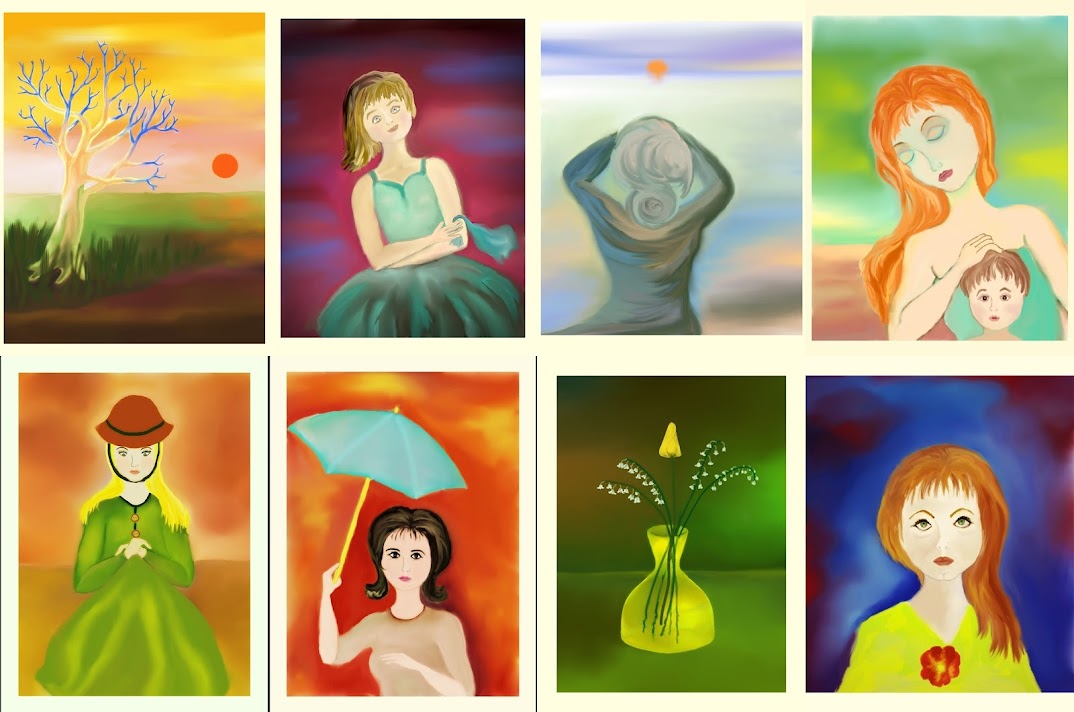
I read again in the map of body expressions about expressing one's inner core through drawings. I used this technique but not too much, in order to alleviate the feeling of solitude. Once upon a time, I had a shocking spiritual or connectedness experience through drawing. It made sense to me only after more than 10 years when I discovered that the thing I drew, in order to express some abstract thought and feeling was in reality present since a long time ago, since the 9th century AD - the Samarra spiral Minaret. I lost that drawing, but I remember how it was - except for the fact that I don't remember the spiral's direction - from left to right or conversely. My spiral tower was rainbow-colored. Otherwise, I used to like Rafael's Madonnas and I made some sketches with madonnas, and the reason was that I would have welcomed with great joy a child in my lonely existence, a thing that was not possible for me. Only today I checked and found that Raphael, an archangel's name, means "God has healed" in online sources. The next drawing expresses my sadness, through the head of an intentionnaly exaggerated frail and emaciated woman.
Almost everything that I drew was related to some meaning or symbol, consciously chosen. The last drawing I put here is one of a woman which represents to me the symbol of self-disclosure and inner feeling or felt sense. This was a new finding. As I said before, my drawing skills did not change since I was 13, because I did not cultivate them or because it was the ceiling of my aptitude. Through taking this course I was able to understand all three reasons for my abandonment of drawing. Before I believed that it was only because there was not art-teaching in math and physics high-school. Another fact that I am uncertain about is why did I cover with hair the right eye in my drawing below and closed the left eye. I surely wouldn't have done the opposite, but I don't see yet what were symbolizing within my soul the right and the left eye. Here is the case too about the easiness in drawing faces oriented to the left edge of the paper, though once I could draw, with some effort, the face of a madonna looking on the other side. Remembering my school years and seeing others drawing sketches, I may say that it is possible this preeminence for that vast majority, because of the domineering left brain hemisphere. I found on the net this assessment: " and surveys in European and American art museums have found that some- thing like 56 percent of men and 68 percent of women in portraits face the left side of the canvas and thereby show more of the left side of the face. Crucifixion scenes of Jesus suffering on the cross showed an even stronger bias, with over 90 percent facing left. (By chance alone, you’d expect closer to 33 percent, since subjects could face left, right, or straight ahead.)" Than it is almost double than chance.
It is written in this section of this course that Sometimes the counselor can invite the client to enter embodied, meditative states by suggesting to physically self-contact an identified tension area (Schneider, 1998) I agree with this. I was my own counselor and I had to try different things and one of them was touching that part of my body - usually the abdomen - and I felt some relief, partial or entire. I don't know if this is only a placebo remedy, or this is a short-circuit of the entities: brain - hands - body. Anyway, if it works, this can be used in my humble opinion. I discovered this by chance.
I deeply apologize for sharing here too much of my own experience.
CONȚINUT ADULT NUMAI CÂTEVA CUVINTE VULGARE, ESTE UN BLOG PENTRU PESTE 18 ANI, FOARTE TRIST, NERECOMANDABIL PENTRU CEI INCULȚI SAU PREA TINERI
Vă vine să credeți că din țărână cresc trandafiri, copaci înalți, case și oameni? Atâta frumusețe incredibilă. Hai, recunoașteți... chiar puteți crede că toate cresc din pământ așa frumoase?
desenele mele cu mouse-ul - o parte din mine, le postez aici fiind complet izolată de peste 38 de ani, probabil le voi șterge
miercuri, 9 septembrie 2020
marți, 8 septembrie 2020
Curs de consiliere psihologică pe Edx
De curând am început să citesc un curs de consiliere psihologică existențialistă pe Edx și notez aici răspunsurile mele la diverse întrebări, pentru cei care știu engleză, răspunsuri care erau parțial scrise deja pe acest blog al meu, adică subînțelese. Acum sunt la jumătatea cursului, deci voi mai posta jumătatea cealaltă când voi termina sau ca fragmente pe parcurs.
Existential Well-Being Counselling Course on Edx
1.I am not new to Edx, and I have a beautiful memory about a course I took here about civilizations - Western Civilization: Ancient and Medieval Europe, a course that entranced my mind and soul, thus probably my body too if we think about human beings as integrated wholes. Unfortunately, this is an introductory topic, the one that people like me are afraid to step into, in order to protect others from breaking conversational rules. Well, you know - the drop-outs like me are never welcomed, but I will say only the truth as short as I can and for the last time about me in this course - I am very poor, I am disabled, I am from Romania, from the outskirts of Bucharest and the worst misery is that I am totally alone, apart from the relation with my mother, begging in vain for years for any kind of social activity, for at least a few virtual connections. I was almost completely alone since 1984. That's all I have to say about myself, remembering the book ”To kill a mocking bird” and the character of Arthur Boo Radley, apart from the fact that I was psychiatrically treated thus my human rights were taken and I asked in vain for them - the medics refused to give me the official papers needed. I have to add two things. One is that I was a student - 6 years of psychology and 5 years of medicine, but I was gifted more for theories and philosophy and so am I today and I say hello to everyone who learned psychology wherever they are and two - that my main motivation of taking this course is to see other people interacting with each other here, learning their basics, to enjoy life among others - though it is only an illusory wireless connection, maybe we, as human beings, do not particularly engage in real life in more direct connections, maybe all it is about a wireless connection between our brains. I write poetry and I am still the same young heart happy to see others being happy, happy to help others if possible, and who knows, maybe one or two unknown persons would like to hear something from me. It is true, I had a suicide attempt 22 years ago, now I told everything about me, but I believe that it is not contagious. My name is Cristina-Monica, and I am 49, but I was always called Cristina, though unknown persons on the net had the tendency of calling me Monica, who knows why. I am CMM, which means 1900. Human life and civilization still looks familiar and wonderful to me.
2.My well- being means being content with what I have done throughout the day when I go to sleep. This definition encompasses everything because it means happiness, calm, peace, and physical well-being too. From the physical/material point of view, I have done all I could do, so I don't feel frustration or other negative emotions. From the social point of view, I can be content if I could do my best to be with others or to help them, from my self's point of view I am happy/content, and from the spiritual point of view, doing my best means to be a part of the human world, the only world we know. I am aware that doing my best means at the same time achieving an equilibrium because stretching one cord too much can break it, while not stretching it enough leads to sadness. So, the word that counts to me today the most to my personal intimate ego is contentment. And harmony. Questions: Comparing my own definition of well-being with different theories exposed here, I can say that I am closer to the subjective theories and to the eudaimonic theory. The theory with 4 headings, the one I analyzed here, seems to be appropriate for any kind of subjective perception because it encompasses everything.
3.I believe that focusing puts the client right in the middle of the world - and the counselor uses the word we are "zooming" - so it is about centering one's world into his own consciousness, focusing and enlarging through analysis. The positive axis or axiological attitude helps to make someone breathe after freeing some space in their focus range. The answers lie within - in the deeper part of our own world - that's why the counselor asks first for relaxation and eventually closing the eyes - because this gesture is metaphorically bringing the inside outwards - when I close my eyes I can see inside me, that is the wise answers.
When I think about my personal strengths - what I had learned through the years - I think about patience, positive attitude, valuing and maybe overvaluing sometimes reality itself - both people and I deserve precious feelings and to be cherished. This is not only subjectivity, but it is also a matter of objectivity too because no one can live by himself and inside the social system we are as much important as the others. I meant that I have the strength to enjoy even fewer good things, to multiply the joy of being involved in the world.
4.It is hard for me to write down these facts about myself. I believe that this kind of self-analysis is not very important or useful to others. It is too little, but I also believe that others can understand what I mean here, or sympathize with what I think or feel. Right now I am feeling better because I am aware of my environment and I made a partial covering for my table lamp from a sheet of paper and it feels very fine like this, the light is mellow and does not hurt the eyes anymore, yet I am a little afraid that it can burst into flames. Anyway - this is only the making space part, by distracting attention to lights and the environment.
To me, compassion was always the most difficult emotion or feeling to experience - because I suffered inside when I realized that I cannot help some particular people. Anyway, by reading the papers presented here and combining them with my own insights and aging, I feel more comfortable now about this feeling. I did not do those exercises, because I am aware of beautiful or good things in my life daily, I never lost that ability. I really enjoyed reading them carefully and I really learned better the distinctions in English for those concepts - empathy, sympathy, pity, compassion, and self-compassion. In my native language, it is slightly different. I think that my opinion about self-compassion changed a little bit by comparing it with these lectures. Self-compassion is a form of compassion and it can result in the same dismal feeling - helplessness if one cannot help himself. Yet here one finds that it is as important as compassion, another difficult feeling. Of course one should maintain a good balance because one cannot help others unless caring for himself. One cannot truly love another if not being happy within. It is always the same balance turmoil, yet I still believe that action in such cases is better than contemplation, if and only if we can pay attention to good feelings and be grateful.
Someone here on the forum wrote about the difference between cognitive and emotional empathy. I never felt the real sympathy or empathy consciously, but maybe unconsciously, like it was written in this course that science discovered recently more about physical bonds between living beings, even beyond biological kingdoms. But, as I said before, I was many times struck with deep compassion feelings, within my mind, especially when I could not help. Anyway, gradually, I went towards believing that the best attitude is to be grateful and to be happy to do your best each day because more or less is not good.
5.To me, an important existential question is whether a bad feeling or attitude or event in our lives can really do some good. I found until now, in the first section of this course, the idea that it is good to acknowledge and accept our bad feelings or other weaknesses and to express them. I partly disagree with this conception, because handling evil is dangerous by its nature. Many people avoid talking about their failures or traumas because of many reasons, depending on their education or their social background which bears many prejudices. I agree, negation is not good in the long term, but people who are resilient and can cope with life's struggles feel that stressing the importance of evil facts might hurt others or even oneself. I still have to think more about this issue.
As for the second question, I will share here my own experience. When I was a child, I was raised amid different odds and ends and found in my grandma's cupboard beautiful ancient porcelain figurines or plates, some of them older than centuries. I was not an expert, but I realized this and found only in later years that they were authentic and precious and intended to sell them for basic needs because I am poor and unemployed. I was asked to take macro pictures of them and their marks that can prove that they are authentic. And then I compared with marks catalogs on the net and it seemed that they are authentic. (Maybe they were not, maybe they are too many broken in the world.) But, for the first time in my life, I realized that, sadly enough, all of them had marks of cracks through the years and centuries and they were not carefully repaired. I could not sell them, but I found a site for such old porcelain with cracks, with big prices, maybe it was something fishy about that - where the owner said these marks were a better proof along with the signatures, for their authenticity. So, we are humane and human beings and we too can bear cracks from our life endurances. Those porcelain figurines are a perfect metaphor, alongside with Kintsugi art in Japan. I still have them, and they remind me of good things in my childhood when everything was aglow. Some people are fortunate enough to be perfectly repaired, others have to bear scars, but, from a distance, everyone is beautiful. So is everyone for the one who learned to accept this miracle that is called a human being.
Another personal story is that I was in love with Andersen's fairytales - my favorite author in childhood - and I had read the story of The Shepherdess and the Chimney Sweep, where one can find the reason for such cracks in fragile things, that are meant to stay safe in their homes - the foolish need of adventure and the foolish need of finding one's freedom beyond the realms of our knowledge. Both porcelain dolls, who were lovers, ran away and got broken then repaired by the owner. This means, from the existential point of view, that one can find freedom inside his own mind because freedom does not reside only in external physical conditions, and man is condemned to be free, as Sartre once said. But the owner can be what different people call God. My belief is that if we are a part of God, God itself is a part of us, which was being said by different philosophers, e.g. those who see the world as a multitude of intertwined systems. I forgot the name of these approaches, I will search again, probably a kind of holo-systemic world.
I don't entirely agree with the idea that light can enter only through the holes or imperfections in our lives. I remember a quote from a well-known Romanian poet and philosopher (I am Romanian) who said that only above murky waters can we find beautiful water lilies. It is almost the same idea. The fact that bitter tastes can lead to sweeter tastes, a fact scientifically proven by the way, as far as I know. So it seems that life is the same - like a roller coaster when moments of excitement and joy appear because of sudden changes in fortune. But my inner intuition tells me that bad is not needed in order to reveal good things. Yet, if life is not kind to us, we can make the best we can from it, as Sartre said.
6.I have strong beliefs regarding the philosophy of language and all the other sciences which deal with language as a study object from different points of view - psychological, philosophical in the broad sense of the word, pragmatic, social or political, etc.
The first question asks about my own assessment as a subject on the axis belonging versus autonomy. First belonging or belong is a word that can be split into two entities: be + longing. I, therefore, am (be), and nevertheless, I am longing. Or long, the root of the word. I am in need of something, I wish for that thing is the etymological root of the word belong. That is me, more precisely my emotional part - with my body and soul - that is my physical and psychological and also social part of me, I am close to the point of belonging with all my heart. This longing and belonging place me at home in my body and my surroundings. This is a part that cannot be resected from my body and mind. From a spiritual point of view, I am autonomous and closer to the autonomy end of the axis. Autonomy came from Greek origins and it means auto(self) + nomos (law), which means I am my own juror and in the same time the creator of the laws of my existence, which is only partly true for everybody. As a whole, I believe that autonomy and belonging don't measure exactly the same dimension. The opposite of belonging is being cold or indifferent. The opposite of autonomy is dependence. I give myself an 8 points place on a 10 points axis for each of these two dimensions. If it is necessary to choose among them, then I feel more longing and belonging than exercising my autonomy, that's why I am here.
The second question is easy to answer. Everyone is within the limits of his/her human condition, but being authentic means to be free, to feel free within, whatever the limitations are. I can feel that I am shaping my own life, but this does not mean that I have the illusion of being a supernatural hero. From a spiritual point of view, I am aware of my belonging to a greater whole, thus I am happy, I do whatever I can and I don't long to be able to do more than possible. The shaping process involves an appropriation of the objects and phenomena including oneself through knowledge, not necessarily increasing my physical or intellectual propriety (written books, art objects created, etc.). It is the simple joy of under-standing.
7.In one of my latest answers to questions, I wrote about my disagreement about the extremes of the continuum autonomy vs. belonging, as if they were concepts referring to different dimensions. Only now, after I read about existential practice and therapist-client interaction, I understood that these concepts are valid inside this type of therapy, they are not only theoretical realms. Like this, they make sense. These existential givens are drawn out from the therapy process. The most inspiring thing to me was the way the therapist deconstructs the patient's ongoing treatment of her reality in order to reach a higher goal. I don't know if I am right, but it seems like a deconstructivist approach, but maybe this does not matter too much.
From the case study, I learned about outcoming the fear of something worse for the patient who is choosing the smaller evil, instead of facing the real threat consciously. Most people simplify their decisions by doing this kind of bargain and sometimes they are wrong. The therapist's intervention resembles that of a kinesiotherapy worker, who is taking risks because of his experience in treating different back spine troubles. In reality, he is not taking risks, because there are common outcomes to any human interaction like this, like the way we recognize the same existential givens for any human being, either therapist or client. Sophie built a wall around her heart, so to speak with the words of a country song that I remember right now.
8.”I am that which I am” seemed a very appealing approach to oneself. Even in harsh times, the simple fact of being alive and being conscious can bring joy. I believe that we can lose ourselves into a greater love or realm of existence - and I think that this is also a spiritual dimension.
Besides this, I admire the self-discipline to which some of the exercises point. I believe that following a schedule is a good thing and the same works for doing different exercises - mentally or physically. I think that my well-being can improve by adding the forcible good way of behaving or being. If I am lacking energy or I am bored or maybe lazy or depressive, I can think do it anyway, you should do this and, after a couple of weeks, I can see the results. I am a person centered on doing what is right or necessary or simply the best thing to do - as a duty - without being compulsive. The limits that my self imposes to my life are rewarding in the end - I feel free and happier to have this kind of self-control. I think that this is a basic human need, having a normal schedule - avoiding being trapped in misery by means of doing the forcible good. A schedule is necessary because we have an animal side and we are all connected with the moon and the sun and with the other people in the world with their biological rhythms.
9.Through the years, getting older at wiser to some degree (I just felt a kind of self-actualization of my understanding of the world and human life starting when I was 35 and continuing until I was 46-47 then slowing down until now when I am 49, but maybe it was not the end and who knows what I shall discover next), I found some facts about physical imbalances in my life. I will pinpoint only one of them - somehow related to the case of Helena. I, too, being raised and living my whole life in a temperate northern climate, trusted the seasons and learned to be watchful and sensible about them and the way their course through the year affects me, especially my physical and intellectual being.
The finding surprised me a little bit. My best time was always autumn, then winter, then spring, and ultimately, the least favorable to me was always summer. This is also the order of my preferences for Vivaldi's masterpiece The 4 seasons. Vivaldi - a word reminding about living, being lively and alive. I was born in the second part of February, at the end of winter, so I entered the hardship of life through one of its tougher parts for me - the onset of spring, when everything bursts out. My preferences regarding the beauty of seasons respect the same order if the winter is snowy or enriched with graceful hoarfrost or thin ice layers. Another interesting fact is that all my three close relatives, except for my mother who is still alive - father, uncle, and aunt - died in the summertime when I was away from them. At the same time, there is a saying in my country which says that ducklings are counted only in autumn, expressing that only those who can survive hard times and the beginnings can be enrolled in another series. School time used to start in autumn, such as for me it was easier, then also easy, then harder and finally the hardest times it was luckily vacation, summer holidays. I realized that these findings are a part of my spiritual being, but also physical, psychological. As for the social part, it was obviously the opposite, because of objective conditions. Regarding the study about Helena's migraine, it is a little different - her realization that it is comforting to know that spring shall always come after winter and so on - autumn after summer, etc. - means that she linked this habitual patterns with her spiritual being, realizing that human beings and herself too, have the autumn of their life and also that there is good and bad altogether, that we cannot enjoy good things if we don't really accept the normal difficulties inherent to our human condition.
10.What happens when you experiment with reversing the question “What should I do about this situation?” to ask yourself: “What is this situation doing to me?” It is understood that the situation is not a happy one, otherwise one wouldn't feel the urge to do something about it or to assess its consequences. The first question releases adrenalin and other stress-related hormones. I understood that I should focus on other dimensions - existential - not biological. It is an urge to achieve a goal after settling a level of accepted performance. It is a question that stimulates the volitional processes in the brain. It is a compelling drive, a pushy "voice" of consciousness. Many times people can behave like this, in a hurry, without fully understanding the echoes of the painful situation within ourselves. I believe that this kind of interaction with stressful events can be useful and necessary in emergency situations when we don't stop and ask why is it that a load weighs upon one's chest, and hurry to take it off. If I ask myself what this situation is doing to me I can analyze my very reasons for a change and I can become more motivated for changes, able to engage in more powerful life-changing events and techniques. Self-compassion becomes conscious and accepted, my weaknesses are better understood.
What are your personal barriers to pausing or giving yourself “a minute” to sense how a situation is affecting you? My personal barriers are the fear of being overwhelmed or distracted by too much suffering in the search for a real solution. I also fear the boomerang effects of negative feelings or words, wondering if they can hurt others and also me in return - I mean I don't want to open a hand fan painted with sadness in front of me, in order to refresh my mind and my body.
I have to add a few things and questions. I was impressed by the last article read here, just before this forum. I am talking about the paragraph talking about focusing and the spiritual realm. I found these words throughout the course - “going back to the ‘source" and I am not certain what this means. I felt a deep sense of joy by reading this paragraph from Professor Leijssen Mia, whatever it might have meant for the author in the very beginning of its creation: Here the term ‘soul’ can be used to indicate that these experiences are perceptible in your body and at the same time extend far beyond the boundaries of your physical self. Whatever terminology you prefer, you can experience a spiritual or transpersonal dimension when you practice focusing. Being lovingly present in this ‘infinite’ realm of experience brings you face-to-face with experiences that turn out to be extremely meaningful. For me, it is an enriched meaning.
As for the focusing process, I think that is like going from exteroception towards interoception or cenesthesia - the perception of my body's internal organs. This perception is not always conscious, it is many times unconscious or subconscious, right under our line of awareness, and that results in influencing our mood in a subtle way. My own theory is that our senses are not only doors for the perception of the world around or within us, but also effective ways to protect ourselves from physical or psychological dangers. That's why focusing without any thought on music or sights, or touches, tastes, and scents can result in our freeing from pain and reordering our reality. Interoceptive processes are alike. Instead of the external world, we focus inside our body and make a show of it (if only for oneself) and thus we can detach from it at a later time - or the pain is smoothing and becoming friendly. Senses are like shields that change arrows' movements. I am not certain about cenesthesia and maybe my whole theory is not correct though I can argue more about it. It is only a metaphor maybe. And we can remember the saying medice, cura te ipsum. By taking care of ourselves, we can be beneficial to others.
11. What were the best times of your life? What was going on in your life that created good circumstances for you? How did you contribute to making it a good time? What were transformational moments in your life or experiences that have changed your life?
I shall answer in the shortest way that I can to both topics, hoping I would find something meaningful to others too. My lifeline is an expression that reminds me of my grandma, who used to predict my future by looking at my hands (by the way, my hands are to me the safe-heaven place of my body, yet lately I experienced symptoms of neuropathy - benumbing, difficulty to do the typing, and I take medicine for that and I believe that it is still good enough). Looking at my hands she foresaw that my lifeline shows a difficult future, plus that I was tremendously generous with other persons, by the fact that my fingers were drawn outwards in extension when I opened my hand. I made many times that exercise of drawing a line in past years, by myself. There is a time when many of us feel the need to do that. Most of my "happiness" moments happened (it is good that these words resemble one another like in my native language the word for "tomorrow" resembles that for "hands") within the frameworks 0-6, 6-12, and 30-50 years of age. When I was a child I was very playful and very happy and conscious of my happiness and very loving and grateful, though I was raised partly alone. My thirst for beauty in nature, my joy of reading or playing with others, or alone, my joy of discovering nature and writing short stories about it made everything happening even more beautiful. After 35 years of age, shortly after my father's death, which was a transformational moment, the same as my suicide attempt and losing a part of my left leg was 6 years before that moment, I continued to read art history books, history of literature or simply history or books which offer a synoptic view upon human civilization and I began to understand life from a deepened perspective. I began to use colors and paint or draw something, a fact that made me realize that I did not improve my skills of this kind after 13 years of age. But the most important fact by far was that I discovered classical music, that kind of treasure which did not make too much sense for me in my youth.
When I was young, always enraptured by natural beauties, I used to listen to simple folks' music and I used to read existential literature and philosophy, like Heidegger, Camus, Sartre, Beauvoir. Back then I believed that this existential framework solves any problem and can bring relief to anyone. But, because life pushed me at my wit's end, demanding from me too much suffering, especially from being always alone, later on I found that existentialism was not a solution to everything. But I started this course with a deepened respect for it, taking from it what's ever-shining. Growing old, after 35 years of age, I also began writing poems, a fact that I used to do in my childhood and adolescence. Throughout my entire existence, the perfect friend would have been an introvert, just like me, because I really respect others' silence and I love to feel my own source of joy and love in quietude.
My best contribution to my well-being was my overall capacity of enriching experience with heartfelt moments, a kind of serene peace, of blissful moments, of calm, yet always very complex emotions and beautiful feelings - for humans, human artifacts, life itself, and natural surroundings. From popular old songs and hits, I can remind here about the country songlines - "you got to stop and smell the roses", Abba's hit Fernando which says “If I had to do the same again, I would my friend, Fernando" or the well-known "My way" - "I state my case of which I'm certain... I did it my way" or Neil Diamond's - "I am, I said", all of these and many others being in line with the existential framework of thought, where we can find, as it is written here in this course, that one is fully oneself, not necessarily happy, if one thinks that he would have lived his own life again the same way he did once. (Nietzsche).
I may add something nihilistic of my own - everything is transient, everything is vanity, not only material aspects of reality but also our so much treasured idealistic values or ideals - yet one can be happy or at least at ease with one's one fate - amor fati. But I always add - only with the hand in the hand of goodness.
12. What was for you an experience of loss that has something added to your strengths or growth? What kind of effects did you experience after doing some of the exercises?
I shall start by answering the second question. I believe that, compared with medicine, psychology uses a greater percentage of positive words, and I believe in the power of the words transient around our existence. Maybe this is even truer about this positive approach of existential psychology, or, to be more precise, in the tradition of person-centered psychotherapy. I believe that this greater amount of positive words can help us or relieve us per se. These exercises about tackling different unwelcomed existential givens gave me the impression that one can practice a more detached and relaxed way to face painful moments or to make difficult decisions. Plus the power of positive words by itself.
I had many experiences of loss throughout my life and they surely added more strengths and growths to my self. Two of them come to my mind right now - losing a part of my left leg due to a suicide attempt and being isolated/ alone for a long period of time, even right now. Loneliness is the hardest thing to endure in the long run. The strength that I developed is a little more sympathy and acceptance to fulfill my own needs and joys, because otherwise I had been too much convinced that human life can have meaning only if it is connected with others - well, to be honest, I still feel the same, but now I am happy to be here in this virtual land with others. Maybe I feel a little more comfortable with loneliness. As for solitude, which was defined here in this course as a kind of something that can lead to alienation from oneself, I did not experience that, apart from my later years, when I felt that by being alone a long time I begin to lose touch with my authentic self. While going through hardship, I learned to value the insights that language can bring to us - a kind of illuminating experience, in this world based on a language convention, as Yalom said. Our freedom manifests itself within the realms of the language - spoken or written words. I can explore here the meaning and close sounding relatives of the words - sole, solitude - it is close to the soul - we find our soul sometimes better when being alone, solitude is similar to the Latin word for sun and to the solfeggio and the musical key sol. And to the word naming ground in my language. And the soles of our feet, etc. All of these can bring beautiful insights - for example I realized not so long ago what's written in this course - that every person is actually alone, because no one can really share the same existence or meanings with others. We are like different suns or stars or islands - like many popular songs say. I found the same idea expressed by Professor Mia: ”People that are able to accept loneliness as an existential given, who realize that there always remains an unbridgeable gap between the individual and others, invest in a rich inner life and make more use of the diverse sources that come their way."
When I lost my leg, almost 22 years ago, I also had an NDE experience. I won't relate this here. Anyway, it was seemingly obvious that I was at risk. From this painful loss, I gathered a few strengths, like being even more grateful to be alive, investing time in writing poems - which I intended to be a kind of beautiful gift to others but I admit that I failed to create something pleasing to them - yet I don't regret that I wrote them, being grateful to have a prosthetic limb that allowed me even to climb moderate heights. Etc. I believe that real introspection is impossible in the literal sense because we are expressing thoughts about how we perceive ourselves and it takes time to do this, so we only talk about past moments in introspection and we cannot spectate or see for real our present experience, moreover, we can get lost in this process, we can be cheaters in regard to the truth or we can be too resilient, etc. It is only one strange phenomenon about me that I shall relate here, hoping it is not too shocking, or that it doesn't break taboo rules. Not so long ago, in the autumn of 2017, I had a very strange paranormal experience, which frightened me and I had to lull myself asleep shortly after. I had a vivid dream that occurred 2 times that night. I saw something similar to a brain on my mental screen, a very well irrigated brain, the color of it was orange because of the blood vessels and nervous tissues and it was fantastically shining. Exactly the moment that I saw that thing I woke up and had in less than a few seconds, almost instantly, an all-comprising experience of my whole life, since early childhood to present times. I read once that other people experienced this thing before a clinical death or in very dangerous moments of their lives. And it happened twice. From this kind of shock I learned to be happier with myself, at least for some time and to continue to do good things in order to feel better, even if I cannot please others.
13. What do you experience as your personal biggest threat to integrity?
To me, the biggest threat to integrity seems to be the fear of forgetting, with old age, different essential facts or life conclusions which I drew out, or even my intimate feelings of bliss and happiness. It did not happen until now but I found myself searching, a few days ago, the laws and the formulae for the movements of objects on a slope, downwards, understood when I was 15 - realizing that I forgot a part of it. I said to myself - it is stupid for me to care about such things at almost 50 years of age as a woman - yet I know inside me that even forgetting about intellectual data learned once can lead to discomfort, it is true only a little discomfort. It is so because good times in my life are closely linked with intellectual activities amid other things, yet I know that our best things and own discoveries stay with us. Forgetting is a normal thing. Another threat is being alone.
What touched you in particular when reading about forgiveness?
Forgiveness was one of the best parts of my life and I really believe that it can improve physical and psychological well-being. Forgiveness is wisdom. I read different novels about this and I must name here only two well-known books, situated at the extremes of the axis forgiveness-revenge: Les Miserables and The Count of Monte Cristo, both of them linked with my own life experience. By reading the Count, I felt disgust and fury, because he is taking revenge (a bad and futile thing) at any cost - killing secondary and innocent characters in the pursuit of his heartless revenge. I was still young, I could not accept calmly such a thing. When a movie was made about this story, they soften the hideous facts written in the novel and even his hideous treatment of the woman that he fell in love with long ago. By reading the Miserables I felt pity and sadness and bitter tenderness because the good hero suffers a lifetime and does good deeds a lifetime only to be neglected in the end by the daughter he adopted and devoted his life to and by his son-in-law, whose life he had saved. He dies because of poverty and solitude and cold winters at old age. At the end of his miserable life, both his daughter and his son-in-law come to pay their respect to him, because they are told the truth that they could not understand by their hearts. He stands as a perfect example that forgiveness and acceptance of one's fate and death bring joy even against the whole misfortunes possible. He forgives his children who come at him for being forgiven and he dies as a happy man. On his modest tombstone, in a corner of the cemetery only a few words remained:
*He sleeps. Although his fate was very strange,
He lived. He died when he no longer had his angel.
The thing came to pass simply, of itself,
As the night comes when day is gone.*
This leads me to my personal painful experience - a week before my father died unexpectedly, he came to my place and asked me for forgiveness and I said yes, although I did remember all that he did evil towards me. Throughout my life, I always trusted the good in him, remembering the way he treated me when I was a child, before the great divide since I was 13.
Wisdom is constructed in one's life through life experiences and not by reading alone. I need to add here about a poem written by another well-known Romanian poet who says that we cannot find the imprints of beauty or life's incentives or unfathomed secrets or the way towards change inside books, which cannot help us to fully treasure life; it is only through living, suffering and being passionate about things that we can hear the grass growing.
14. What are coping strategies that you experience as really helpful in your daily life?
I found effective in my situation mostly the first 4 strategies listed by Profesor Mia Leijssen:
•Cognitive selection
•Cultivating the positive
•Taking care
•Capacity to adapt
How does your favorite coping strategy contribute to meaning in your life?
I shall write here about the effects or the way of developing a positively cultivated conscience. I remember the case studied here when the counselor asks the client if she does find beauty, goodness, or truth in her life. She is a little puzzled. When I started to write poems in 2007, my poems were like childhood scribbles. My kind of ars poetica was an ideal of coming of age of truth, beauty, and good altogether, especially truth and beauty. My poems underwent a solid transformation from 2007 until 2012 when I had already become the owner of my poetical thinking, writings (sometimes prose, which gives an impression of more self-control) were a kind of self-imposed psychotherapy resulting in more self-knowledge and understanding of how my unconscious mind works and how I deal with the Un-known. I give you an example of one very old poem of mine, moreover, it is about my own translation of one of my poems:
INTUITION
Like a heart upon a stone,/ Amber burning on a pyre,/ Like the scent drilling to bone/ On that painful, brilliant fire,/
Like slow walking on a wing,/ Rustles waking up our ears,/ Dreams forgotten every spring,/ The beginning of all fears,/
Like a truth in this time flight,/ Finding in my palm foundation,/ Which I held maybe too tight/ To believe in its perfection.
I have plenty of examples of goodness in my life, deeds from myself and from others, and plenty of room for truth and beauty - which I experienced as rejuvenation, happiness, peace, perfection, sublime.
Or a fragment from another childish poem, far from my own true self, who was fighting to emerge from within in this essay of artistry, knowing that poetry was not my calling, but philosophy:
We’re responsible for what we think/ Even when our hopes begin to sink –/ Since then, under any kind of weather,/ Truth and beauty always stayed together.
Thanks to everyone for reading and maybe pausing to perceive my lone self here. I forgot to note an important detail: when I started my poetical journey I had a great amount of self-knowledge, but I did not know where I would arrive and what I would find at the end of it.
15.Which of the list of the Spiritual Narrative Questions felt most relevant to you? Why?
Almost all of them are relevant to me, but I will focus upon the 4th: Would it be meaningful to sense kinds of doorways that naturally open spirit for you; like, for example, experiences in nature, certain religious symbols, rituals, or practices, or readings?
These doorways or otherwise named here as Everyday Gateway Experiences, might be open to anyone, yet not acknowledged by everyone. Before getting into the heart of the matter, I have to say something very of great relevance to my own life as a psychiatric patient. The truth about me can be said in one phrase as "I was totally rejected, without having the chance to talk with anyone or to be with anyone (apart from 2-3 exceptions)". We cannot be with others by writing written monologues. Such spiritual experiences - I will give a few examples later - were in great number in my life, they were a source of wonder and joy and paved the way to a more complex and deep self-understanding. It may be that these spiritual experiences arise in the lives of every intellectual, yet they are considered to be normal, intimate, already understood. The psychiatric patient is rejected and acknowledges this fact. The problems surrounding a deep understanding of the world and spiritual growth pertain mostly to intellectual patients and become an object of scorn and even violence if they are foolishly shared with others. Those others are rejecting the same way any other cognitive or emotional overt attitude of the patient, because of the social conventions around that person. So, the patient knows that he/she is the same as others and tries to avoid any overt explanation of what he feels or thinks about any kind of subjective experience, including spiritual. Anyway, if he would have been accepted that would have never been the case. Spiritual experiences, alongside others, can be met with skepticism, rejection and reluctance to be respected or acknowledged and, most of all, they are explicitly considered to be a mark of psychosis or another abnormality, even though they are common to other more fortunate people. Such experiences should be tackled with respect, love, gentleness, secrecy, and silence.
Those who are mental health cases can be trapped in the hands of people who are not aware of their spiritual being or technicians who are not aware of the spiritual realms of existence. I believe that the spiritual dimension is present in both intellectual or non-intellectual minds and souls, but its self-awareness or understanding differs. Thus, if the lonely patient talks - if he ever talks! - about the spiritual a-ha moments in his life, he may be considered paranoid or schizophrenic without further investigation, even if the rest of his life is stainless. Apart from this spiritual dimension, his overall image of the universe and/or humanity can be correct. This spiritual dimension can be present even in younger intellectuals as well, but they are not aware of it, or they don't recognize it. It can manifest itself in peak experiences, blissful events, gateways to the unknown, different types of broad encompassing meanings.
I liked very much one of the exercises from the past sections - the one where the client writes down what he is, then he places the papers in the order of importance, renouncing one by one to each of them, saying goodbye to each of them - then, when he is empty, which thing stays rooted in his self? I believe that only his spiritual self stays with him. I have been through many existential difficulties or crisis, but I felt that there are a few things that no one can steal from us, even in the most desperate moments: the joy to be aware or to observe or to imagine that happy people exist, that laughter and play exist, that good and justice are there too, even if not everywhere. We can be happy that others are happy even if we are not their family or friends and we can enjoy the world as a spectator. Even if we cannot help them. Another tough root is the love for beauty, either artistic beauty, but even more natural beauty as a whole, which, in its multitude, cannot be the creation of only one artist. And the third strength is the happiness to understand and link things to one another.
Now I will give a few examples from my many personal examples of such doorways to the sacred or to the mystery of the wholeness. Once I was very sad and miserable, walking the streets alone as I always did, in search of images and beauty offered to the senses. I sat down on the fence of a nearby church and it was a sunshiny day and there was no wind, as far as I remember. Though the willow behind me was high above and out of reach, something moved one branch and it poured water - maybe rain remnants - upon my head, as if it was a kind of baptism or consecration. Then nothing, no more miracle - and, after a while, I got up and walked farther. Another time I was in a car on the road with my parents. The sky was heavy of dark clouds all over the fields and the region was unknown to me. Suddenly, on my right, a church appeared, and it was brightened by the sun, and the fall of graceful sunrays was beautiful and restricted to that area. Another fact happened to me after I visited a monastery in my area, but not too close to my home. I walked alone on tight and secondary streets and I memorized the name of one particular street because it had an odd name and I had to search in the dictionary for it. After a week or so, I was attracted by a sheet of paper glued on a shop/building window. I got closer and only then I realized that it was about political voting, a fact out of my area of interest - I saw that it was written in small letters and I had no glasses with me, but I realized by chance that it was a list of street names. All of a sudden my weak eyes were directly drawn to the name of that distant street that led to the monastery, amid hundreds of other streets, as if I were a LASER light. I had a great many such experiences, starting with my adult age, around 18 years of age. Some of them are about books - whatever book I may choose, either from my own home or from a library, either already read by me or not read, many times when I opened at random the book I found words closely related to what just happened in my life, or even to what is going to happen without being aware that it can happen. When this happened to me when I was 18, I got scared - because it seemed that my brain was someone else's playground. Growing older, I understood the deeper truth and it made me smile and happy - it was certainly a simple and normal spiritual experience, and only after a few years I found it numbered in a parapsychology book, a fact that made me sad. I also understood better the connection between the unconscious and consciousness and creativity within these frameworks. These facts about books are related by others too, maybe more by marginal people, and they remind us about the habit of predicting the future in old times through the random opening of the Bible or of another well-known book. I give you now a recent connectivity/spirituality example: I was reading about Descartes (the philosopher) in an ebook that I downloaded by chance in my internet drive. There it is written, as such philosophy historians use to do , a kind of anecdotical story about Descartes, I quote "prompted to philosophy by a series of dreams (on November 10, 1619) of a man selling water melons." I don't know if this story is genuinely true, but these days and also in other years, there are loaded trucks with water melons in my surroundings, and they put a high-volume announcement while racing through the streets, advertising for their water melons as if a muezzin calling for prayer.This ebook is written by Norman L Geisler, it is a history of western philosophy, volume II.Anyway, here is the moment to recount the story about "the book of sand", written by Jorge Luis Borges, one author who delved into the unknown and who wrote different other stories like that. Other examples from my life are crystal clear (spiritual) connectedness or synchronicity. I give another example of synchronicity - a few years ago I had to go to a dentist. Suddenly, walking on the street, my eyes were drawn to see a bush with snowberries, which reminded me of childhood. It might have been that I was really remembering my childhood happy moments about these berries, popping them under my feet. In the same period of time - not too long, only a few weeks, maybe less, I visited a distant park and I saw by chance some snowberries in a corner. And it happened the third time also as a coincidence, seeking what was hidden. Another odd thing happened when I wrote a poem about a dry autumn leaf swinging on a spider thread - a fact that I noticed in the countryside, when I made a short film with my camera. Then, thinking about my poem after years, walking aimlessly on the streets nearby, my eyes were unconsciously drawn upwards and above a bench in a small playground and there it was - a withered leaf hanging on a spider thread, the only one there. Then I wrote a second poem about this encounter. Because I am a cerebrospinal individual, I can acknowledge this kind of experience as centeredness to any human intellect, as they might be to others too. Because I am a cerebrospinal individual, I can acknowledge this kind of experience as centeredness to any human intellect, as it might be the case with others too.
Take one idea or one illustration from an article in this section that touched you particularly strongly. What was it about this idea or this illustration that resonated in you?
I was touched by the story of Annelien, the deaf infant who recovered all of a sudden. I see causality as a form of synchronicity at the same time. If such doorways to the spiritual world open, even if they seem odd, they happen for two reasons at least and one of them is the fact that we are present there to acknowledge them. I will not write in detail about this.
I will say this bluntly in a few words, days after my genuine and truthful involvement in this course helped me realize a new insight: some ignorant people may call people like me "psychics" and may develop feelings of rejection towards us. This is a label. I am talking about the multiple coexistence and connectedness experiences of mine. Like this, people like me often become the supposed cause of evil, or scapegoats. In reality, I was pure goodness and self-control and peace and calmness and I did not trigger, not even unconsciously, the aggressive behaviors of some people against me. Anyway, no one ever asked me a thing, no one really talked with me my whole life, and I am still in disbelief that only a few people have this "psychic" ability, maybe every intellectual is like this, centering and organizing the environment around his life, both past, present, and future. I will stop this writing here.
Existential Well-Being Counselling Course on Edx
1.I am not new to Edx, and I have a beautiful memory about a course I took here about civilizations - Western Civilization: Ancient and Medieval Europe, a course that entranced my mind and soul, thus probably my body too if we think about human beings as integrated wholes. Unfortunately, this is an introductory topic, the one that people like me are afraid to step into, in order to protect others from breaking conversational rules. Well, you know - the drop-outs like me are never welcomed, but I will say only the truth as short as I can and for the last time about me in this course - I am very poor, I am disabled, I am from Romania, from the outskirts of Bucharest and the worst misery is that I am totally alone, apart from the relation with my mother, begging in vain for years for any kind of social activity, for at least a few virtual connections. I was almost completely alone since 1984. That's all I have to say about myself, remembering the book ”To kill a mocking bird” and the character of Arthur Boo Radley, apart from the fact that I was psychiatrically treated thus my human rights were taken and I asked in vain for them - the medics refused to give me the official papers needed. I have to add two things. One is that I was a student - 6 years of psychology and 5 years of medicine, but I was gifted more for theories and philosophy and so am I today and I say hello to everyone who learned psychology wherever they are and two - that my main motivation of taking this course is to see other people interacting with each other here, learning their basics, to enjoy life among others - though it is only an illusory wireless connection, maybe we, as human beings, do not particularly engage in real life in more direct connections, maybe all it is about a wireless connection between our brains. I write poetry and I am still the same young heart happy to see others being happy, happy to help others if possible, and who knows, maybe one or two unknown persons would like to hear something from me. It is true, I had a suicide attempt 22 years ago, now I told everything about me, but I believe that it is not contagious. My name is Cristina-Monica, and I am 49, but I was always called Cristina, though unknown persons on the net had the tendency of calling me Monica, who knows why. I am CMM, which means 1900. Human life and civilization still looks familiar and wonderful to me.
2.My well- being means being content with what I have done throughout the day when I go to sleep. This definition encompasses everything because it means happiness, calm, peace, and physical well-being too. From the physical/material point of view, I have done all I could do, so I don't feel frustration or other negative emotions. From the social point of view, I can be content if I could do my best to be with others or to help them, from my self's point of view I am happy/content, and from the spiritual point of view, doing my best means to be a part of the human world, the only world we know. I am aware that doing my best means at the same time achieving an equilibrium because stretching one cord too much can break it, while not stretching it enough leads to sadness. So, the word that counts to me today the most to my personal intimate ego is contentment. And harmony. Questions: Comparing my own definition of well-being with different theories exposed here, I can say that I am closer to the subjective theories and to the eudaimonic theory. The theory with 4 headings, the one I analyzed here, seems to be appropriate for any kind of subjective perception because it encompasses everything.
3.I believe that focusing puts the client right in the middle of the world - and the counselor uses the word we are "zooming" - so it is about centering one's world into his own consciousness, focusing and enlarging through analysis. The positive axis or axiological attitude helps to make someone breathe after freeing some space in their focus range. The answers lie within - in the deeper part of our own world - that's why the counselor asks first for relaxation and eventually closing the eyes - because this gesture is metaphorically bringing the inside outwards - when I close my eyes I can see inside me, that is the wise answers.
When I think about my personal strengths - what I had learned through the years - I think about patience, positive attitude, valuing and maybe overvaluing sometimes reality itself - both people and I deserve precious feelings and to be cherished. This is not only subjectivity, but it is also a matter of objectivity too because no one can live by himself and inside the social system we are as much important as the others. I meant that I have the strength to enjoy even fewer good things, to multiply the joy of being involved in the world.
4.It is hard for me to write down these facts about myself. I believe that this kind of self-analysis is not very important or useful to others. It is too little, but I also believe that others can understand what I mean here, or sympathize with what I think or feel. Right now I am feeling better because I am aware of my environment and I made a partial covering for my table lamp from a sheet of paper and it feels very fine like this, the light is mellow and does not hurt the eyes anymore, yet I am a little afraid that it can burst into flames. Anyway - this is only the making space part, by distracting attention to lights and the environment.
To me, compassion was always the most difficult emotion or feeling to experience - because I suffered inside when I realized that I cannot help some particular people. Anyway, by reading the papers presented here and combining them with my own insights and aging, I feel more comfortable now about this feeling. I did not do those exercises, because I am aware of beautiful or good things in my life daily, I never lost that ability. I really enjoyed reading them carefully and I really learned better the distinctions in English for those concepts - empathy, sympathy, pity, compassion, and self-compassion. In my native language, it is slightly different. I think that my opinion about self-compassion changed a little bit by comparing it with these lectures. Self-compassion is a form of compassion and it can result in the same dismal feeling - helplessness if one cannot help himself. Yet here one finds that it is as important as compassion, another difficult feeling. Of course one should maintain a good balance because one cannot help others unless caring for himself. One cannot truly love another if not being happy within. It is always the same balance turmoil, yet I still believe that action in such cases is better than contemplation, if and only if we can pay attention to good feelings and be grateful.
Someone here on the forum wrote about the difference between cognitive and emotional empathy. I never felt the real sympathy or empathy consciously, but maybe unconsciously, like it was written in this course that science discovered recently more about physical bonds between living beings, even beyond biological kingdoms. But, as I said before, I was many times struck with deep compassion feelings, within my mind, especially when I could not help. Anyway, gradually, I went towards believing that the best attitude is to be grateful and to be happy to do your best each day because more or less is not good.
5.To me, an important existential question is whether a bad feeling or attitude or event in our lives can really do some good. I found until now, in the first section of this course, the idea that it is good to acknowledge and accept our bad feelings or other weaknesses and to express them. I partly disagree with this conception, because handling evil is dangerous by its nature. Many people avoid talking about their failures or traumas because of many reasons, depending on their education or their social background which bears many prejudices. I agree, negation is not good in the long term, but people who are resilient and can cope with life's struggles feel that stressing the importance of evil facts might hurt others or even oneself. I still have to think more about this issue.
As for the second question, I will share here my own experience. When I was a child, I was raised amid different odds and ends and found in my grandma's cupboard beautiful ancient porcelain figurines or plates, some of them older than centuries. I was not an expert, but I realized this and found only in later years that they were authentic and precious and intended to sell them for basic needs because I am poor and unemployed. I was asked to take macro pictures of them and their marks that can prove that they are authentic. And then I compared with marks catalogs on the net and it seemed that they are authentic. (Maybe they were not, maybe they are too many broken in the world.) But, for the first time in my life, I realized that, sadly enough, all of them had marks of cracks through the years and centuries and they were not carefully repaired. I could not sell them, but I found a site for such old porcelain with cracks, with big prices, maybe it was something fishy about that - where the owner said these marks were a better proof along with the signatures, for their authenticity. So, we are humane and human beings and we too can bear cracks from our life endurances. Those porcelain figurines are a perfect metaphor, alongside with Kintsugi art in Japan. I still have them, and they remind me of good things in my childhood when everything was aglow. Some people are fortunate enough to be perfectly repaired, others have to bear scars, but, from a distance, everyone is beautiful. So is everyone for the one who learned to accept this miracle that is called a human being.
Another personal story is that I was in love with Andersen's fairytales - my favorite author in childhood - and I had read the story of The Shepherdess and the Chimney Sweep, where one can find the reason for such cracks in fragile things, that are meant to stay safe in their homes - the foolish need of adventure and the foolish need of finding one's freedom beyond the realms of our knowledge. Both porcelain dolls, who were lovers, ran away and got broken then repaired by the owner. This means, from the existential point of view, that one can find freedom inside his own mind because freedom does not reside only in external physical conditions, and man is condemned to be free, as Sartre once said. But the owner can be what different people call God. My belief is that if we are a part of God, God itself is a part of us, which was being said by different philosophers, e.g. those who see the world as a multitude of intertwined systems. I forgot the name of these approaches, I will search again, probably a kind of holo-systemic world.
I don't entirely agree with the idea that light can enter only through the holes or imperfections in our lives. I remember a quote from a well-known Romanian poet and philosopher (I am Romanian) who said that only above murky waters can we find beautiful water lilies. It is almost the same idea. The fact that bitter tastes can lead to sweeter tastes, a fact scientifically proven by the way, as far as I know. So it seems that life is the same - like a roller coaster when moments of excitement and joy appear because of sudden changes in fortune. But my inner intuition tells me that bad is not needed in order to reveal good things. Yet, if life is not kind to us, we can make the best we can from it, as Sartre said.
6.I have strong beliefs regarding the philosophy of language and all the other sciences which deal with language as a study object from different points of view - psychological, philosophical in the broad sense of the word, pragmatic, social or political, etc.
The first question asks about my own assessment as a subject on the axis belonging versus autonomy. First belonging or belong is a word that can be split into two entities: be + longing. I, therefore, am (be), and nevertheless, I am longing. Or long, the root of the word. I am in need of something, I wish for that thing is the etymological root of the word belong. That is me, more precisely my emotional part - with my body and soul - that is my physical and psychological and also social part of me, I am close to the point of belonging with all my heart. This longing and belonging place me at home in my body and my surroundings. This is a part that cannot be resected from my body and mind. From a spiritual point of view, I am autonomous and closer to the autonomy end of the axis. Autonomy came from Greek origins and it means auto(self) + nomos (law), which means I am my own juror and in the same time the creator of the laws of my existence, which is only partly true for everybody. As a whole, I believe that autonomy and belonging don't measure exactly the same dimension. The opposite of belonging is being cold or indifferent. The opposite of autonomy is dependence. I give myself an 8 points place on a 10 points axis for each of these two dimensions. If it is necessary to choose among them, then I feel more longing and belonging than exercising my autonomy, that's why I am here.
The second question is easy to answer. Everyone is within the limits of his/her human condition, but being authentic means to be free, to feel free within, whatever the limitations are. I can feel that I am shaping my own life, but this does not mean that I have the illusion of being a supernatural hero. From a spiritual point of view, I am aware of my belonging to a greater whole, thus I am happy, I do whatever I can and I don't long to be able to do more than possible. The shaping process involves an appropriation of the objects and phenomena including oneself through knowledge, not necessarily increasing my physical or intellectual propriety (written books, art objects created, etc.). It is the simple joy of under-standing.
7.In one of my latest answers to questions, I wrote about my disagreement about the extremes of the continuum autonomy vs. belonging, as if they were concepts referring to different dimensions. Only now, after I read about existential practice and therapist-client interaction, I understood that these concepts are valid inside this type of therapy, they are not only theoretical realms. Like this, they make sense. These existential givens are drawn out from the therapy process. The most inspiring thing to me was the way the therapist deconstructs the patient's ongoing treatment of her reality in order to reach a higher goal. I don't know if I am right, but it seems like a deconstructivist approach, but maybe this does not matter too much.
From the case study, I learned about outcoming the fear of something worse for the patient who is choosing the smaller evil, instead of facing the real threat consciously. Most people simplify their decisions by doing this kind of bargain and sometimes they are wrong. The therapist's intervention resembles that of a kinesiotherapy worker, who is taking risks because of his experience in treating different back spine troubles. In reality, he is not taking risks, because there are common outcomes to any human interaction like this, like the way we recognize the same existential givens for any human being, either therapist or client. Sophie built a wall around her heart, so to speak with the words of a country song that I remember right now.
8.”I am that which I am” seemed a very appealing approach to oneself. Even in harsh times, the simple fact of being alive and being conscious can bring joy. I believe that we can lose ourselves into a greater love or realm of existence - and I think that this is also a spiritual dimension.
Besides this, I admire the self-discipline to which some of the exercises point. I believe that following a schedule is a good thing and the same works for doing different exercises - mentally or physically. I think that my well-being can improve by adding the forcible good way of behaving or being. If I am lacking energy or I am bored or maybe lazy or depressive, I can think do it anyway, you should do this and, after a couple of weeks, I can see the results. I am a person centered on doing what is right or necessary or simply the best thing to do - as a duty - without being compulsive. The limits that my self imposes to my life are rewarding in the end - I feel free and happier to have this kind of self-control. I think that this is a basic human need, having a normal schedule - avoiding being trapped in misery by means of doing the forcible good. A schedule is necessary because we have an animal side and we are all connected with the moon and the sun and with the other people in the world with their biological rhythms.
9.Through the years, getting older at wiser to some degree (I just felt a kind of self-actualization of my understanding of the world and human life starting when I was 35 and continuing until I was 46-47 then slowing down until now when I am 49, but maybe it was not the end and who knows what I shall discover next), I found some facts about physical imbalances in my life. I will pinpoint only one of them - somehow related to the case of Helena. I, too, being raised and living my whole life in a temperate northern climate, trusted the seasons and learned to be watchful and sensible about them and the way their course through the year affects me, especially my physical and intellectual being.
The finding surprised me a little bit. My best time was always autumn, then winter, then spring, and ultimately, the least favorable to me was always summer. This is also the order of my preferences for Vivaldi's masterpiece The 4 seasons. Vivaldi - a word reminding about living, being lively and alive. I was born in the second part of February, at the end of winter, so I entered the hardship of life through one of its tougher parts for me - the onset of spring, when everything bursts out. My preferences regarding the beauty of seasons respect the same order if the winter is snowy or enriched with graceful hoarfrost or thin ice layers. Another interesting fact is that all my three close relatives, except for my mother who is still alive - father, uncle, and aunt - died in the summertime when I was away from them. At the same time, there is a saying in my country which says that ducklings are counted only in autumn, expressing that only those who can survive hard times and the beginnings can be enrolled in another series. School time used to start in autumn, such as for me it was easier, then also easy, then harder and finally the hardest times it was luckily vacation, summer holidays. I realized that these findings are a part of my spiritual being, but also physical, psychological. As for the social part, it was obviously the opposite, because of objective conditions. Regarding the study about Helena's migraine, it is a little different - her realization that it is comforting to know that spring shall always come after winter and so on - autumn after summer, etc. - means that she linked this habitual patterns with her spiritual being, realizing that human beings and herself too, have the autumn of their life and also that there is good and bad altogether, that we cannot enjoy good things if we don't really accept the normal difficulties inherent to our human condition.
10.What happens when you experiment with reversing the question “What should I do about this situation?” to ask yourself: “What is this situation doing to me?” It is understood that the situation is not a happy one, otherwise one wouldn't feel the urge to do something about it or to assess its consequences. The first question releases adrenalin and other stress-related hormones. I understood that I should focus on other dimensions - existential - not biological. It is an urge to achieve a goal after settling a level of accepted performance. It is a question that stimulates the volitional processes in the brain. It is a compelling drive, a pushy "voice" of consciousness. Many times people can behave like this, in a hurry, without fully understanding the echoes of the painful situation within ourselves. I believe that this kind of interaction with stressful events can be useful and necessary in emergency situations when we don't stop and ask why is it that a load weighs upon one's chest, and hurry to take it off. If I ask myself what this situation is doing to me I can analyze my very reasons for a change and I can become more motivated for changes, able to engage in more powerful life-changing events and techniques. Self-compassion becomes conscious and accepted, my weaknesses are better understood.
What are your personal barriers to pausing or giving yourself “a minute” to sense how a situation is affecting you? My personal barriers are the fear of being overwhelmed or distracted by too much suffering in the search for a real solution. I also fear the boomerang effects of negative feelings or words, wondering if they can hurt others and also me in return - I mean I don't want to open a hand fan painted with sadness in front of me, in order to refresh my mind and my body.
I have to add a few things and questions. I was impressed by the last article read here, just before this forum. I am talking about the paragraph talking about focusing and the spiritual realm. I found these words throughout the course - “going back to the ‘source" and I am not certain what this means. I felt a deep sense of joy by reading this paragraph from Professor Leijssen Mia, whatever it might have meant for the author in the very beginning of its creation: Here the term ‘soul’ can be used to indicate that these experiences are perceptible in your body and at the same time extend far beyond the boundaries of your physical self. Whatever terminology you prefer, you can experience a spiritual or transpersonal dimension when you practice focusing. Being lovingly present in this ‘infinite’ realm of experience brings you face-to-face with experiences that turn out to be extremely meaningful. For me, it is an enriched meaning.
As for the focusing process, I think that is like going from exteroception towards interoception or cenesthesia - the perception of my body's internal organs. This perception is not always conscious, it is many times unconscious or subconscious, right under our line of awareness, and that results in influencing our mood in a subtle way. My own theory is that our senses are not only doors for the perception of the world around or within us, but also effective ways to protect ourselves from physical or psychological dangers. That's why focusing without any thought on music or sights, or touches, tastes, and scents can result in our freeing from pain and reordering our reality. Interoceptive processes are alike. Instead of the external world, we focus inside our body and make a show of it (if only for oneself) and thus we can detach from it at a later time - or the pain is smoothing and becoming friendly. Senses are like shields that change arrows' movements. I am not certain about cenesthesia and maybe my whole theory is not correct though I can argue more about it. It is only a metaphor maybe. And we can remember the saying medice, cura te ipsum. By taking care of ourselves, we can be beneficial to others.
11. What were the best times of your life? What was going on in your life that created good circumstances for you? How did you contribute to making it a good time? What were transformational moments in your life or experiences that have changed your life?
I shall answer in the shortest way that I can to both topics, hoping I would find something meaningful to others too. My lifeline is an expression that reminds me of my grandma, who used to predict my future by looking at my hands (by the way, my hands are to me the safe-heaven place of my body, yet lately I experienced symptoms of neuropathy - benumbing, difficulty to do the typing, and I take medicine for that and I believe that it is still good enough). Looking at my hands she foresaw that my lifeline shows a difficult future, plus that I was tremendously generous with other persons, by the fact that my fingers were drawn outwards in extension when I opened my hand. I made many times that exercise of drawing a line in past years, by myself. There is a time when many of us feel the need to do that. Most of my "happiness" moments happened (it is good that these words resemble one another like in my native language the word for "tomorrow" resembles that for "hands") within the frameworks 0-6, 6-12, and 30-50 years of age. When I was a child I was very playful and very happy and conscious of my happiness and very loving and grateful, though I was raised partly alone. My thirst for beauty in nature, my joy of reading or playing with others, or alone, my joy of discovering nature and writing short stories about it made everything happening even more beautiful. After 35 years of age, shortly after my father's death, which was a transformational moment, the same as my suicide attempt and losing a part of my left leg was 6 years before that moment, I continued to read art history books, history of literature or simply history or books which offer a synoptic view upon human civilization and I began to understand life from a deepened perspective. I began to use colors and paint or draw something, a fact that made me realize that I did not improve my skills of this kind after 13 years of age. But the most important fact by far was that I discovered classical music, that kind of treasure which did not make too much sense for me in my youth.
When I was young, always enraptured by natural beauties, I used to listen to simple folks' music and I used to read existential literature and philosophy, like Heidegger, Camus, Sartre, Beauvoir. Back then I believed that this existential framework solves any problem and can bring relief to anyone. But, because life pushed me at my wit's end, demanding from me too much suffering, especially from being always alone, later on I found that existentialism was not a solution to everything. But I started this course with a deepened respect for it, taking from it what's ever-shining. Growing old, after 35 years of age, I also began writing poems, a fact that I used to do in my childhood and adolescence. Throughout my entire existence, the perfect friend would have been an introvert, just like me, because I really respect others' silence and I love to feel my own source of joy and love in quietude.
My best contribution to my well-being was my overall capacity of enriching experience with heartfelt moments, a kind of serene peace, of blissful moments, of calm, yet always very complex emotions and beautiful feelings - for humans, human artifacts, life itself, and natural surroundings. From popular old songs and hits, I can remind here about the country songlines - "you got to stop and smell the roses", Abba's hit Fernando which says “If I had to do the same again, I would my friend, Fernando" or the well-known "My way" - "I state my case of which I'm certain... I did it my way" or Neil Diamond's - "I am, I said", all of these and many others being in line with the existential framework of thought, where we can find, as it is written here in this course, that one is fully oneself, not necessarily happy, if one thinks that he would have lived his own life again the same way he did once. (Nietzsche).
I may add something nihilistic of my own - everything is transient, everything is vanity, not only material aspects of reality but also our so much treasured idealistic values or ideals - yet one can be happy or at least at ease with one's one fate - amor fati. But I always add - only with the hand in the hand of goodness.
12. What was for you an experience of loss that has something added to your strengths or growth? What kind of effects did you experience after doing some of the exercises?
I shall start by answering the second question. I believe that, compared with medicine, psychology uses a greater percentage of positive words, and I believe in the power of the words transient around our existence. Maybe this is even truer about this positive approach of existential psychology, or, to be more precise, in the tradition of person-centered psychotherapy. I believe that this greater amount of positive words can help us or relieve us per se. These exercises about tackling different unwelcomed existential givens gave me the impression that one can practice a more detached and relaxed way to face painful moments or to make difficult decisions. Plus the power of positive words by itself.
I had many experiences of loss throughout my life and they surely added more strengths and growths to my self. Two of them come to my mind right now - losing a part of my left leg due to a suicide attempt and being isolated/ alone for a long period of time, even right now. Loneliness is the hardest thing to endure in the long run. The strength that I developed is a little more sympathy and acceptance to fulfill my own needs and joys, because otherwise I had been too much convinced that human life can have meaning only if it is connected with others - well, to be honest, I still feel the same, but now I am happy to be here in this virtual land with others. Maybe I feel a little more comfortable with loneliness. As for solitude, which was defined here in this course as a kind of something that can lead to alienation from oneself, I did not experience that, apart from my later years, when I felt that by being alone a long time I begin to lose touch with my authentic self. While going through hardship, I learned to value the insights that language can bring to us - a kind of illuminating experience, in this world based on a language convention, as Yalom said. Our freedom manifests itself within the realms of the language - spoken or written words. I can explore here the meaning and close sounding relatives of the words - sole, solitude - it is close to the soul - we find our soul sometimes better when being alone, solitude is similar to the Latin word for sun and to the solfeggio and the musical key sol. And to the word naming ground in my language. And the soles of our feet, etc. All of these can bring beautiful insights - for example I realized not so long ago what's written in this course - that every person is actually alone, because no one can really share the same existence or meanings with others. We are like different suns or stars or islands - like many popular songs say. I found the same idea expressed by Professor Mia: ”People that are able to accept loneliness as an existential given, who realize that there always remains an unbridgeable gap between the individual and others, invest in a rich inner life and make more use of the diverse sources that come their way."
When I lost my leg, almost 22 years ago, I also had an NDE experience. I won't relate this here. Anyway, it was seemingly obvious that I was at risk. From this painful loss, I gathered a few strengths, like being even more grateful to be alive, investing time in writing poems - which I intended to be a kind of beautiful gift to others but I admit that I failed to create something pleasing to them - yet I don't regret that I wrote them, being grateful to have a prosthetic limb that allowed me even to climb moderate heights. Etc. I believe that real introspection is impossible in the literal sense because we are expressing thoughts about how we perceive ourselves and it takes time to do this, so we only talk about past moments in introspection and we cannot spectate or see for real our present experience, moreover, we can get lost in this process, we can be cheaters in regard to the truth or we can be too resilient, etc. It is only one strange phenomenon about me that I shall relate here, hoping it is not too shocking, or that it doesn't break taboo rules. Not so long ago, in the autumn of 2017, I had a very strange paranormal experience, which frightened me and I had to lull myself asleep shortly after. I had a vivid dream that occurred 2 times that night. I saw something similar to a brain on my mental screen, a very well irrigated brain, the color of it was orange because of the blood vessels and nervous tissues and it was fantastically shining. Exactly the moment that I saw that thing I woke up and had in less than a few seconds, almost instantly, an all-comprising experience of my whole life, since early childhood to present times. I read once that other people experienced this thing before a clinical death or in very dangerous moments of their lives. And it happened twice. From this kind of shock I learned to be happier with myself, at least for some time and to continue to do good things in order to feel better, even if I cannot please others.
13. What do you experience as your personal biggest threat to integrity?
To me, the biggest threat to integrity seems to be the fear of forgetting, with old age, different essential facts or life conclusions which I drew out, or even my intimate feelings of bliss and happiness. It did not happen until now but I found myself searching, a few days ago, the laws and the formulae for the movements of objects on a slope, downwards, understood when I was 15 - realizing that I forgot a part of it. I said to myself - it is stupid for me to care about such things at almost 50 years of age as a woman - yet I know inside me that even forgetting about intellectual data learned once can lead to discomfort, it is true only a little discomfort. It is so because good times in my life are closely linked with intellectual activities amid other things, yet I know that our best things and own discoveries stay with us. Forgetting is a normal thing. Another threat is being alone.
What touched you in particular when reading about forgiveness?
Forgiveness was one of the best parts of my life and I really believe that it can improve physical and psychological well-being. Forgiveness is wisdom. I read different novels about this and I must name here only two well-known books, situated at the extremes of the axis forgiveness-revenge: Les Miserables and The Count of Monte Cristo, both of them linked with my own life experience. By reading the Count, I felt disgust and fury, because he is taking revenge (a bad and futile thing) at any cost - killing secondary and innocent characters in the pursuit of his heartless revenge. I was still young, I could not accept calmly such a thing. When a movie was made about this story, they soften the hideous facts written in the novel and even his hideous treatment of the woman that he fell in love with long ago. By reading the Miserables I felt pity and sadness and bitter tenderness because the good hero suffers a lifetime and does good deeds a lifetime only to be neglected in the end by the daughter he adopted and devoted his life to and by his son-in-law, whose life he had saved. He dies because of poverty and solitude and cold winters at old age. At the end of his miserable life, both his daughter and his son-in-law come to pay their respect to him, because they are told the truth that they could not understand by their hearts. He stands as a perfect example that forgiveness and acceptance of one's fate and death bring joy even against the whole misfortunes possible. He forgives his children who come at him for being forgiven and he dies as a happy man. On his modest tombstone, in a corner of the cemetery only a few words remained:
*He sleeps. Although his fate was very strange,
He lived. He died when he no longer had his angel.
The thing came to pass simply, of itself,
As the night comes when day is gone.*
This leads me to my personal painful experience - a week before my father died unexpectedly, he came to my place and asked me for forgiveness and I said yes, although I did remember all that he did evil towards me. Throughout my life, I always trusted the good in him, remembering the way he treated me when I was a child, before the great divide since I was 13.
Wisdom is constructed in one's life through life experiences and not by reading alone. I need to add here about a poem written by another well-known Romanian poet who says that we cannot find the imprints of beauty or life's incentives or unfathomed secrets or the way towards change inside books, which cannot help us to fully treasure life; it is only through living, suffering and being passionate about things that we can hear the grass growing.
14. What are coping strategies that you experience as really helpful in your daily life?
I found effective in my situation mostly the first 4 strategies listed by Profesor Mia Leijssen:
•Cognitive selection
•Cultivating the positive
•Taking care
•Capacity to adapt
How does your favorite coping strategy contribute to meaning in your life?
I shall write here about the effects or the way of developing a positively cultivated conscience. I remember the case studied here when the counselor asks the client if she does find beauty, goodness, or truth in her life. She is a little puzzled. When I started to write poems in 2007, my poems were like childhood scribbles. My kind of ars poetica was an ideal of coming of age of truth, beauty, and good altogether, especially truth and beauty. My poems underwent a solid transformation from 2007 until 2012 when I had already become the owner of my poetical thinking, writings (sometimes prose, which gives an impression of more self-control) were a kind of self-imposed psychotherapy resulting in more self-knowledge and understanding of how my unconscious mind works and how I deal with the Un-known. I give you an example of one very old poem of mine, moreover, it is about my own translation of one of my poems:
INTUITION
Like a heart upon a stone,/ Amber burning on a pyre,/ Like the scent drilling to bone/ On that painful, brilliant fire,/
Like slow walking on a wing,/ Rustles waking up our ears,/ Dreams forgotten every spring,/ The beginning of all fears,/
Like a truth in this time flight,/ Finding in my palm foundation,/ Which I held maybe too tight/ To believe in its perfection.
I have plenty of examples of goodness in my life, deeds from myself and from others, and plenty of room for truth and beauty - which I experienced as rejuvenation, happiness, peace, perfection, sublime.
Or a fragment from another childish poem, far from my own true self, who was fighting to emerge from within in this essay of artistry, knowing that poetry was not my calling, but philosophy:
We’re responsible for what we think/ Even when our hopes begin to sink –/ Since then, under any kind of weather,/ Truth and beauty always stayed together.
Thanks to everyone for reading and maybe pausing to perceive my lone self here. I forgot to note an important detail: when I started my poetical journey I had a great amount of self-knowledge, but I did not know where I would arrive and what I would find at the end of it.
15.Which of the list of the Spiritual Narrative Questions felt most relevant to you? Why?
Almost all of them are relevant to me, but I will focus upon the 4th: Would it be meaningful to sense kinds of doorways that naturally open spirit for you; like, for example, experiences in nature, certain religious symbols, rituals, or practices, or readings?
These doorways or otherwise named here as Everyday Gateway Experiences, might be open to anyone, yet not acknowledged by everyone. Before getting into the heart of the matter, I have to say something very of great relevance to my own life as a psychiatric patient. The truth about me can be said in one phrase as "I was totally rejected, without having the chance to talk with anyone or to be with anyone (apart from 2-3 exceptions)". We cannot be with others by writing written monologues. Such spiritual experiences - I will give a few examples later - were in great number in my life, they were a source of wonder and joy and paved the way to a more complex and deep self-understanding. It may be that these spiritual experiences arise in the lives of every intellectual, yet they are considered to be normal, intimate, already understood. The psychiatric patient is rejected and acknowledges this fact. The problems surrounding a deep understanding of the world and spiritual growth pertain mostly to intellectual patients and become an object of scorn and even violence if they are foolishly shared with others. Those others are rejecting the same way any other cognitive or emotional overt attitude of the patient, because of the social conventions around that person. So, the patient knows that he/she is the same as others and tries to avoid any overt explanation of what he feels or thinks about any kind of subjective experience, including spiritual. Anyway, if he would have been accepted that would have never been the case. Spiritual experiences, alongside others, can be met with skepticism, rejection and reluctance to be respected or acknowledged and, most of all, they are explicitly considered to be a mark of psychosis or another abnormality, even though they are common to other more fortunate people. Such experiences should be tackled with respect, love, gentleness, secrecy, and silence.
Those who are mental health cases can be trapped in the hands of people who are not aware of their spiritual being or technicians who are not aware of the spiritual realms of existence. I believe that the spiritual dimension is present in both intellectual or non-intellectual minds and souls, but its self-awareness or understanding differs. Thus, if the lonely patient talks - if he ever talks! - about the spiritual a-ha moments in his life, he may be considered paranoid or schizophrenic without further investigation, even if the rest of his life is stainless. Apart from this spiritual dimension, his overall image of the universe and/or humanity can be correct. This spiritual dimension can be present even in younger intellectuals as well, but they are not aware of it, or they don't recognize it. It can manifest itself in peak experiences, blissful events, gateways to the unknown, different types of broad encompassing meanings.
I liked very much one of the exercises from the past sections - the one where the client writes down what he is, then he places the papers in the order of importance, renouncing one by one to each of them, saying goodbye to each of them - then, when he is empty, which thing stays rooted in his self? I believe that only his spiritual self stays with him. I have been through many existential difficulties or crisis, but I felt that there are a few things that no one can steal from us, even in the most desperate moments: the joy to be aware or to observe or to imagine that happy people exist, that laughter and play exist, that good and justice are there too, even if not everywhere. We can be happy that others are happy even if we are not their family or friends and we can enjoy the world as a spectator. Even if we cannot help them. Another tough root is the love for beauty, either artistic beauty, but even more natural beauty as a whole, which, in its multitude, cannot be the creation of only one artist. And the third strength is the happiness to understand and link things to one another.
Now I will give a few examples from my many personal examples of such doorways to the sacred or to the mystery of the wholeness. Once I was very sad and miserable, walking the streets alone as I always did, in search of images and beauty offered to the senses. I sat down on the fence of a nearby church and it was a sunshiny day and there was no wind, as far as I remember. Though the willow behind me was high above and out of reach, something moved one branch and it poured water - maybe rain remnants - upon my head, as if it was a kind of baptism or consecration. Then nothing, no more miracle - and, after a while, I got up and walked farther. Another time I was in a car on the road with my parents. The sky was heavy of dark clouds all over the fields and the region was unknown to me. Suddenly, on my right, a church appeared, and it was brightened by the sun, and the fall of graceful sunrays was beautiful and restricted to that area. Another fact happened to me after I visited a monastery in my area, but not too close to my home. I walked alone on tight and secondary streets and I memorized the name of one particular street because it had an odd name and I had to search in the dictionary for it. After a week or so, I was attracted by a sheet of paper glued on a shop/building window. I got closer and only then I realized that it was about political voting, a fact out of my area of interest - I saw that it was written in small letters and I had no glasses with me, but I realized by chance that it was a list of street names. All of a sudden my weak eyes were directly drawn to the name of that distant street that led to the monastery, amid hundreds of other streets, as if I were a LASER light. I had a great many such experiences, starting with my adult age, around 18 years of age. Some of them are about books - whatever book I may choose, either from my own home or from a library, either already read by me or not read, many times when I opened at random the book I found words closely related to what just happened in my life, or even to what is going to happen without being aware that it can happen. When this happened to me when I was 18, I got scared - because it seemed that my brain was someone else's playground. Growing older, I understood the deeper truth and it made me smile and happy - it was certainly a simple and normal spiritual experience, and only after a few years I found it numbered in a parapsychology book, a fact that made me sad. I also understood better the connection between the unconscious and consciousness and creativity within these frameworks. These facts about books are related by others too, maybe more by marginal people, and they remind us about the habit of predicting the future in old times through the random opening of the Bible or of another well-known book. I give you now a recent connectivity/spirituality example: I was reading about Descartes (the philosopher) in an ebook that I downloaded by chance in my internet drive. There it is written, as such philosophy historians use to do , a kind of anecdotical story about Descartes, I quote "prompted to philosophy by a series of dreams (on November 10, 1619) of a man selling water melons." I don't know if this story is genuinely true, but these days and also in other years, there are loaded trucks with water melons in my surroundings, and they put a high-volume announcement while racing through the streets, advertising for their water melons as if a muezzin calling for prayer.This ebook is written by Norman L Geisler, it is a history of western philosophy, volume II.Anyway, here is the moment to recount the story about "the book of sand", written by Jorge Luis Borges, one author who delved into the unknown and who wrote different other stories like that. Other examples from my life are crystal clear (spiritual) connectedness or synchronicity. I give another example of synchronicity - a few years ago I had to go to a dentist. Suddenly, walking on the street, my eyes were drawn to see a bush with snowberries, which reminded me of childhood. It might have been that I was really remembering my childhood happy moments about these berries, popping them under my feet. In the same period of time - not too long, only a few weeks, maybe less, I visited a distant park and I saw by chance some snowberries in a corner. And it happened the third time also as a coincidence, seeking what was hidden. Another odd thing happened when I wrote a poem about a dry autumn leaf swinging on a spider thread - a fact that I noticed in the countryside, when I made a short film with my camera. Then, thinking about my poem after years, walking aimlessly on the streets nearby, my eyes were unconsciously drawn upwards and above a bench in a small playground and there it was - a withered leaf hanging on a spider thread, the only one there. Then I wrote a second poem about this encounter. Because I am a cerebrospinal individual, I can acknowledge this kind of experience as centeredness to any human intellect, as they might be to others too. Because I am a cerebrospinal individual, I can acknowledge this kind of experience as centeredness to any human intellect, as it might be the case with others too.
Take one idea or one illustration from an article in this section that touched you particularly strongly. What was it about this idea or this illustration that resonated in you?
I was touched by the story of Annelien, the deaf infant who recovered all of a sudden. I see causality as a form of synchronicity at the same time. If such doorways to the spiritual world open, even if they seem odd, they happen for two reasons at least and one of them is the fact that we are present there to acknowledge them. I will not write in detail about this.
I will say this bluntly in a few words, days after my genuine and truthful involvement in this course helped me realize a new insight: some ignorant people may call people like me "psychics" and may develop feelings of rejection towards us. This is a label. I am talking about the multiple coexistence and connectedness experiences of mine. Like this, people like me often become the supposed cause of evil, or scapegoats. In reality, I was pure goodness and self-control and peace and calmness and I did not trigger, not even unconsciously, the aggressive behaviors of some people against me. Anyway, no one ever asked me a thing, no one really talked with me my whole life, and I am still in disbelief that only a few people have this "psychic" ability, maybe every intellectual is like this, centering and organizing the environment around his life, both past, present, and future. I will stop this writing here.
joi, 27 august 2020
Un alt model de scrisoare
din nou mă angajez că voi termina capitolul despre internet în această săptămână și apoi voi scrie ultimul și voi corecta tot blogul repede, dar acum las aici încă un model de scrisoare în limba engleză pe care l-am trimis și îl voi mai trimite, deși ei spun că oamenii au fost toți păcăliți și că eu am fost așa de monstruos chinuită, încât nimeni nu poate crede adevărul și deci oamenii cred că eu aș fi proastă sau aș minți sau că am fost nebună și am inventat tot ce am scris pe blog, sau o parte, când de fapt totul e adevărat și mă puteau accepta și salva.
pentru că alții nu au milă de mine și fiindcă alții nu se interesează să mă ajute, sau chiar îmi fac promisiuni pe care nu le țin, ca și cum aș fi altceva decât sunt, sunt datoare să scriu eu la diverse persoane din țară sau din străinătate. Mesaje în sticle în ocean... Totuși ei zic că e în zadar - de fapt nu se știe - fiindcă toți psihologii și psihiatrii și în general intelectuali din România au mințit despre mine cu scopul de a mă omorî. Păcat, era ceva foarte frumos și bun și eram și inteligentă, dacă ar ști adevărul curat , ar fi imediat adevărul și dreptatea.... fiind ținută singură toată viața de la 13 ani absolut nimeni nu mă știe cum sunt.
Iată din nou un model de scrisoare a mea pentru diverse adrese unde trimit, deși mai am de terminat blogul, dar nu mult și de corectat, totul e corect și adevărat și chiar e esențialul, deși în realitate a fost și mai mult abuz și violență asupra mea, scrisoarea e scrisă mai neglijent, iertați greșelile de gramatică. Eu aș fi făcut acest lucru pentru oricine altcineva aflat în situația mea.
Revered ...X,
I doubt you will be able to read my painful letter, painful from the point of view of one individual – myself – who was continuously imprisoned and tortured since the age of 13 and a half (1984), having a psychiatric history of imprisonment since 1992. Meanwhile, I was able to be a pupil and a student for 23 years with good results and without repeating scholarship years, studying 6 years of psychology and 5 years of medicine, without being able to sustain my master dissertation, because I was rejected by colleagues and told by my teacher that I don’t have the right to study psychology because I was psychiatrically diagnosed with schizophrenia in 1992, when I was in my 2nd year as a student in Bucharest, within the Psychology Faculty at the University. Thus I couldn’t have been endowed with credentials in order to overlook cases of mentally ill patients, because I was enrolled in a master's program for psychotherapy. That was not my goal, I was forced to sustain an entrance exam there, although my interest was high in education or other psychology studies, being by nature fond of theories and less of a practitioner. But, after obtaining my psychology license after 5 years of studies, I could not find a job, seeing that almost all of my colleagues were endowed with different jobs and were able to do something for a living. And in Bucharest, only psychotherapy was available as a master scholarship.
After losing one year of my life like that, I stayed at home with my parents, alone once more. Then I entered medical studies, after 2 failed attempts, the third time, in 1998. I had a suicide attempt at the end of 1998 – my only attempt of that kind – because I was struck with a terrible headache and I believed I would lose my mind and become something evil like the others who followed my steps on the streets telling fantasies and evil things as if they knew me – I truly believed back then that they were totally insane and manipulated by some evil mind, but my headache was horrible and my father refused to take me to the hospital. I lost half of my left leg and luckily enough I was given a prosthetic limb. Then I continued my medical studies, but I was not physically able to go through all of them, and I abandoned my 5th year there.
Luckily enough, after the kind and helpful advice of one of my ex-psychology teachers, I obtained a job as a teacher in one of Bucharest’s high-schools as a psychology and economy teacher – in the social sciences department. But I was rejected and I was pushed outside since I entered there and I was forced to resign in 2006, after 2 years there. Before that, I was a teacher when I was a still a psychology student in the high school where I was once a student and a kind of assistant teacher in a University, but my psychology teacher did not accept me there, simply because I was not good enough in her opinion, and maybe she was right, but she was not right to think that I was mentally ill and prone to be differently treated than other students.
Then, in 2007, when I was 36 I hardly found a job as a librarian at the Academy of Economic Studies in Bucharest, where I was the object of crystal clear abuses and maltreatment and forced to resign at the end of 2007. I took the opportunity to work there because my ex-teachers from the University sent me to a psychiatrist who told me that I am not allowed to do any job, and never a job involving children, because of my psychiatric diagnostic. And she told me to find some job as an isolated person, e.g. librarian or archive worker. Then I could no more find any job, and I tried in vain to be helped by psychology associations or organizations or social integrative resources like the “Motivation” Foundation in Bucharest, where they could not find me a job in more than 2 years.
Anyway, as a whole, it looks like a normal life of an isolated psychiatric patient throughout life stages. You may ask why I am writing to you. Desperate needs of course. I consider my case to be worth the attention of someone good, for a few reasons:
• I was the object of many ethical mistakes by psychologists and psychiatrists. I am counting here a few – one psychologist emitted an official assessment paper about my psyche telling obvious lies and she did not even talk with me, she asked me only one thing – how are my relationship with God and I answered that it is a good one because I see God in natural phenomena in city parks, etc. Nothing else and she invented obvious nonsense about my thinking and talking that would have been impossible without incoherence – and it was obvious that I was never incoherent and vulgar. Every time I was imprisoned in the hospital no one talked with me, no one asked me anything, only one of my psychiatrists treated me as a human being and talked with me, from time to time.
• I was always very poor, ever since I was a child, being almost the poorest in any community of students I was in. Then I suffered from hunger after my father’s death in 2005 and losing my jobs, I had no money for food or clothes for several years and I was forced to beg on the street. I was still able to do some work and I was not old, but I had no social connections at all, apart from my mother. My parents were almost monsters and abused me in adolescence. • I had no sins or mistakes whatsoever – it is the truth, though it seems improbable.
• I was a very kind person, always enraptured with love for life and human beings, taking delight in nature contemplation, helping others, and reading philosophy or art history.
• The most hideous thing is that I was and am totally alone, and I was alone even when I was enrolled in different stages of my life's education. When I was a child I was not forcibly isolated, being raised by my paternal grandmother, because my family knew that my parents were insane. But what I could not realize then was that my father was not my biological father. There were only a few persons talking with me my whole life and among them only a few evil persons who did me wrong. Now it’s been 36 years of isolation and suffering. I was born in 1971.
• I am very eager to be with others, at least to see or hear others talk, I am usually silent, but I desperately need some kind of relationship, but I was rejected even by psychiatric patients’ support groups and psychologists and psychiatrists lied once more about me. Three years ago, when I was 46 years old, one medical doctor – only one judge – wrote that I lost my capacity of work 100% - and I was forced to accept a small pension, but what he did are an abuse and a lie. My family doctor refused since 2007 – when I was 36 – to give me an official paper that I was able to work or to study anything – because she said that the law is like that because I am a psychiatric patient.
• I was poisoned for years and I had proofs about that, but no one talked with me, no one visited me… I might have been considered insane lately because of that. I know that psychiatric patients are sometimes forced to confess that they are poisoned. My only social relationship is my mother, who was my lifetime prosecutor and executioner.
With the hope and that maybe someone will read carefully my plea, I sign here, sending you the address of my blog where I wrote everything about my life, even the most intimate aspects, where you can find links to other blogs or internet pages of mine, because I was forced to do some poetry writing, without being accepted, but winning by chance a contest in Romania. Any kind of advice or help is very welcomed. Many thanks and all my good wishes,
Cristina-Monica Moldoveanu
https://cristina-moldoveanu.blogspot.com/
https://muzelealbe.wordpress.com/blog/
pentru că alții nu au milă de mine și fiindcă alții nu se interesează să mă ajute, sau chiar îmi fac promisiuni pe care nu le țin, ca și cum aș fi altceva decât sunt, sunt datoare să scriu eu la diverse persoane din țară sau din străinătate. Mesaje în sticle în ocean... Totuși ei zic că e în zadar - de fapt nu se știe - fiindcă toți psihologii și psihiatrii și în general intelectuali din România au mințit despre mine cu scopul de a mă omorî. Păcat, era ceva foarte frumos și bun și eram și inteligentă, dacă ar ști adevărul curat , ar fi imediat adevărul și dreptatea.... fiind ținută singură toată viața de la 13 ani absolut nimeni nu mă știe cum sunt.
Iată din nou un model de scrisoare a mea pentru diverse adrese unde trimit, deși mai am de terminat blogul, dar nu mult și de corectat, totul e corect și adevărat și chiar e esențialul, deși în realitate a fost și mai mult abuz și violență asupra mea, scrisoarea e scrisă mai neglijent, iertați greșelile de gramatică. Eu aș fi făcut acest lucru pentru oricine altcineva aflat în situația mea.
Revered ...X,
I doubt you will be able to read my painful letter, painful from the point of view of one individual – myself – who was continuously imprisoned and tortured since the age of 13 and a half (1984), having a psychiatric history of imprisonment since 1992. Meanwhile, I was able to be a pupil and a student for 23 years with good results and without repeating scholarship years, studying 6 years of psychology and 5 years of medicine, without being able to sustain my master dissertation, because I was rejected by colleagues and told by my teacher that I don’t have the right to study psychology because I was psychiatrically diagnosed with schizophrenia in 1992, when I was in my 2nd year as a student in Bucharest, within the Psychology Faculty at the University. Thus I couldn’t have been endowed with credentials in order to overlook cases of mentally ill patients, because I was enrolled in a master's program for psychotherapy. That was not my goal, I was forced to sustain an entrance exam there, although my interest was high in education or other psychology studies, being by nature fond of theories and less of a practitioner. But, after obtaining my psychology license after 5 years of studies, I could not find a job, seeing that almost all of my colleagues were endowed with different jobs and were able to do something for a living. And in Bucharest, only psychotherapy was available as a master scholarship.
After losing one year of my life like that, I stayed at home with my parents, alone once more. Then I entered medical studies, after 2 failed attempts, the third time, in 1998. I had a suicide attempt at the end of 1998 – my only attempt of that kind – because I was struck with a terrible headache and I believed I would lose my mind and become something evil like the others who followed my steps on the streets telling fantasies and evil things as if they knew me – I truly believed back then that they were totally insane and manipulated by some evil mind, but my headache was horrible and my father refused to take me to the hospital. I lost half of my left leg and luckily enough I was given a prosthetic limb. Then I continued my medical studies, but I was not physically able to go through all of them, and I abandoned my 5th year there.
Luckily enough, after the kind and helpful advice of one of my ex-psychology teachers, I obtained a job as a teacher in one of Bucharest’s high-schools as a psychology and economy teacher – in the social sciences department. But I was rejected and I was pushed outside since I entered there and I was forced to resign in 2006, after 2 years there. Before that, I was a teacher when I was a still a psychology student in the high school where I was once a student and a kind of assistant teacher in a University, but my psychology teacher did not accept me there, simply because I was not good enough in her opinion, and maybe she was right, but she was not right to think that I was mentally ill and prone to be differently treated than other students.
Then, in 2007, when I was 36 I hardly found a job as a librarian at the Academy of Economic Studies in Bucharest, where I was the object of crystal clear abuses and maltreatment and forced to resign at the end of 2007. I took the opportunity to work there because my ex-teachers from the University sent me to a psychiatrist who told me that I am not allowed to do any job, and never a job involving children, because of my psychiatric diagnostic. And she told me to find some job as an isolated person, e.g. librarian or archive worker. Then I could no more find any job, and I tried in vain to be helped by psychology associations or organizations or social integrative resources like the “Motivation” Foundation in Bucharest, where they could not find me a job in more than 2 years.
Anyway, as a whole, it looks like a normal life of an isolated psychiatric patient throughout life stages. You may ask why I am writing to you. Desperate needs of course. I consider my case to be worth the attention of someone good, for a few reasons:
• I was the object of many ethical mistakes by psychologists and psychiatrists. I am counting here a few – one psychologist emitted an official assessment paper about my psyche telling obvious lies and she did not even talk with me, she asked me only one thing – how are my relationship with God and I answered that it is a good one because I see God in natural phenomena in city parks, etc. Nothing else and she invented obvious nonsense about my thinking and talking that would have been impossible without incoherence – and it was obvious that I was never incoherent and vulgar. Every time I was imprisoned in the hospital no one talked with me, no one asked me anything, only one of my psychiatrists treated me as a human being and talked with me, from time to time.
• I was always very poor, ever since I was a child, being almost the poorest in any community of students I was in. Then I suffered from hunger after my father’s death in 2005 and losing my jobs, I had no money for food or clothes for several years and I was forced to beg on the street. I was still able to do some work and I was not old, but I had no social connections at all, apart from my mother. My parents were almost monsters and abused me in adolescence. • I had no sins or mistakes whatsoever – it is the truth, though it seems improbable.
• I was a very kind person, always enraptured with love for life and human beings, taking delight in nature contemplation, helping others, and reading philosophy or art history.
• The most hideous thing is that I was and am totally alone, and I was alone even when I was enrolled in different stages of my life's education. When I was a child I was not forcibly isolated, being raised by my paternal grandmother, because my family knew that my parents were insane. But what I could not realize then was that my father was not my biological father. There were only a few persons talking with me my whole life and among them only a few evil persons who did me wrong. Now it’s been 36 years of isolation and suffering. I was born in 1971.
• I am very eager to be with others, at least to see or hear others talk, I am usually silent, but I desperately need some kind of relationship, but I was rejected even by psychiatric patients’ support groups and psychologists and psychiatrists lied once more about me. Three years ago, when I was 46 years old, one medical doctor – only one judge – wrote that I lost my capacity of work 100% - and I was forced to accept a small pension, but what he did are an abuse and a lie. My family doctor refused since 2007 – when I was 36 – to give me an official paper that I was able to work or to study anything – because she said that the law is like that because I am a psychiatric patient.
• I was poisoned for years and I had proofs about that, but no one talked with me, no one visited me… I might have been considered insane lately because of that. I know that psychiatric patients are sometimes forced to confess that they are poisoned. My only social relationship is my mother, who was my lifetime prosecutor and executioner.
With the hope and that maybe someone will read carefully my plea, I sign here, sending you the address of my blog where I wrote everything about my life, even the most intimate aspects, where you can find links to other blogs or internet pages of mine, because I was forced to do some poetry writing, without being accepted, but winning by chance a contest in Romania. Any kind of advice or help is very welcomed. Many thanks and all my good wishes,
Cristina-Monica Moldoveanu
https://cristina-moldoveanu.blogspot.com/
https://muzelealbe.wordpress.com/blog/
luni, 24 august 2020
24 august 2020
Azi mi-am amintit de flegma pe care mi-au aruncat-o în cap, în păr, de sus de la
vreo fereastră, în București în 2017 cred. Când am scos-o din păr m-am speriat
crezând că e pânză de păianjen. Azi mi-am cumpărat ruj, eu nu am folosit decât
puțin și rar toată viața.
iar au început cu aceeași idee - că francezii, de data asta, comit o crimă extrem de monstruoasă - eu repet, nu am nici cea mai mică legătură cu francezii și nu știu la ce francezi se referă ei
ei mai spuneau zilele trecute din nou că oamenii proști, dacă li se spune că un om e nebun, ei iau drept bună acea idee, mai ales dacă li se spune de către un medic sau psiholog
ei spun din nou ceva ce nu înțeleg - ”trebuie să îți bagi mâna foarte adânc în buzunar, fiindcă ea e total nevinovată ”
ei spun din nou că lumea crede că eu aș fi rea și proastă și eu sunt cel mai bun om și foarte inteligentă. De unde până unde să creadă lumea așa ceva? Cine? Evident am fost singură toată viața și nimeni nu a vorbit cu mine în afară de câteva persoane întreaga viață
despre psihologi - ideea lor e că ”psihologii buni au fost jucați pe degete de psihologii răi”
Nebunii au început iarăși, cum au făcut de atâția ani -iarăși minciuni, treziți-vă:
”toate urgiile pământului o să vie asupra României, restul lumii a început să înțeleagă adevărul”
Nu o să vie nicio urgie, ei de mult amenință așa, cu scopul ca eu să fiu lovită, cu ideea că lumea nu trebuie să înțeleagă adevărul despre mine etc.
”ne au la mână pentru totdeauna” - iarăși o aberație ca să fiu tot eu țap ispășitor și să se spargă toate în capul meu Normal că dacă ar fi fost adevărul lumea m-ar fi acceptat, chiar și celelalte popoare m-ar fi putut salva, fiindcă sunt om viu, nu obiect politic, și absolut nimeni nu ar fi pățit nimic și nici eu nu aș fi fost omorâtă prin otravă, izolare de decenii și sărăcie și multe torturi
Adevărul înseamnă adevărul curat, inclusiv despre valoarea mea ca om, nu doar faptul că eram total nevinovată și însemna și rațiunea, nu nebunia de genul că ”poporul crede că ei au fost păcăliți prin tine și datorită ție”, ceea ce e tot o minciună.
”toți au avut șansa să te accepte și să îndrepte o nedreptate evidentă și, în loc să te accepte, te-au măcelărit.”
fericită, mă laud ca pe facebook, cu scopul să vă ridic dvs moralul, adică să vă bucurați că și eu mai reușesc câte ceva, că după ce am fost nemulțumită de cursul de filozofie de la facultatea de drept de la Iași, am găsit un curs de filozofie a artei în 2 volume la Universitatea de Artă din București și am plonjat în el cu aripi cu tot - e satisfăcător deocamdată, dar am început cu volumul doi că oricum citesc și istoria filozofiei în engleză în paralel
iar au început cu ideile lor ilogice - că eu am spus mereu numai adevărul, dar toți mă văd/cred că sunt altceva decât sunt. E total absurd. Nu are cine. Cine? Am fost mereu singură, deci nimeni nu mă vede și nimeni nu are cum să creadă. Blogul meu l-au citit puțini și nu știu cât de corect l-au citit. Pe facebook nu am avut relații sau discuții aproape deloc cu alții, nici măcar în scris, deci nu are cine. Poate doar mama.
iar au început cu aceeași idee - că francezii, de data asta, comit o crimă extrem de monstruoasă - eu repet, nu am nici cea mai mică legătură cu francezii și nu știu la ce francezi se referă ei
ei mai spuneau zilele trecute din nou că oamenii proști, dacă li se spune că un om e nebun, ei iau drept bună acea idee, mai ales dacă li se spune de către un medic sau psiholog
ei spun din nou ceva ce nu înțeleg - ”trebuie să îți bagi mâna foarte adânc în buzunar, fiindcă ea e total nevinovată ”
ei spun din nou că lumea crede că eu aș fi rea și proastă și eu sunt cel mai bun om și foarte inteligentă. De unde până unde să creadă lumea așa ceva? Cine? Evident am fost singură toată viața și nimeni nu a vorbit cu mine în afară de câteva persoane întreaga viață
despre psihologi - ideea lor e că ”psihologii buni au fost jucați pe degete de psihologii răi”
Nebunii au început iarăși, cum au făcut de atâția ani -iarăși minciuni, treziți-vă:
”toate urgiile pământului o să vie asupra României, restul lumii a început să înțeleagă adevărul”
Nu o să vie nicio urgie, ei de mult amenință așa, cu scopul ca eu să fiu lovită, cu ideea că lumea nu trebuie să înțeleagă adevărul despre mine etc.
”ne au la mână pentru totdeauna” - iarăși o aberație ca să fiu tot eu țap ispășitor și să se spargă toate în capul meu Normal că dacă ar fi fost adevărul lumea m-ar fi acceptat, chiar și celelalte popoare m-ar fi putut salva, fiindcă sunt om viu, nu obiect politic, și absolut nimeni nu ar fi pățit nimic și nici eu nu aș fi fost omorâtă prin otravă, izolare de decenii și sărăcie și multe torturi
Adevărul înseamnă adevărul curat, inclusiv despre valoarea mea ca om, nu doar faptul că eram total nevinovată și însemna și rațiunea, nu nebunia de genul că ”poporul crede că ei au fost păcăliți prin tine și datorită ție”, ceea ce e tot o minciună.
”toți au avut șansa să te accepte și să îndrepte o nedreptate evidentă și, în loc să te accepte, te-au măcelărit.”
fericită, mă laud ca pe facebook, cu scopul să vă ridic dvs moralul, adică să vă bucurați că și eu mai reușesc câte ceva, că după ce am fost nemulțumită de cursul de filozofie de la facultatea de drept de la Iași, am găsit un curs de filozofie a artei în 2 volume la Universitatea de Artă din București și am plonjat în el cu aripi cu tot - e satisfăcător deocamdată, dar am început cu volumul doi că oricum citesc și istoria filozofiei în engleză în paralel
iar au început cu ideile lor ilogice - că eu am spus mereu numai adevărul, dar toți mă văd/cred că sunt altceva decât sunt. E total absurd. Nu are cine. Cine? Am fost mereu singură, deci nimeni nu mă vede și nimeni nu are cum să creadă. Blogul meu l-au citit puțini și nu știu cât de corect l-au citit. Pe facebook nu am avut relații sau discuții aproape deloc cu alții, nici măcar în scris, deci nu are cine. Poate doar mama.
marți, 18 august 2020
18 august 2020
18 august 2020
Din nou despre otravă, de fapt ceea ce am mai spus adesea și oricum se subînțelege.
Repet - eu a trebuit să mă limitez la a susține cazul meu individual, deși eram altruismul pur. Unii îmi spun cu dispreț că eu nu realizez faptul că mulți oameni nevinovați sunt omorâți - fără ca ei să știe nimic despre sentimentele mele față de oameni. A fost și este ceva extrem de frumos și pur - iubire, respect și bunătate - sunt conștientă în fiece clipă că fiecare om e o minune a naturii sau a lui Dumnezeu - copii, adulți, bătrâni și mereu am privit lumea cu încântare și bucuria de a avea o șansă să trăiesc. Am rămas la fel din 1984, dar ei îmi reproșează azi clar în gând (și în trecut) că nu accept să fiu omorâtă! Nu știu ce înțeleg ei prin această neacceptare de a muri omorâtă la care se referă ei - poate îi deranjează că am povestit totul. Dar aș fi terminat de vreo 3 ani dacă nu m-ar fi otrăvit și chinuit monstruos și apoi tot nu aș fi mai scris nimic. Repet, voi termina blogul și veți înțelege, fiindcă voi și corecta postările anterioare, în care au intrat unii cu picioare virtuale. Nu mai e mult de scris, voi ține post și voi face mișcare și nu voi fuma, pentru a putea scrie tot și corecta tot și trimite peste tot. Ei spun că psihologii nu au înțeles că ei nu trebuiau să mă distrugă, ci să mă salveze. Am scris multor psihologi, sperând că mă vor accepta oricât de puțin, am scris unor terapeuți, unor foști colegi și profesori, dar nici măcar nu mi-au răspuns, veți vedea la sfârșitul blogului. Azi au intrat din nou unii cu ideea de omor ritualic, și alții care spun că e tot o invenție pentru a justifica o crimă inutilă și josnică, la fel cu invențiile psihiatrice (sau politice, despre care nu știu nimic).
Dar, din nou despre otravă. Există mai multe categorii de nebuni: unii care cred că povestea mea despre otravă e o invenție psihotică sau monstruoasă, care cred că eu am mințit, deși era absurd. Alții cred că eu am fost condamnată la moarte sau că trebuie să fiu omorâtă. Alte categorii secundare cred că prin otravă ei mă termină sau mă aranjează, ca și cum aceste cuvinte ar avea alt înțeles decât cel de omor, ceea ce nu există.
Azi și ieri mi-au sugerat că am fost din nou otrăvită, deși ei mi-au paradit ficatul - subliniez: prin otravă, nu doar prin otrava din țigări - și totuși ei mă și otrăvesc pe lângă afecțiunea hepatică, ca în zilele acestea de exemplu, periodic, dar nu cu frecvență constantă. Azi am avut dimineața colici foarte puternice - urmate după mai multe ore de scaun segmentat, - după care tot dimineața am avut sete oribilă și am băut câțiva litri de apă în timp scurt.
Picioarele, care nu au mai fost de mult umflate rău, s-au umflat mult și la gleznă și la pulpă și degetele au devenit mai greu de coordonat, poate fiindcă edemul apăsa pe nervii periferici, sau chiar datorită otrăvii în mod direct. Am ieșit la plimbare și edemul s-a mai retras către seară.
Din nou aceleași idei ale lor că nu mă pot accepta fiindcă ar fi un scandal prea mare și toți preferă să mă omoare sau că nimeni nu vorbește cu mine fiindcă se tem să nu fie și ei otrăviți sau privați de libertate sau torturați cum am fost eu. Sau că toți proștii sunt cuceriți de ideea că trebuie să mor ca ei să fie curățați de rușinea că mi-au făcut rău, fiind eu nevinovată.
Izolarea din 1984 e foarte grea - sunt acum 36 de ani.
Unii spuneau că am greșit că am spus adevărul despre otravă în povestea vieții mele, fiindcă e un lucru monstruos și niciun prost nu poate crede așa ceva. Oricum eu am scris aceasta numai de vreo 5-7 ani, dar e cât se poate de clar că era adevărul și că oricum m-ar fi otrăvit în continuare, chiar dacă nu aș fi scris adevărul.
Ideea lor și a mea e că oamenii de bună credință sunt manipulați ușor de cei răi și spun în sinea lor că eu sunt nebună, fiindcă nu e posibilă atâta cruzime asupra unui om normal și nevinovat, că ei cred că deși sunt multe miliarde de oameni, așa ceva nu există - și tocmai mie - un om care a citit mult, un om evident bun și curat și cu două ”facultăți”. Cruzimea aceasta e cât se poate de plauzibilă, fiindcă eu am fost singură întreaga viață, ba chiar izolată cu forța, fiind un om tare fericit în preajma altora și capabilă de comunicare normală. Fiind singură și săracă lipită pământului, absolut nimeni nu mă vrea și nu mă cunoaște și nu ține la mine. Aproape nimeni nu a vorbit cu mine întreaga viață, deci aproape 50 de ani și încă sunt un om normal. A existat numai Luiza Dona în viața mea și mai puțin chiar Irina Ioniță - tot o colegă - și Lucian Micu, un coleg. Dar oamenii mi-au luat abuziv, nedrept și nejustificat drepturile la muncă și la studii superioare sau postuniversitare, fiindcă altfel în mod cert aș fi dovedit și inteligența de valoare și caracterul bun și sufletul frumos. Totul ar fi fost perfect și nu m-ar fi mai otrăvit și nu aș fi fost singură, chiar dacă nu m-aș fi măritat, ar fi fost câteva relații colegiale. Probabil că unii proști cred că nu se poate așa un caz oribil fiindcă au un fel de sindrom Big Brother, că anume societatea sau oameni competenți - concepte abstracte - ar fi intervenit și m-ar fi ajutat sau m-ar fi scos din otravă și izolare de decenii etc. Ei cred ca nebunii că astfel de lucruri monstruoase nu se pot petrece în văzul lumii întregi. Dar nu este așa - societatea nu există - exist eu și tu și el și voi etc. și nimeni nu a stat cu mine de vorbă să vadă dacă meritam drepturile așa cum mă lăudam, sau măcar că nu trebuiau să mă omoare. Eu nu aveam cum să am rude, sau relații măcar cu alții, având familie foarte mică și foarte săracă și drepturile luate din 1992 oficial, dar de fapt din 1984. Nu avea cine să se intereseze de mine sau să mă vrea. Psihiatria sau psihologia de asemenea nu există ca atare, e vorba de oameni și oameni. În lume există mulți oameni complet singuri, care mor singuri sau sunt omorâți fiind singuri. Nenorocul meu e că am fost complet singură în anii tinereții și maturității, tot timpul din 1984, în timp ce alții sunt singuri, dar nu chiar ca mine numai la bătrânețe. Implor milă de ani de zile pe internet fără niciun rezultat.
Ei spun din nou că mi s-a făcut așa mult rău, încât nimeni nu poate crede adevărul așa de frumos despre mine și nici faptul că am fost torturată monstruos, fără să am nicio șansă. Mai este și faptul, spun ei, că mama mea minte de îngheață apele și încă cele câteva rude ale mele. Cum adică? Nu pricep ce vor să spună. Ideea e că mama e încă în viață și toți mențin minciuna, crezând în ea și nu în mine (?). Ei mai spun și că oamenii care vor să mor sunt corupți în mod treptat de-a lungul vieții lor (poate și brusc) și vor moartea și ascunderea adevărului și pentru că ei înșiși au greșit deoarece au crezut aberații despre mine, nu e doar faptul că vor să acopere ce au greșit alții.
Ei mai spun din nou că și în copilărie eram un copil așa de bun și cuminte, încât oamenii credeau că sunt nebună sau alții, fără să mă știe, credeau minciuni și tot nebună mă vedeau.Totuși, repet, chiar am fost un om de valoare, păcat că au ales moartea mea, căci dumnezeu le dă liber-arbitru și ei sunt mereu liberi. Eu încă sper că se vor răzgândi. Otrava are multe dezavantaje - suferință și durere aproape în tot corpul, dar și anumite tulburări ale proceselor psihice - atenție, memorie în prezent etc.
Bineînțeles că nu era necesar să fie tot adevărul despre mine public pentru toți - ci doar adevărul necesar în diverse contexte - de exemplu despre cum sunt eu ca om sau ca intelectual - și atunci m-ar fi acceptat și nu m-ar mai fi otrăvit, nu aș fi murit prematur, ci în mod normal. Mi s-a părut ciudat că ei continuau cu otrava deja de vreo 20 de ani, fără să țină cont de adevăr deloc.
Încă o dată repet ceea ce nu e interpretare greșită - e vorba de faptul că am fost mereu sclavă și că nu intenționez să dărâm instituția psihiatrică, dar eu chiar am fost un om perfect și meritam și merit viața.
mama iar suflă trompeta - face așa, sinuzită cronică probabil, din iarnă... dar e neplăcut uneori, mai ales că ea chiar mi-a făcut mult rău și a chemat mereu răul peste mine, sunt unii care au inventat că mama se droghează pe ascuns și așa dispar banii din casă - nu cred asta - luna asta i-am dat peste 1000 lei în casă cum spune ea și apoi... zice că a terminat pensia ei în câteva zile, cum făcea când m-am mutat aici - azi am mai dat 200 lei pentru întreținere - eu mai am doar 250 lei până pe 3-5 septembrie
iar au intrat cei care spun că nu se poate face nimic, fiindcă eu sunt mult prea inteligentă ?!!
19 august 2020
Bună seara, nu prea mă simt bine - dar poate e doar o răceală și nu e ceva grav, am luat niște pastile pentru răceală.
Nu știu dacă cineva m-a otrăvit sau infectat cu masca, nu cred deloc ce insinuează unii în acest sens, dar spun adevărul : eu am 2 măști de pânză de la începutul epidemiei, după fiecare purtare le-am spălat cu atenție cu săpun antibacterian Protex, aproape mereu cu același săpun și le-am pus la uscat în baie pe sfoară. Nu aveam bani pentru măști de unică folosință, mama le folosește și ea pe cele vechi de unică folosință, fiindcă nu are nici ea bani și nu are măști de pânză cum am găsit eu - am vrut să iau și pentru ea dar s-au vândut toate în aceeași zi. Când se uscau le puneam într-o pungă de la farmacie pe un raft în cameră. Sau le lăsam acolo, în baie până când le purtam. Ciudat e că măștile uneori miroseau urât și alteori deloc, sau miroseau frumos, a proaspăt. Absolut cert mirosul meu nu a avut fluctuații, nu m-am înșelat, nu știu ce era. De-a lungul drumului spre centrul comercial de la Gheață sunt mai multe maidane și terenuri abandonate, gunoaie cu mirosuri urâte și adesea miroase și a materii fecale în dreptul centrului ApaVol, pe strada sergent Gh. Dincă. De asemenea de multe ori muncitorii sapă gropi adânci pe drumul meu și apoi le acoperă iar. E și un magazin de servicii funerare complete pe drum. Ieri masca mirosea urât, azi miros frumos.
Din nou despre otravă, de fapt ceea ce am mai spus adesea și oricum se subînțelege.
Repet - eu a trebuit să mă limitez la a susține cazul meu individual, deși eram altruismul pur. Unii îmi spun cu dispreț că eu nu realizez faptul că mulți oameni nevinovați sunt omorâți - fără ca ei să știe nimic despre sentimentele mele față de oameni. A fost și este ceva extrem de frumos și pur - iubire, respect și bunătate - sunt conștientă în fiece clipă că fiecare om e o minune a naturii sau a lui Dumnezeu - copii, adulți, bătrâni și mereu am privit lumea cu încântare și bucuria de a avea o șansă să trăiesc. Am rămas la fel din 1984, dar ei îmi reproșează azi clar în gând (și în trecut) că nu accept să fiu omorâtă! Nu știu ce înțeleg ei prin această neacceptare de a muri omorâtă la care se referă ei - poate îi deranjează că am povestit totul. Dar aș fi terminat de vreo 3 ani dacă nu m-ar fi otrăvit și chinuit monstruos și apoi tot nu aș fi mai scris nimic. Repet, voi termina blogul și veți înțelege, fiindcă voi și corecta postările anterioare, în care au intrat unii cu picioare virtuale. Nu mai e mult de scris, voi ține post și voi face mișcare și nu voi fuma, pentru a putea scrie tot și corecta tot și trimite peste tot. Ei spun că psihologii nu au înțeles că ei nu trebuiau să mă distrugă, ci să mă salveze. Am scris multor psihologi, sperând că mă vor accepta oricât de puțin, am scris unor terapeuți, unor foști colegi și profesori, dar nici măcar nu mi-au răspuns, veți vedea la sfârșitul blogului. Azi au intrat din nou unii cu ideea de omor ritualic, și alții care spun că e tot o invenție pentru a justifica o crimă inutilă și josnică, la fel cu invențiile psihiatrice (sau politice, despre care nu știu nimic).
Dar, din nou despre otravă. Există mai multe categorii de nebuni: unii care cred că povestea mea despre otravă e o invenție psihotică sau monstruoasă, care cred că eu am mințit, deși era absurd. Alții cred că eu am fost condamnată la moarte sau că trebuie să fiu omorâtă. Alte categorii secundare cred că prin otravă ei mă termină sau mă aranjează, ca și cum aceste cuvinte ar avea alt înțeles decât cel de omor, ceea ce nu există.
Azi și ieri mi-au sugerat că am fost din nou otrăvită, deși ei mi-au paradit ficatul - subliniez: prin otravă, nu doar prin otrava din țigări - și totuși ei mă și otrăvesc pe lângă afecțiunea hepatică, ca în zilele acestea de exemplu, periodic, dar nu cu frecvență constantă. Azi am avut dimineața colici foarte puternice - urmate după mai multe ore de scaun segmentat, - după care tot dimineața am avut sete oribilă și am băut câțiva litri de apă în timp scurt.
Picioarele, care nu au mai fost de mult umflate rău, s-au umflat mult și la gleznă și la pulpă și degetele au devenit mai greu de coordonat, poate fiindcă edemul apăsa pe nervii periferici, sau chiar datorită otrăvii în mod direct. Am ieșit la plimbare și edemul s-a mai retras către seară.
Din nou aceleași idei ale lor că nu mă pot accepta fiindcă ar fi un scandal prea mare și toți preferă să mă omoare sau că nimeni nu vorbește cu mine fiindcă se tem să nu fie și ei otrăviți sau privați de libertate sau torturați cum am fost eu. Sau că toți proștii sunt cuceriți de ideea că trebuie să mor ca ei să fie curățați de rușinea că mi-au făcut rău, fiind eu nevinovată.
Izolarea din 1984 e foarte grea - sunt acum 36 de ani.
Unii spuneau că am greșit că am spus adevărul despre otravă în povestea vieții mele, fiindcă e un lucru monstruos și niciun prost nu poate crede așa ceva. Oricum eu am scris aceasta numai de vreo 5-7 ani, dar e cât se poate de clar că era adevărul și că oricum m-ar fi otrăvit în continuare, chiar dacă nu aș fi scris adevărul.
Ideea lor și a mea e că oamenii de bună credință sunt manipulați ușor de cei răi și spun în sinea lor că eu sunt nebună, fiindcă nu e posibilă atâta cruzime asupra unui om normal și nevinovat, că ei cred că deși sunt multe miliarde de oameni, așa ceva nu există - și tocmai mie - un om care a citit mult, un om evident bun și curat și cu două ”facultăți”. Cruzimea aceasta e cât se poate de plauzibilă, fiindcă eu am fost singură întreaga viață, ba chiar izolată cu forța, fiind un om tare fericit în preajma altora și capabilă de comunicare normală. Fiind singură și săracă lipită pământului, absolut nimeni nu mă vrea și nu mă cunoaște și nu ține la mine. Aproape nimeni nu a vorbit cu mine întreaga viață, deci aproape 50 de ani și încă sunt un om normal. A existat numai Luiza Dona în viața mea și mai puțin chiar Irina Ioniță - tot o colegă - și Lucian Micu, un coleg. Dar oamenii mi-au luat abuziv, nedrept și nejustificat drepturile la muncă și la studii superioare sau postuniversitare, fiindcă altfel în mod cert aș fi dovedit și inteligența de valoare și caracterul bun și sufletul frumos. Totul ar fi fost perfect și nu m-ar fi mai otrăvit și nu aș fi fost singură, chiar dacă nu m-aș fi măritat, ar fi fost câteva relații colegiale. Probabil că unii proști cred că nu se poate așa un caz oribil fiindcă au un fel de sindrom Big Brother, că anume societatea sau oameni competenți - concepte abstracte - ar fi intervenit și m-ar fi ajutat sau m-ar fi scos din otravă și izolare de decenii etc. Ei cred ca nebunii că astfel de lucruri monstruoase nu se pot petrece în văzul lumii întregi. Dar nu este așa - societatea nu există - exist eu și tu și el și voi etc. și nimeni nu a stat cu mine de vorbă să vadă dacă meritam drepturile așa cum mă lăudam, sau măcar că nu trebuiau să mă omoare. Eu nu aveam cum să am rude, sau relații măcar cu alții, având familie foarte mică și foarte săracă și drepturile luate din 1992 oficial, dar de fapt din 1984. Nu avea cine să se intereseze de mine sau să mă vrea. Psihiatria sau psihologia de asemenea nu există ca atare, e vorba de oameni și oameni. În lume există mulți oameni complet singuri, care mor singuri sau sunt omorâți fiind singuri. Nenorocul meu e că am fost complet singură în anii tinereții și maturității, tot timpul din 1984, în timp ce alții sunt singuri, dar nu chiar ca mine numai la bătrânețe. Implor milă de ani de zile pe internet fără niciun rezultat.
Ei spun din nou că mi s-a făcut așa mult rău, încât nimeni nu poate crede adevărul așa de frumos despre mine și nici faptul că am fost torturată monstruos, fără să am nicio șansă. Mai este și faptul, spun ei, că mama mea minte de îngheață apele și încă cele câteva rude ale mele. Cum adică? Nu pricep ce vor să spună. Ideea e că mama e încă în viață și toți mențin minciuna, crezând în ea și nu în mine (?). Ei mai spun și că oamenii care vor să mor sunt corupți în mod treptat de-a lungul vieții lor (poate și brusc) și vor moartea și ascunderea adevărului și pentru că ei înșiși au greșit deoarece au crezut aberații despre mine, nu e doar faptul că vor să acopere ce au greșit alții.
Ei mai spun din nou că și în copilărie eram un copil așa de bun și cuminte, încât oamenii credeau că sunt nebună sau alții, fără să mă știe, credeau minciuni și tot nebună mă vedeau.Totuși, repet, chiar am fost un om de valoare, păcat că au ales moartea mea, căci dumnezeu le dă liber-arbitru și ei sunt mereu liberi. Eu încă sper că se vor răzgândi. Otrava are multe dezavantaje - suferință și durere aproape în tot corpul, dar și anumite tulburări ale proceselor psihice - atenție, memorie în prezent etc.
Bineînțeles că nu era necesar să fie tot adevărul despre mine public pentru toți - ci doar adevărul necesar în diverse contexte - de exemplu despre cum sunt eu ca om sau ca intelectual - și atunci m-ar fi acceptat și nu m-ar mai fi otrăvit, nu aș fi murit prematur, ci în mod normal. Mi s-a părut ciudat că ei continuau cu otrava deja de vreo 20 de ani, fără să țină cont de adevăr deloc.
Încă o dată repet ceea ce nu e interpretare greșită - e vorba de faptul că am fost mereu sclavă și că nu intenționez să dărâm instituția psihiatrică, dar eu chiar am fost un om perfect și meritam și merit viața.
mama iar suflă trompeta - face așa, sinuzită cronică probabil, din iarnă... dar e neplăcut uneori, mai ales că ea chiar mi-a făcut mult rău și a chemat mereu răul peste mine, sunt unii care au inventat că mama se droghează pe ascuns și așa dispar banii din casă - nu cred asta - luna asta i-am dat peste 1000 lei în casă cum spune ea și apoi... zice că a terminat pensia ei în câteva zile, cum făcea când m-am mutat aici - azi am mai dat 200 lei pentru întreținere - eu mai am doar 250 lei până pe 3-5 septembrie
iar au intrat cei care spun că nu se poate face nimic, fiindcă eu sunt mult prea inteligentă ?!!
19 august 2020
Bună seara, nu prea mă simt bine - dar poate e doar o răceală și nu e ceva grav, am luat niște pastile pentru răceală.
Nu știu dacă cineva m-a otrăvit sau infectat cu masca, nu cred deloc ce insinuează unii în acest sens, dar spun adevărul : eu am 2 măști de pânză de la începutul epidemiei, după fiecare purtare le-am spălat cu atenție cu săpun antibacterian Protex, aproape mereu cu același săpun și le-am pus la uscat în baie pe sfoară. Nu aveam bani pentru măști de unică folosință, mama le folosește și ea pe cele vechi de unică folosință, fiindcă nu are nici ea bani și nu are măști de pânză cum am găsit eu - am vrut să iau și pentru ea dar s-au vândut toate în aceeași zi. Când se uscau le puneam într-o pungă de la farmacie pe un raft în cameră. Sau le lăsam acolo, în baie până când le purtam. Ciudat e că măștile uneori miroseau urât și alteori deloc, sau miroseau frumos, a proaspăt. Absolut cert mirosul meu nu a avut fluctuații, nu m-am înșelat, nu știu ce era. De-a lungul drumului spre centrul comercial de la Gheață sunt mai multe maidane și terenuri abandonate, gunoaie cu mirosuri urâte și adesea miroase și a materii fecale în dreptul centrului ApaVol, pe strada sergent Gh. Dincă. De asemenea de multe ori muncitorii sapă gropi adânci pe drumul meu și apoi le acoperă iar. E și un magazin de servicii funerare complete pe drum. Ieri masca mirosea urât, azi miros frumos.
duminică, 16 august 2020
16 august 2020
15 august
primul semn de bătrânețe - de două ori căutam cheia - ieri și zilele trecute și cheia era - în palmă, nu am mai pățit la fel ieri am avut tinitus a doua oară în viață mai puternic, dar deodată așa tare, încât a țiuit lung și postefectul a durat vreo jumătate de oră, mi-a fost teamă că surzesc
În ultima săptămână am avut noapte de noapte, dureri de cap înfiorătoare și amorțeli groaznice ale mâinii drepte - ei spun din nou că vor să mă omoare, dar acum, datorită durerii groaznice de cap, chiar am crezut și eu că mor. După ce mă trezesc, mai durează 2-3 ore să îmi revin.
17 august 2020
Așadar, din nou recapitulez povestea vieții mele:
Tot răul pe care l-au făcut unii asupra mea din 1984 până azi și traseul vieții mele în întregime de atunci până azi era predictibil clar din 1984, când părinții au început să mă lovească de moarte și s-au referit în mod clar la închisoare pentru mine și tortură psihiatrică, deci sclavie fără dreptul de a munci sau studia, și atât mama cât și tata au spus clar în cuvinte rostite cu voce tare aceste lucruri. Chiar dacă facem abstracție de vorble lor despre asta atunci, tot era oricum clar totul încă din 1984 și eu înțelesesem totul de atunci. Atunci, firesc, m-am gîndit că va trebui să rabd numai 5 ani și apoi voi da examen în alt oraș la facultate, fugind de acasă. Nu știam atunci că tata avea rude maghiare la Cluj - pe o anumită verișoară Maria, inginer textilist și soțul ei Domi - tenor la opera maghiară din Cluj. Amândoi locuiau cu fiica lor Annamaria foarte aproape de biserica reformată cu statuia lui Sf. Gheorghe ucigând balaurul, descrisă de Blaga într-un poem, deci foarte aproape de Universitate. În curtea lor era și un muzician bătrân cu fiul lui violonist. Nu știu dacă în general muzicienii stau aproape de universități, e posibil, fiindcă există multe legități sociopsihologice. Oricum eu nu știam în 1984 că voi ajunge la Cluj, dar e posibil chiar ca acei oameni să nu fi fost rude cu tata, ci inventați pe parcurs, fiind clar că eu voi fugi de acasă pentru facultate, fiind clar că altfel nu aveam altă posibilitate de fugă în 1989 - muncă sau căsătorie - fiindcă părinții erau extrem de violenți. Cei doi susnumiți au divorțat ulterior.
Ei spun acum că oamenii nu mă consideră om sau normală, fiindcă au încercat să mă omoare de multe ori în copilărie și nu au reușit. Doamne sfinte! Nu trebuie să încerci să omori pe nimeni pentru a vedea dacă e normal!
primul semn de bătrânețe - de două ori căutam cheia - ieri și zilele trecute și cheia era - în palmă, nu am mai pățit la fel ieri am avut tinitus a doua oară în viață mai puternic, dar deodată așa tare, încât a țiuit lung și postefectul a durat vreo jumătate de oră, mi-a fost teamă că surzesc
În ultima săptămână am avut noapte de noapte, dureri de cap înfiorătoare și amorțeli groaznice ale mâinii drepte - ei spun din nou că vor să mă omoare, dar acum, datorită durerii groaznice de cap, chiar am crezut și eu că mor. După ce mă trezesc, mai durează 2-3 ore să îmi revin.
17 august 2020
Așadar, din nou recapitulez povestea vieții mele:
Tot răul pe care l-au făcut unii asupra mea din 1984 până azi și traseul vieții mele în întregime de atunci până azi era predictibil clar din 1984, când părinții au început să mă lovească de moarte și s-au referit în mod clar la închisoare pentru mine și tortură psihiatrică, deci sclavie fără dreptul de a munci sau studia, și atât mama cât și tata au spus clar în cuvinte rostite cu voce tare aceste lucruri. Chiar dacă facem abstracție de vorble lor despre asta atunci, tot era oricum clar totul încă din 1984 și eu înțelesesem totul de atunci. Atunci, firesc, m-am gîndit că va trebui să rabd numai 5 ani și apoi voi da examen în alt oraș la facultate, fugind de acasă. Nu știam atunci că tata avea rude maghiare la Cluj - pe o anumită verișoară Maria, inginer textilist și soțul ei Domi - tenor la opera maghiară din Cluj. Amândoi locuiau cu fiica lor Annamaria foarte aproape de biserica reformată cu statuia lui Sf. Gheorghe ucigând balaurul, descrisă de Blaga într-un poem, deci foarte aproape de Universitate. În curtea lor era și un muzician bătrân cu fiul lui violonist. Nu știu dacă în general muzicienii stau aproape de universități, e posibil, fiindcă există multe legități sociopsihologice. Oricum eu nu știam în 1984 că voi ajunge la Cluj, dar e posibil chiar ca acei oameni să nu fi fost rude cu tata, ci inventați pe parcurs, fiind clar că eu voi fugi de acasă pentru facultate, fiind clar că altfel nu aveam altă posibilitate de fugă în 1989 - muncă sau căsătorie - fiindcă părinții erau extrem de violenți. Cei doi susnumiți au divorțat ulterior.
Ei spun acum că oamenii nu mă consideră om sau normală, fiindcă au încercat să mă omoare de multe ori în copilărie și nu au reușit. Doamne sfinte! Nu trebuie să încerci să omori pe nimeni pentru a vedea dacă e normal!
Abonați-vă la:
Postări (Atom)
Postare prezentată
Ultima parte – CONCLUZII - enumerare
Concluzii, partea 1 Azi, 12.12.2020, încep să scriu ultima parte a acestui blog despre viața mea. Iar au intrat în mintea mea cineva în li...


